
Hoping to plan the perfect one day in Hawaii Volcanoes National Park?! You’re in the right place!
This wildly beautiful corner of the Big Island completely blew me away in the best way possible. From massive volcanic craters and steaming vents to lush rainforest trails and dramatic lava fields, the landscapes here feel almost otherworldly.
Hawaiʻi Volcanoes National Park is home to two of the world’s most famous volcanoes: Kīlauea (one of the most active volcanoes on Earth) and Mauna Loa (the largest volcano on the planet by volume)! And the park itself stretches from sea level to over 13,000 feet, meaning you’ll pass through dramatically different landscapes and climate zones in a single day.
If you’ve only got one day in Hawaii Volcanoes National Park, don’t worry – you can still see a ton. Think driving along crater rim roads surrounded by ancient lava flows. Hiking across hardened black lava fields with ocean views in the distance. Watching steam rise from the earth beneath your feet. And you can’t forget about the towering volcanic landscapes, native Hawaiian culture, and jaw-dropping scenery around basically every turn.
It may feel rugged and remote at times, but honestly? That’s part of what makes it so unforgettable.
I’ve actually visited Hawaii (and the Big Island) quite a few times before – snorkeling in the crystal-clear waters of Maui, wandering around Waikiki on Oahu, admiring the Na Pali coast in Kauai, and soaking up the sunshine in Kona. But somehow, we had never properly explored the Big Island’s volcanic side!

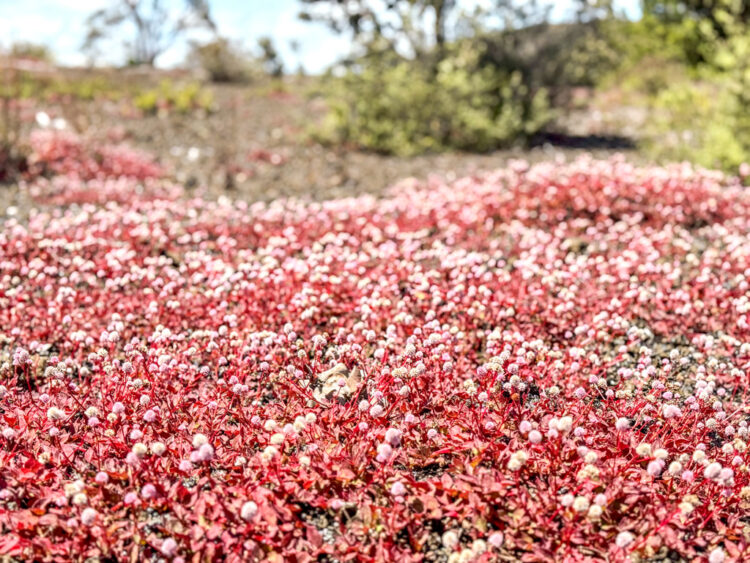
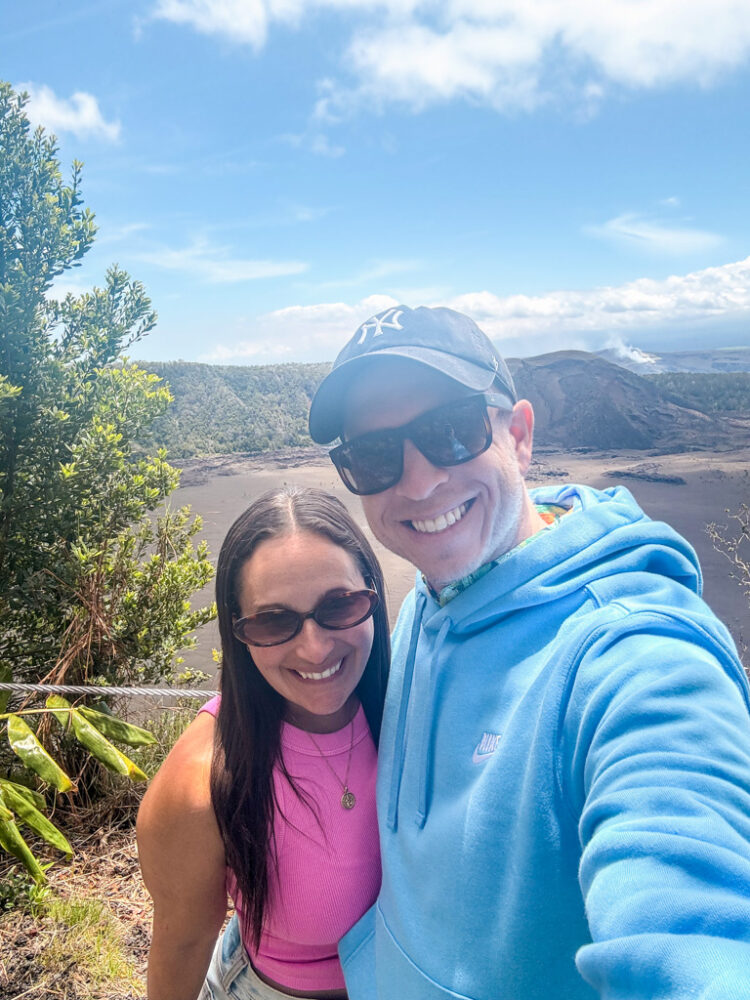
So when my husband and I were already traveling around the Big island, I knew we had to spend one day in Hawaii Volcanoes National Park. I had seen photos of the lava landscapes for years, but seeing everything in person felt even more surreal than I imagined.
The Hawaiian Islands themselves were formed by volcanic activity over millions of years, and parts of the park are still actively growing and changing today thanks to ongoing eruptions and lava flows.
So let’s get to it – the perfect one day Hawaii Volcanoes National Park itinerary coming right up. But first, a few important things to know… including the fact that yes, you really might see lava shooting out of the volcano. And no, I’m not kidding!
The Wild Reality of Visiting an Active Volcano
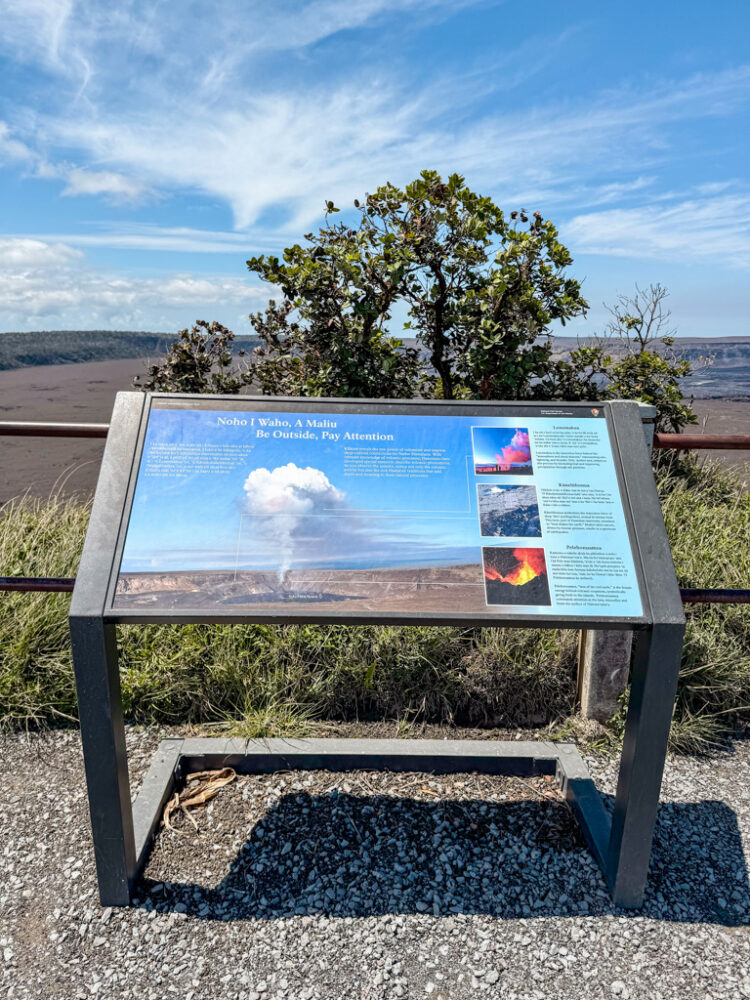
One of the craziest things about visiting Hawaiʻi Volcanoes National Park lately is how incredibly active Kīlauea has been in recent years. After a major eruption in 2018 dramatically reshaped parts of the summit area and destroyed hundreds of homes in the Lower Puna region, volcanic activity picked back up again in late 2020 – and since then, eruptions have been happening pretty regularly.
In just the last few years alone, Kīlauea has had multiple summit eruptions, including long-lasting eruptions in 2021, 2023, 2024, and continuing eruptive episodes throughout 2025 and into 2026. Some recent eruptions inside Halemaʻumaʻu Crater have featured massive lava fountains shooting hundreds of feet into the air, glowing lava lakes, and nighttime views that honestly look completely surreal in photos.
We actually visited just a few days after one eruption ended… and then left only a few days before another eruption started, which still feels crazy to think about. Meanwhile, one of my friends happened to time her trip perfectly and visited during an active eruption. She said seeing actual lava glowing and erupting in person was absolutely unreal – one of the coolest travel experiences she’s ever had and truly a once-in-a-lifetime experience.
Of course, eruptions are never guaranteed, and conditions can change fast, but if you’re planning a Big Island trip, I highly recommend checking the latest volcanic updates before you go. There’s genuinely a chance you could witness one of the most active volcanoes on Earth doing its thing in real time, especially now that it’s super active again.
One Day in Hawaii Volcanoes National Park Logistics
When to Go to Hawaii Volcanoes National Park
The good news? There’s really no bad time to visit Hawaiʻi Volcanoes National Park. Unlike a lot of mainland national parks that basically shut down half the year under snow, this one is open year-round and every season feels a little different.
That said, if you’re trying to plan the best time to go, I’d personally aim for either spring or fall. You’ll usually get pleasant weather, fewer crowds than peak summer, and a better chance of enjoying the park without spending half your day searching for parking at the main viewpoints.
One thing that surprised me? The park is HUGE, and the weather changes constantly. You can be sweating in a T-shirt while walking across lava fields and then suddenly reaching for a hoodie near the summit area an hour later. The elevation changes make a massive difference, so even though you’re in Hawaii, don’t assume it’s tropical beach weather 24/7.
And of course, volcanic activity can completely change the experience. If Kīlauea happens to be actively erupting during your visit, it honestly feels like watching the earth being created in real time. The park gets especially busy during eruptions – particularly around sunset and after dark when the crater glow becomes more visible.
If lava viewing is happening, expect fuller parking lots, more traffic, and crowds gathering at overlooks with the same level of excitement as people waiting for fireworks at Disney. But even more spectacular!
Spring (April – June)
This is probably the best overall time to visit Hawaii Volcanoes National Park.
The weather is usually mild, the island is extra green from winter rain, and crowds are generally manageable outside of holiday weekends. You’ll also have a better chance of getting clear morning views before clouds roll in later in the afternoon.
Spring kind of feels like the sweet spot. Trails are less crowded, parking is easier, and the whole park feels calmer compared to summer. If you want that balance of good weather without peak-season chaos, this is it.
For reference, we visited in early-May and had glorious weather all day. Up until we left and then it started pouring on our drive home!
Summer (June – August)
Summer is definitely the busiest season, especially once school gets out – which honestly makes complete sense. Hawaii is a bucket-list destination for so many people, and the national park is one of the Big Island’s biggest highlights.
You’ll usually get warm temperatures and longer daylight hours, which is great if you’re trying to squeeze a lot into one day. But you’ll definitely be sharing the park with more visitors. Expect crowded parking lots, busy viewpoints, and potential traffic around eruption viewing areas if volcanic activity is happening.
If you visit in summer, I’d strongly recommend starting early. The earlier you arrive, the easier it’ll be to beat both the crowds and the midday heat on exposed lava field hikes.
Fall (September – November)
Fall is another amazing time to visit and honestly feels a little underrated.
The summer crowds start thinning out, but the weather is still warm and pleasant. September can still feel fairly busy, but by October and November the park tends to feel much quieter overall. The first time we visited the Big Island was in October, and I was pleasantly surprised by the lack of crowds.
This is such a good time to visit if you want a more relaxed experience and don’t love shoulder-to-shoulder viewpoints. Hotel prices on the Big Island can also dip a little compared to summer and holiday season – which is always appreciated because Hawaii is not exactly known for being budget-friendly (whomp whomp).
Winter (December – March)
Winter brings cooler temperatures and a higher chance of rain, especially around the summit and higher elevations.
That definitely doesn’t mean you shouldn’t visit though. In fact, winter can be incredibly beautiful because the park often feels extra lush, misty, and dramatic – almost like stepping into Jurassic Park at times. You just need to be prepared for changing weather.
The biggest thing to know is that winter also overlaps with holiday travel season, so Christmas and New Year’s can get surprisingly busy. If you’re visiting during that period, book accommodations early and expect crowds at the main highlights.
How to Get to Hawaiʻi Volcanoes National Park
One of the best things about visiting Hawaiʻi Volcanoes National Park is that getting there is pretty straightforward no matter which side of the Big Island you’re staying on. The park sits along Highway 11, and while the drive can be long, it’s honestly part of the experience.
This is one of those destinations where you’ll need a rental car. Public transportation options are extremely limited, and having your own car gives you the flexibility to stop at viewpoints, pull over for roadside fruit stands, or randomly yell “WAIT LOOK AT THAT” every five minutes like we did (especially me, haha).
One thing I’d definitely recommend? Fill up your gas tank before entering the park. Services inside are pretty limited, and you’ll probably end up driving way more than expected between crater overlooks, trailheads, and scenic roads. And yes, gas is expensive in Hawaii (just like in California), there’s no way around it.
From Kona
If you’re staying in or around Kailua-Kona, plan for around a 2 to 2.5 hour drive depending on traffic and exactly where you’re staying.
Yes, it’s a long drive, but it’s GORGEOUS. Along HI-11 you’ll pass black lava fields, huge coastline views, little towns, and stretches of road that feel almost cinematic. The scenery changes constantly, which somehow makes the drive feel shorter than it actually is.
We came from Kona and left around 7-ish in the morning after making a mandatory caffeine stop at Kona Coffee and Tea for my husband’s favorite iced mac nut latte. Priorities. If you’re doing the park in one day, I’d definitely recommend an early start like this. Not only does it help you beat some of the crowds, but it also gives you enough time to properly explore without feeling rushed.
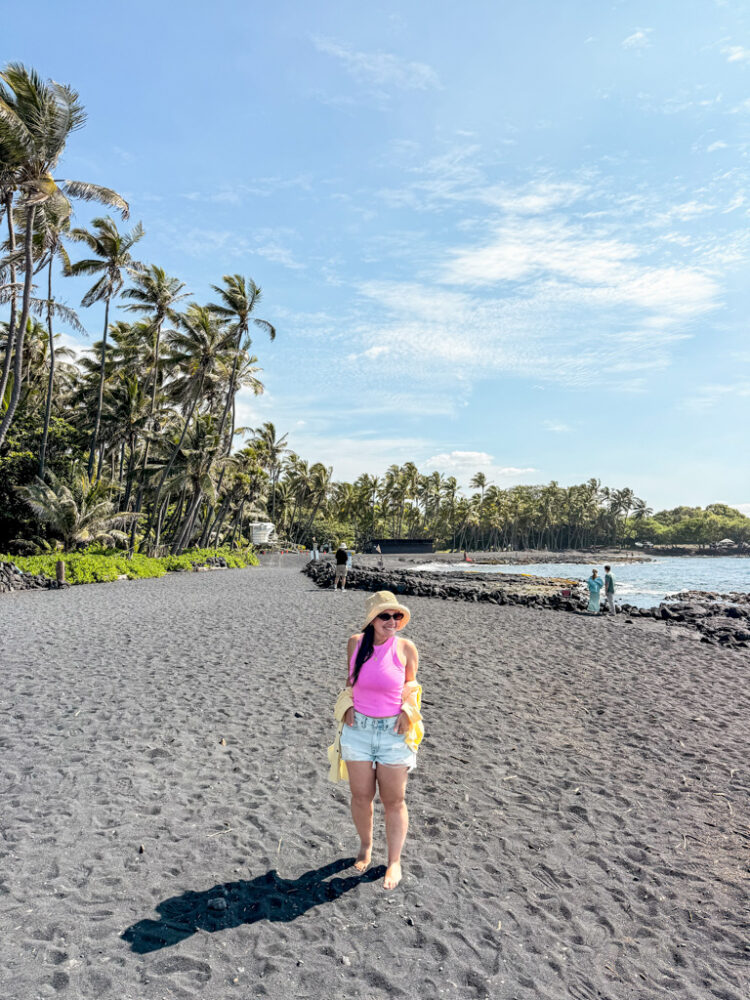
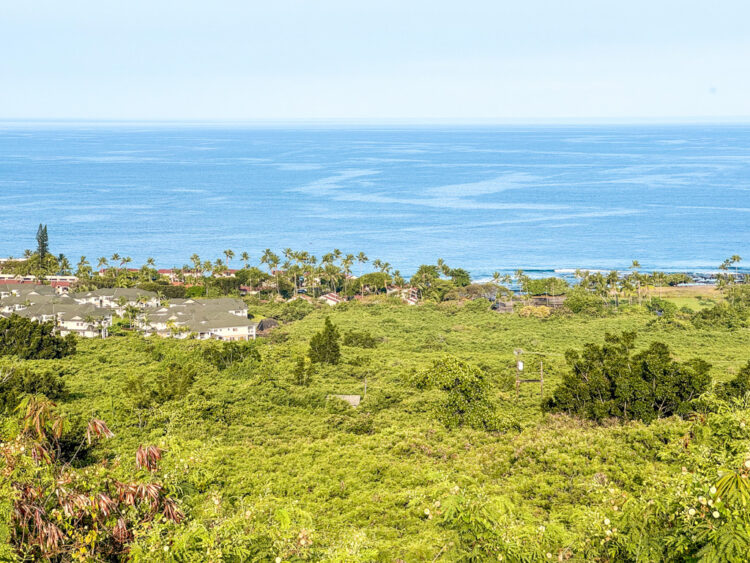
Whatever you do, don’t miss stops at Punalu’u Bakeshop and Punaluʻu Black Sand Beach before heading into the park.
From Hilo
If you’re staying in Hilo, you’re honestly in the ideal spot because the park is only about a 45-minute drive away.
This side of the island feels completely different from Kona. Hilo is greener, rainier, and way more lush overall, so the drive into the park has a totally different vibe. Think tropical rainforest instead of dry lava landscapes.
Because the drive is shorter, staying in Hilo gives you way more flexibility if you want to catch sunrise, stay late for crater glow viewing, or split your park visit across multiple days. It’s also a great option if you hate long day-trip drives and don’t want to spend half your vacation in the car.
Weather at Hawaiʻi Volcanoes National Park
The weather at Hawaiʻi Volcanoes National Park can best be described as wildly unpredictable in the most Hawaii way possible.
Even though you’re on a tropical island, don’t expect nonstop beach weather. The park spans a huge range of elevations, and conditions can change fast. One minute it’s sunny and warm, and the next you’re standing in misty fog questioning why you didn’t bring a jacket.
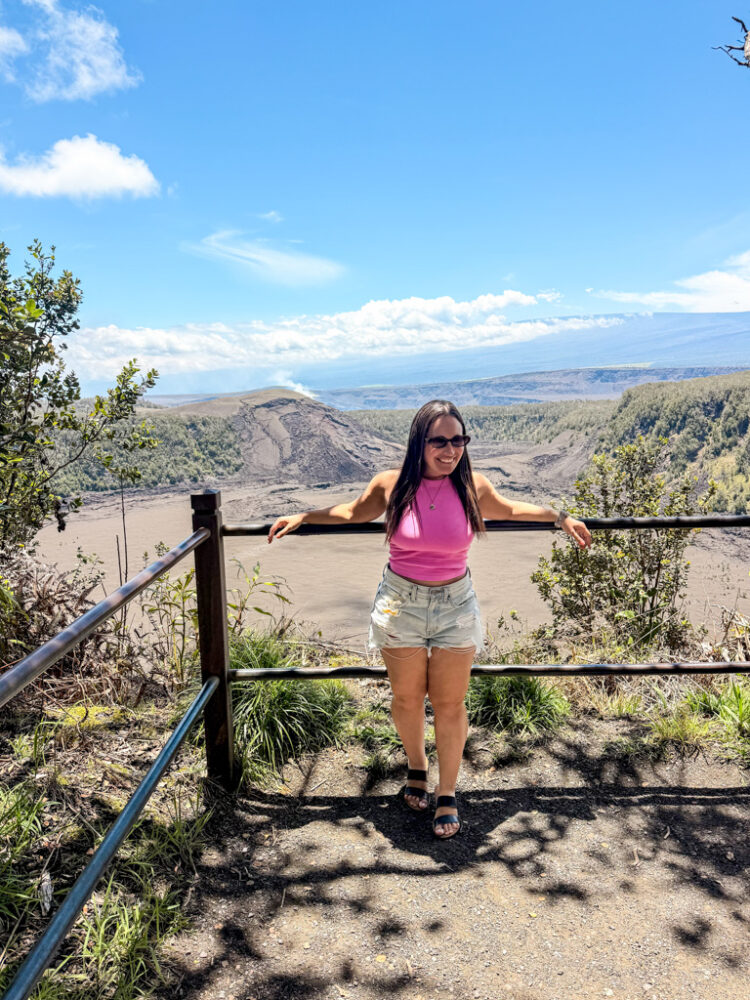
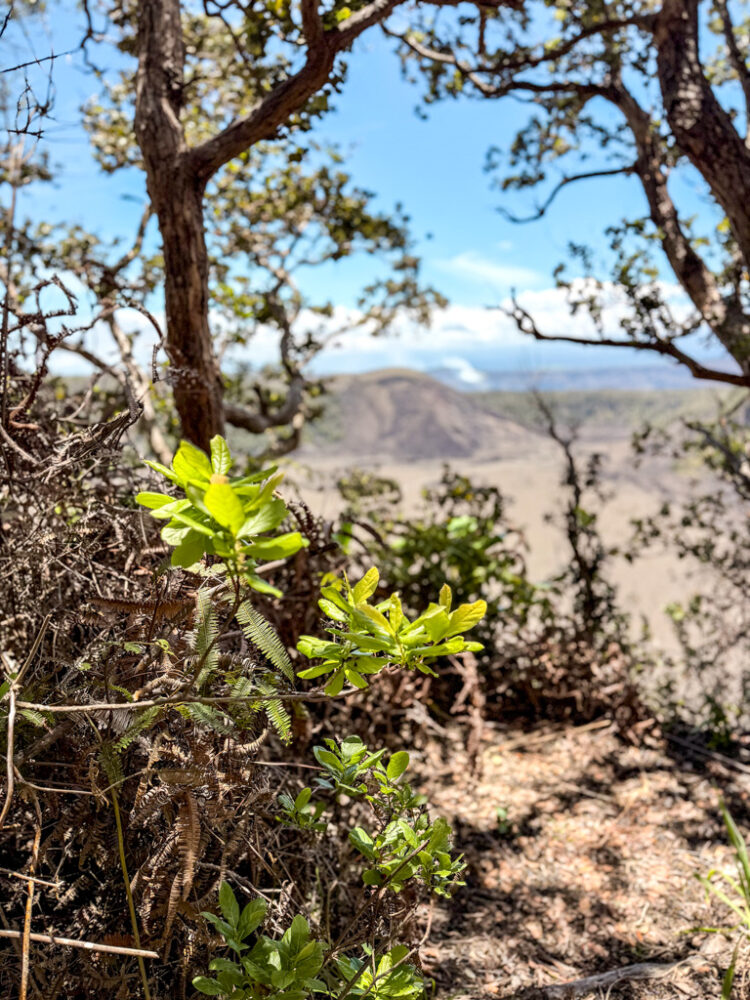
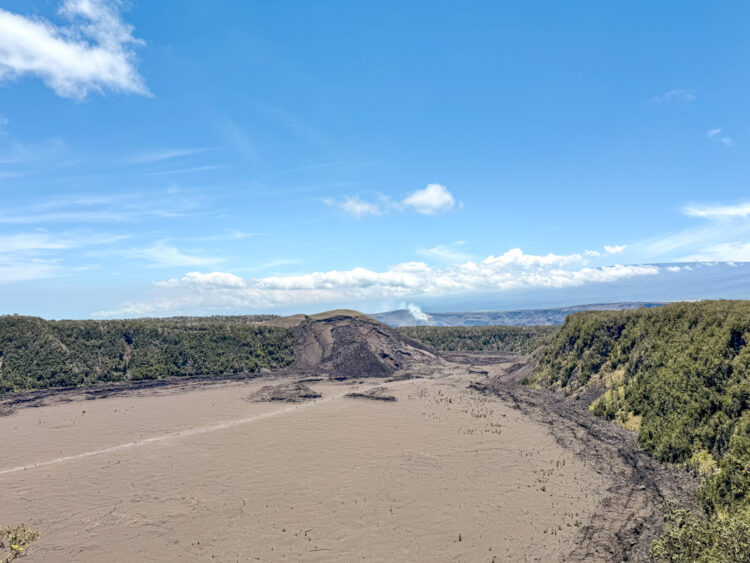
We actually got super lucky with the weather during our visit because it was bright and sunny all day. The skies were incredibly clear, which made the crater views and lava fields look even more dramatic. But it was CRAZY windy for so much of the day, and my hair was blowing everywhere, haha (which made for some very difficult photos, lol).
But the weather changed almost immediately once we left.
As we were driving back toward Kailua-Kona, the skies completely opened up and it started pouring beyond belief. Thankfully my husband was driving and not me, haha. It was such a good reminder of how quickly conditions can shift on the Big Island.
That’s why I’d always recommend dressing in layers, even if the forecast looks good. A light rain jacket or hoodie can make a huge difference, especially if you’re visiting early in the morning, staying after sunset for eruption glow viewing, or heading to higher elevation areas around the summit.
You’ll also want good shoes. Trails can get muddy and slippery after rain, and the volcanic terrain is uneven in a lot of places. This is not the national park for flimsy sandals you bought because they looked cute in your vacation outfit photos.
One more thing to know: the Kona side and Hilo side of the island have very different climates. Kona is generally sunnier and drier, while Hilo gets a lot more rain and feels much more tropical and lush. The park sits kind of between those climates, so you really can experience both in a single day without even trying.
How Long to Stay at Hawaiʻi Volcanoes National Park
I’d recommend budgeting anywhere from a half day to a full day for Hawaiʻi Volcanoes National Park, depending on how much you want to do.
If you’re mostly interested in scenic viewpoints, short walks, lava fields, crater overlooks, and seeing the main highlights, you can absolutely have a great experience in half a day. But if you want to tackle longer hikes, explore more remote areas of the park, or stay after dark for eruption glow viewing, a full day is definitely better.
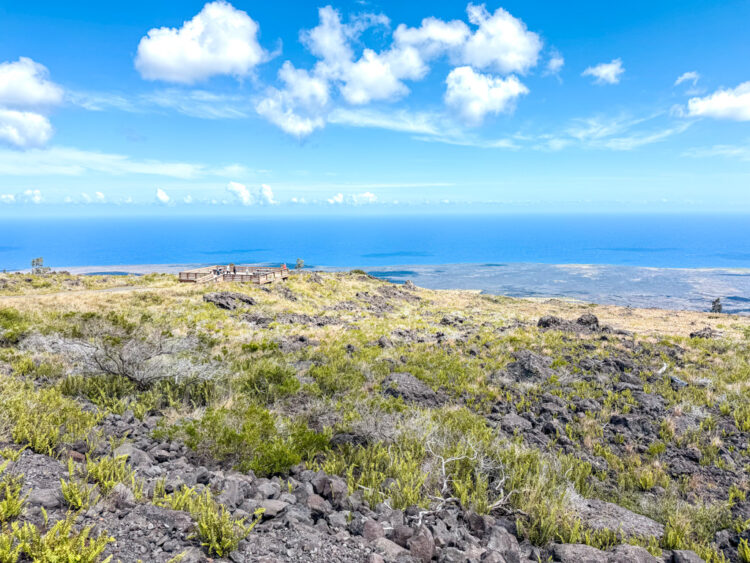
We actually didn’t make it to the park until almost 11am because we stopped at both Punaluʻu Bake Shop and Punaluʻu Black Sand Beach beforehand, which honestly ended up working out perfectly for us. We weren’t planning on doing any super long hikes, so we still had plenty of time to see all the major sights without feeling rushed.
You don’t have to be an intense hiker to enjoy this park, unlike other parks like Zion National Park (ohhh Angel’s Landing, iykyk). Some of the coolest landscapes and viewpoints are incredibly accessible and only require short walks from parking areas.
That said, don’t underestimate how long it can take to get around. The park is massive, and you’ll probably stop way more often than you expect because every few minutes there’s another lava field or scenic overlook.
If you only have one day, I’d personally focus on:
- Crater viewpoints
- A lava tube
- One or two short scenic hikes
- Driving Chain of Craters Road
- Seeing the park at sunset if possible
And if there’s active volcanic activity while you’re visiting? Definitely leave yourself extra time. Crowds and traffic can slow things down a lot, especially around popular viewing areas. People will absolutely be parked up with snacks and camp chairs like it’s a tailgate party for geology nerds, and honestly, I kind of respect it.
Is It Worth Staying Overnight Near Hawaiʻi Volcanoes National Park?
Personally, unless you’re planning to do a lot of hiking or really want to experience the park after dark, I truly don’t think staying overnight near Hawaiʻi Volcanoes National Park is necessary for most people.
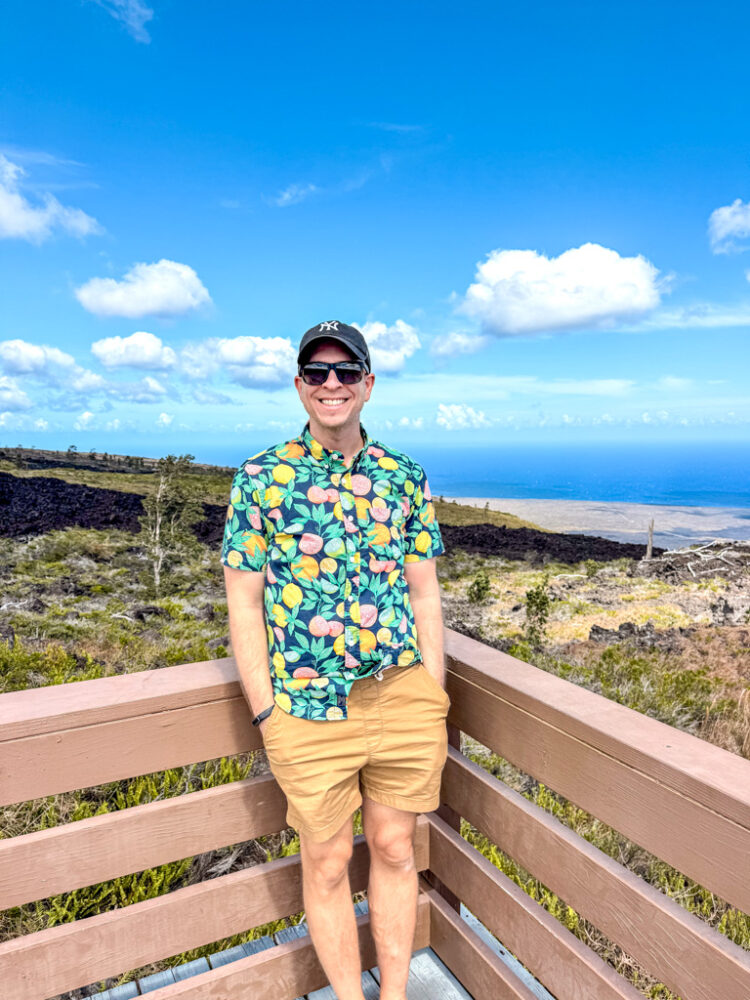
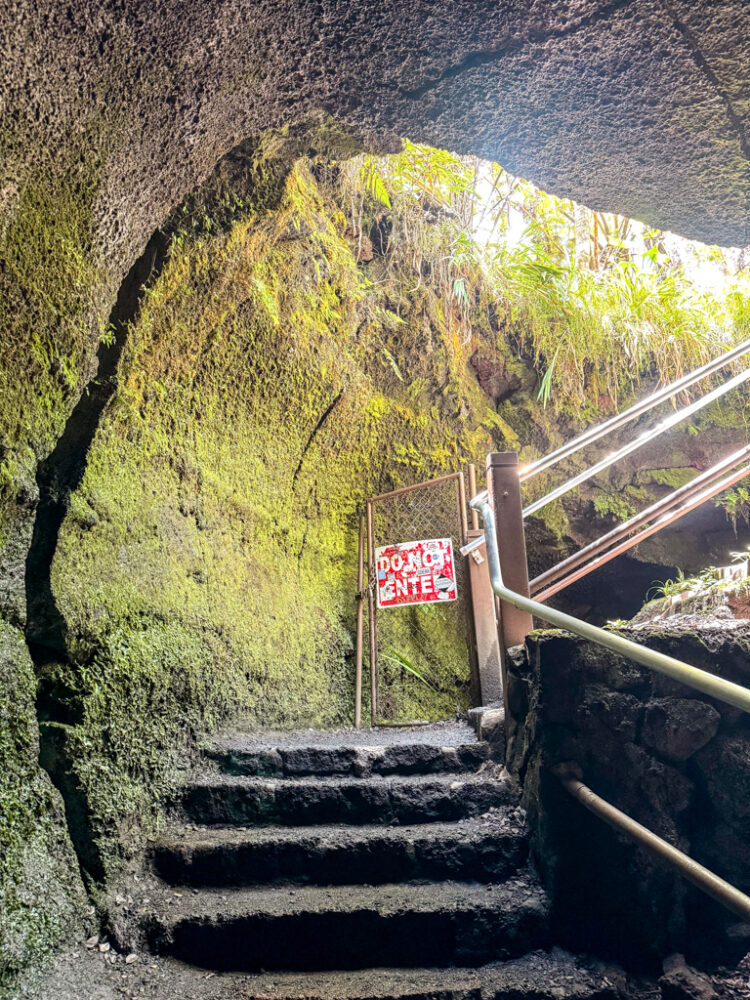
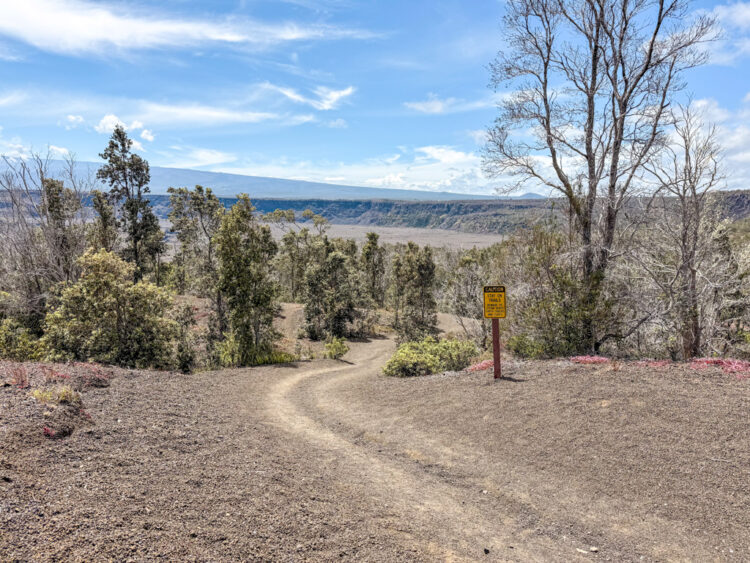
We saw everything we personally wanted to see in about 4.5 hours or so, and that included plenty of stops, viewpoints, wandering around lava fields, and taking photos. Since we weren’t doing any major hikes, a day trip (technically, a half day!) worked perfectly for us.
The nearby town, aptly named Volcano Village, is also very small. It has a quiet little local feel, but there honestly isn’t a ton going on there. Restaurant options are pretty limited, and after spending time in places like Kona or even Hilo, it can feel noticeably quieter at night. This is definitely a place you stay in with the national park being the main attraction nearby.
I think staying overnight makes the most sense if:
- You want to do multiple long hikes
- You’re hoping to catch sunrise and sunset in the park
- There’s active lava viewing and you want to see it after dark
- You prefer slower travel days without a lot of driving
- You’re staying on the Hilo side anyway and want a different experience
Otherwise, I’d personally just visit as a day trip from Kailua-Kona or Hilo.
If you do decide to stay overnight near Hawaiʻi Volcanoes National Park, there’s actually a handful of really cozy and highly rated places in and around the tiny town of Volcano. Most of them lean more toward rainforest cottages, lodges, and bed-and-breakfast vibes rather than big resorts, which honestly fits the area perfectly.
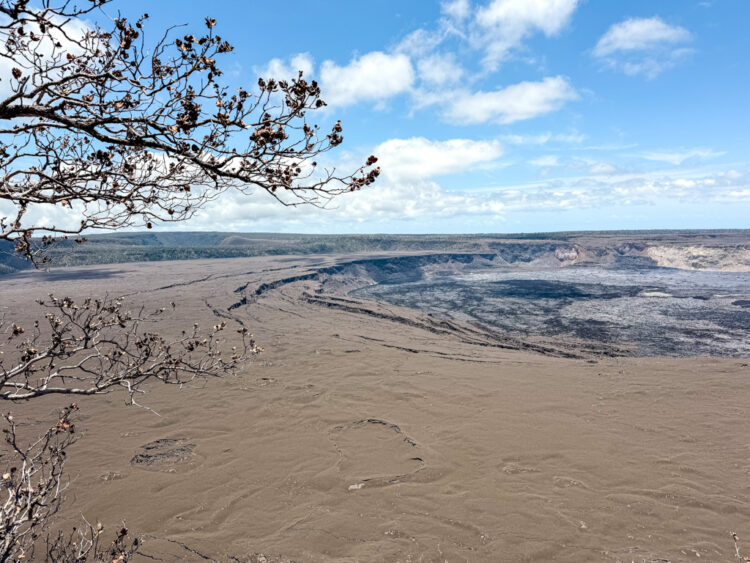
The most famous option by far is Volcano House. This is the iconic hotel inside the national park and honestly? The location’s hard to beat. It sits right on the crater rim, so you’re basically staying in the middle of the action. It’s one of those classic national park lodges that feels more about the experience and location than luxury amenities. People love it for the views, convenience, and the fact that you can wake up and immediately be in the park without dealing with parking or driving.
If you want more of a cozy rainforest cottage feel, a lot of people rave about places in Volcano Village. Some of the most well-rated options include:
- Volcano Village Estates: charming cottages and bungalows surrounded by lush rainforest just outside the park entrance. This is one of the more popular “peaceful cabin in the woods” type stays.
- Volcano Village Lodge: private lodge-style accommodations that people consistently love for the quiet atmosphere, homemade breakfasts, and cozy rainforest setting.
- Lotus Garden Cottages: a romantic cottage-style stay with tropical gardens and more of a secluded retreat vibe.
- Volcano Eco Retreat by Heartcore Hotels: probably the most upscale-feeling option in the area, with eco-luxury bamboo cabins and a really tranquil jungle setting.
- Chalet Kilauea: another cozy Volcano Village option that comes up a lot in traveler recommendations for being quiet, comfortable, and close to the park.
There’s also tons of small vacation rentals, cabins, and Airbnbs scattered throughout Volcano Village if you want something more private. Honestly, the whole area has this very misty rainforest energy that feels completely different from the beachy Hawaii most people picture. It kind of feels like if Hawaii and the Pacific Northwest had a very damp little crossover episode.
What to Bring to Hawaiʻi Volcanoes National Park
One thing I’d definitely recommend bringing to Hawaiʻi Volcanoes National Park is food. Specifically: an actual lunch. Yes, learn from our mistakes (and growling bellies).

There really aren’t many food options inside the park itself, especially if you’re planning to spend several hours exploring. There’s a restaurant at Volcano House and a few small grab-and-go options around the area, but this is not the kind of national park where you’re constantly stumbling across cafés or snack bars.
We, for some reason, did not plan accordingly and basically survived on cookies all day (shoutout to Donna’s Cookies which we had picked up the day before). Which felt fun at first and then slowly became less fun around hour four when I realized my body was running entirely on sugar and vibes.
A picnic lunch is honestly the move here. Even just grabbing sandwiches or snacks before entering the park makes the day way easier and gives you more flexibility to stay out exploring longer without having to leave in search of food.
Here’s what I’d personally recommend bringing:
- A picnic lunch or substantial snacks
- Plenty of water
- Layers or a light jacket
- Good walking shoes
- Sunscreen
- A portable phone charger
- Rain jacket or umbrella just in case
- Flashlight if you’re staying after sunset
- Binoculars if there’s active volcanic activity
- Hat and sunglasses
In terms of footwear, if you’re just exploring the main sights and shorter trails, you don’t need anything super intense. We actually wore sandals and were mostly fine… however, I kind of wish I had worn sneakers because tiny rocks kept getting into my shoes literally all day and it became increasingly annoying.
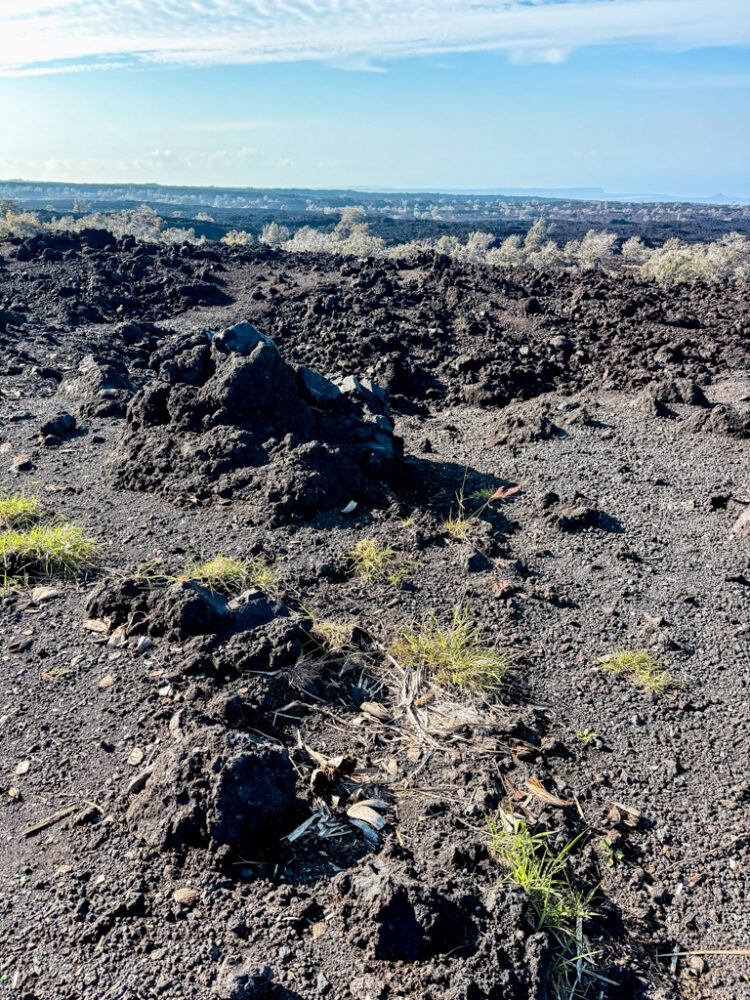
You’ll be walking on uneven paths, hardened lava rock, gravel, and exposed tree roots on some of the shorter trails, so having shoes with decent grip definitely helps. Even the easy walks can feel a little rugged compared to a typical paved national park path.
That said, unless you’re planning on doing longer hikes or hiking down into the crater, I personally don’t think hiking boots are necessary for most visitors. Plenty of people explore the park comfortably in regular sneakers or sturdy walking sandals.
Other Tips & Helpful Information for Visiting Hawaiʻi Volcanoes National Park
A few random things I’m really glad we knew beforehand – or wish we had known – before visiting Hawaiʻi Volcanoes National Park:
Respect the Cultural Significance of the Park
Hawaiʻi Volcanoes National Park is not only a national park – it’s also a deeply sacred place in Native Hawaiian culture. Be respectful, avoid taking lava rocks (this is a BIG one), and treat the land with care during your visit.
Expect Slow Driving
A lot of the roads to and from the park are mostly one lane in each direction, including several roads within the park itself. This is not the place for aggressive itinerary planning where you assume you’ll be zooming between stops. You will absolutely get stuck behind slower drivers, tour vans, people randomly braking for scenic views, or someone trying to spot lava while driving 12 mph. It’s just part of the experience.
We found the best approach was honestly to lean into it. The drives are beautiful anyway, and trying to rush around the park kind of defeats the point. Big Island driving overall feels much slower paced than on the mainland.
Don’t Expect to See Flowing Lava
A lot of people visit expecting bright red lava flowing everywhere, but active lava viewing changes constantly and is never guaranteed. Even without visible lava, the park is still absolutely incredible and worth visiting for the landscapes alone.
Stop at Punaluʻu Bake Shop Before the Park
If you’re driving from the Kona side, I highly recommend stopping at Punaluʻu Bake Shop before heading into the park.
It’s known as the southernmost bakery in the United States, and honestly, this ended up being one of my favorite stops of the entire day. They’re famous for their malasadas (filled Portuguese donuts), and I got a lilikoi frosted malasada that was genuinely so good. Dare I say even better than Leonard’s Bakery over on Oahu, whoa!
This is also a great place to grab coffee, snacks, or picnic supplies before entering the park since food options inside are pretty limited over there.



Entry Fees
As of now, the entrance fee for Hawaiʻi Volcanoes National Park is:
- $30 per private vehicle
- Valid for 7 consecutive days
If you’re visiting multiple national parks during the year, it’s probably worth getting the America the Beautiful Pass, which covers entry to all U.S. national parks and federal recreation sites for one year.
Don’t Skip Nearby Punaluʻu Black Sand Beach
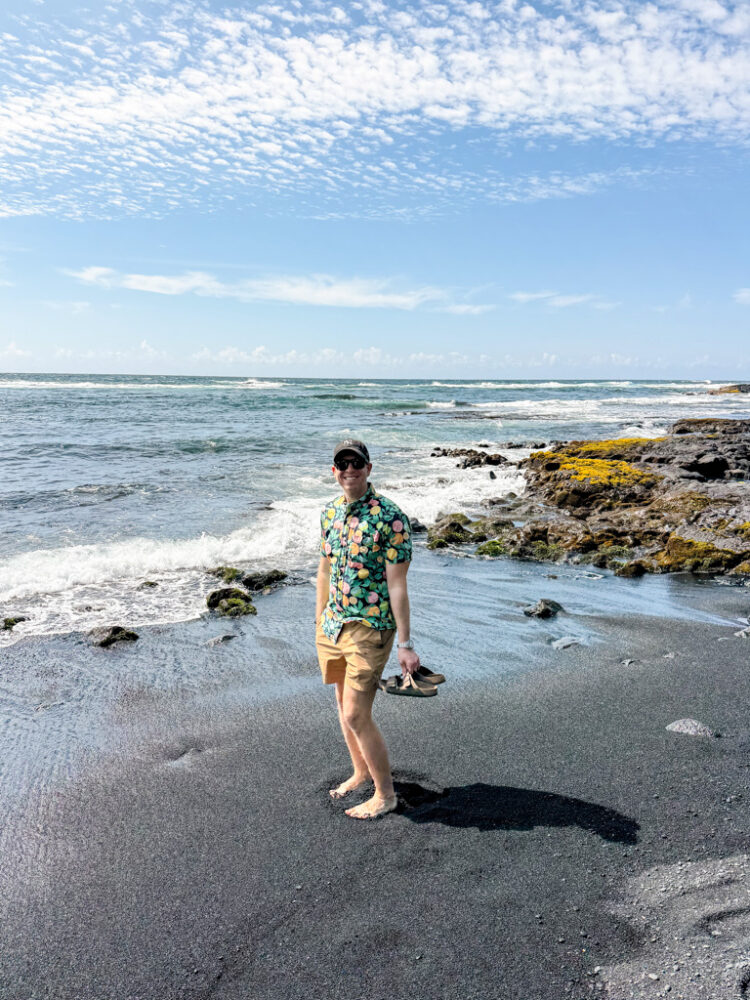
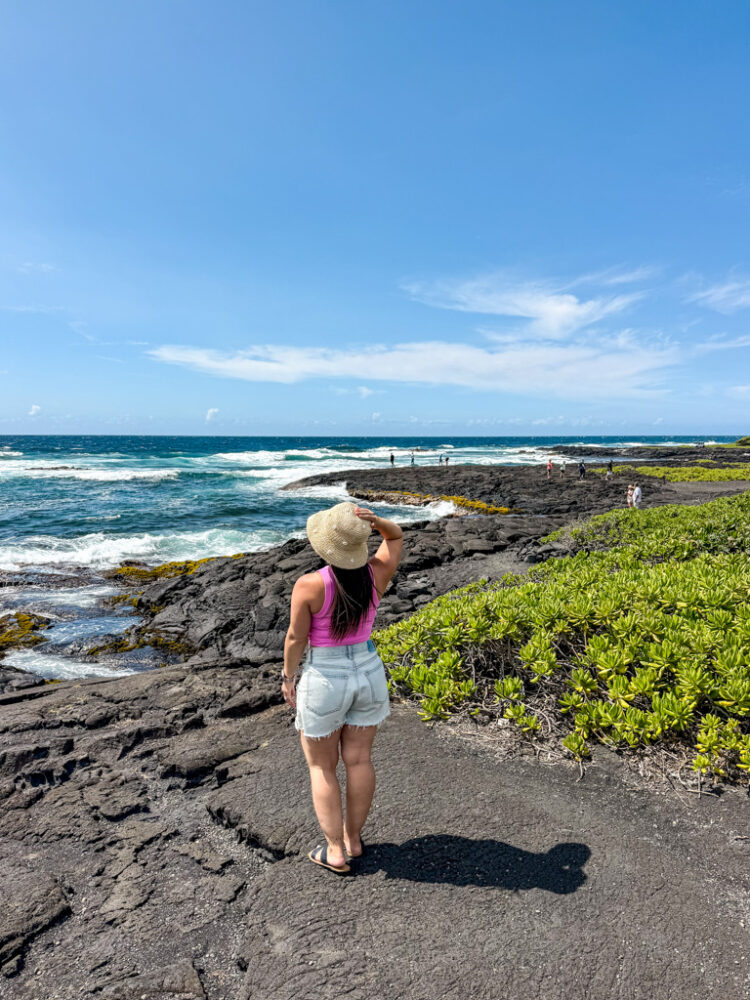
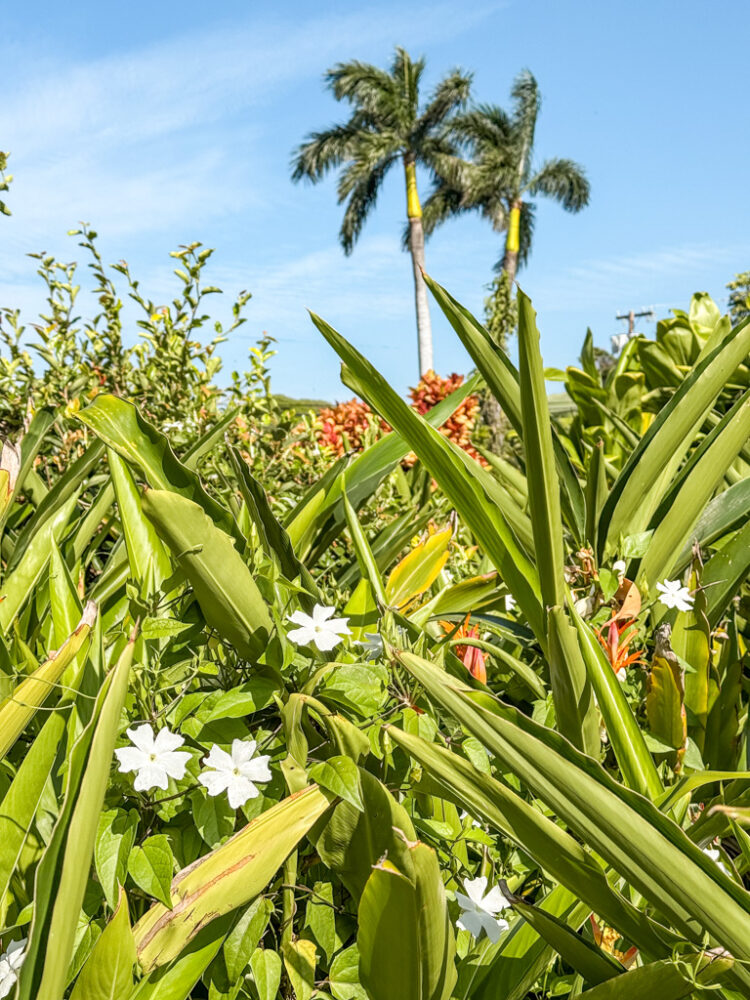
Right near the bakery, make time for Punaluʻu Black Sand Beach too. The beach is absolutely gorgeous, with jet-black sand backed by what felt like dozens of towering palm trees. It’s honestly what I envision Hawaii to be, and it lives up to that expectation.
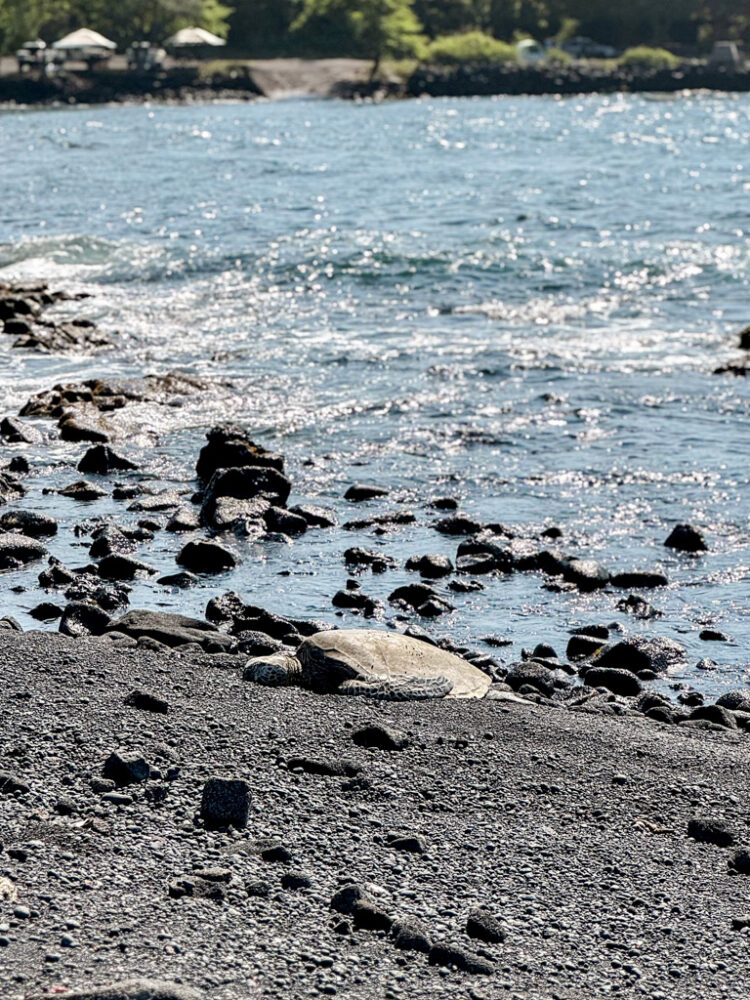
The contrast of black volcanic sand, bright green palm trees, and vivid blue water feels SO dramatic in person. This beach is also one of the easiest places on the Big Island to spot Hawaiian green sea turtles (!!!) resting on shore. And we saw a whole bunch just casually napping on the sand.
A few important things:
- never touch or approach the turtles
- give them plenty of space (I took the photo below at 5x zoom)
- the sand can get VERY hot during midday
- swimming conditions can sometimes be rough here
- Don’t take the sand
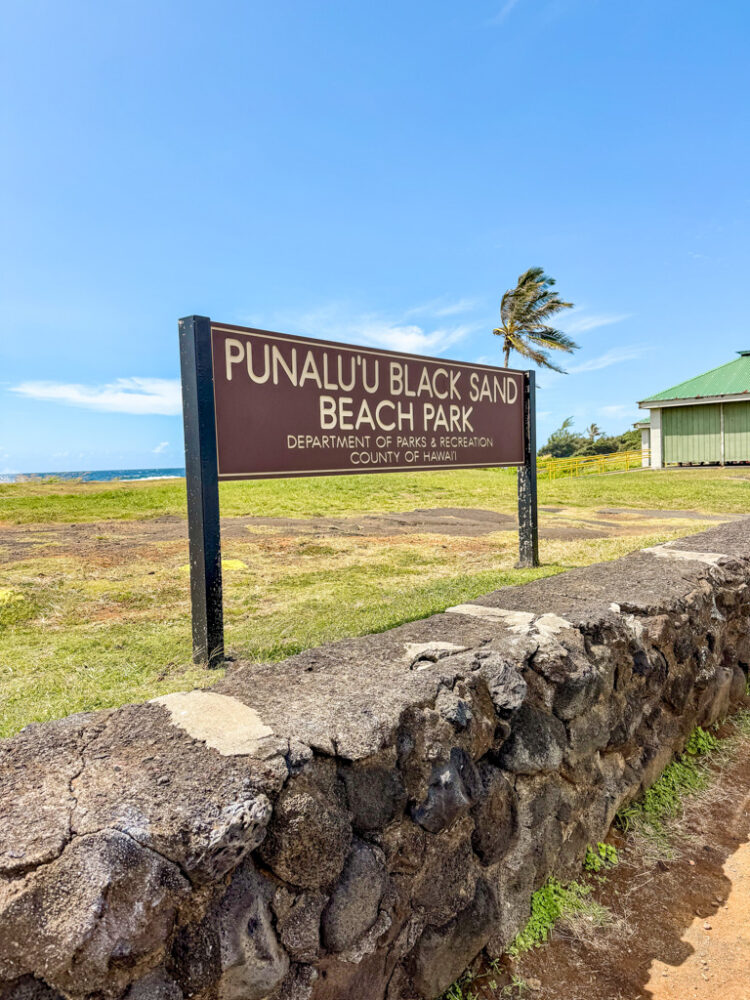

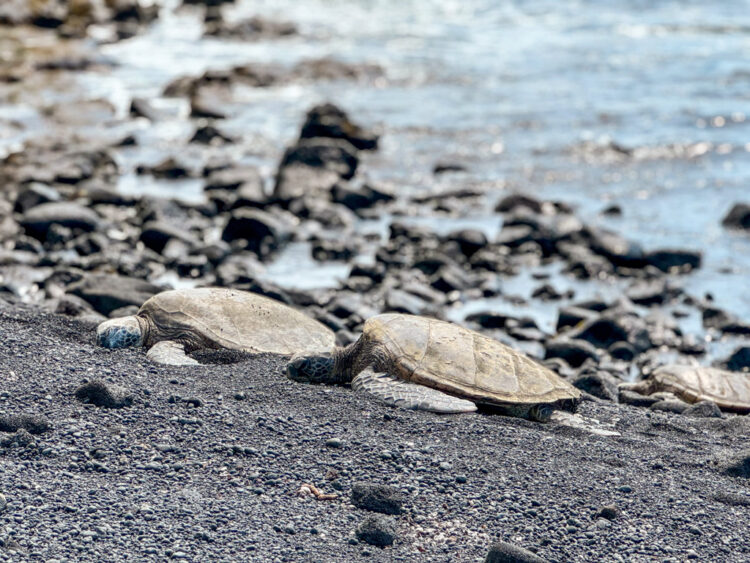
Even if you only stay for 30 – 45 minutes, I definitely think this stop is worth it. If you wanna see the main highlights of Hawai’i Volcanoes National Park, you sadly won’t have time for a proper beach day here.
Download Maps Ahead of Time
Cell service can be spotty in parts of the park, especially once you start driving farther from the main visitor areas. Download offline maps beforehand if you rely on your phone for navigation.
Start Earlier Than You Think
Even if you’re not planning a huge hiking day, an early start helps a lot with parking, crowds, and cooler temperatures. Popular viewpoints can get surprisingly busy by late morning (most notably the lava tube!), especially during weekends and holidays.
Don’t Rush Chain of Craters Road
This ended up being one of the coolest parts of the park for us. The landscape changes constantly as you drive, and there are tons of pull-offs and viewpoints worth stopping at. Build in more time for this than you think you’ll need.
Stay on Marked Trails
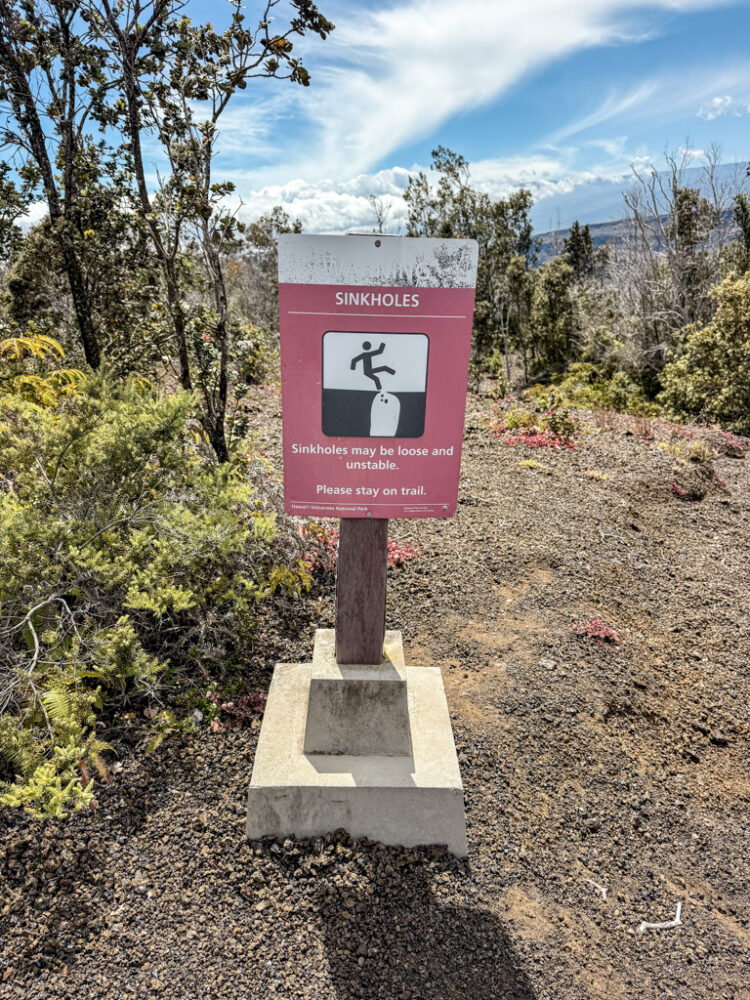
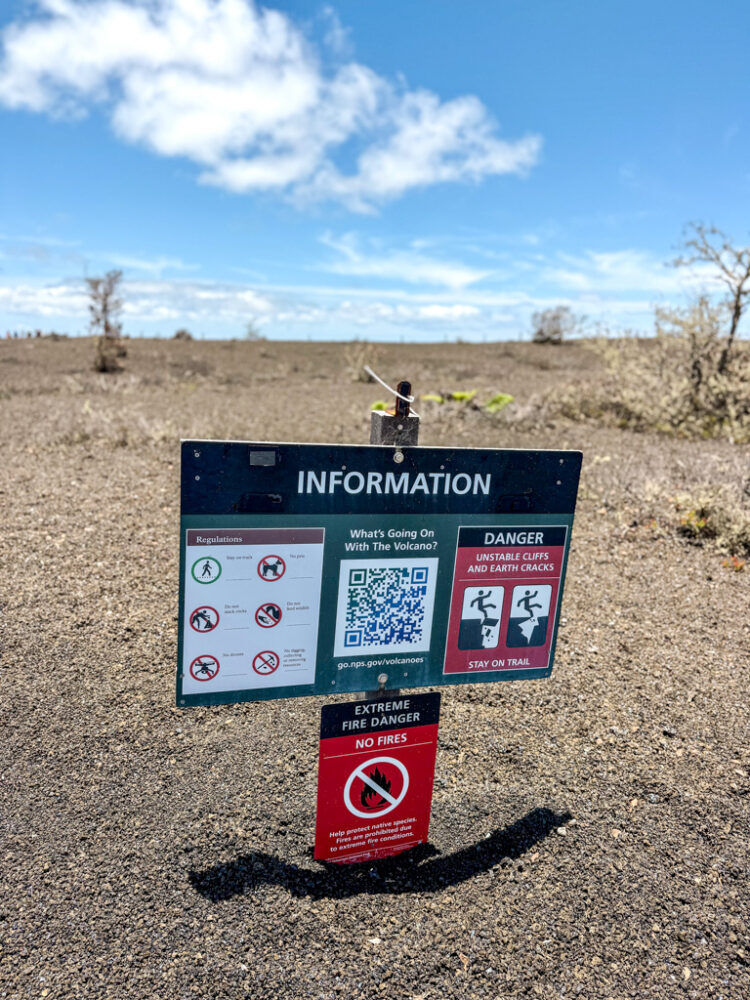
This one’s important. Lava rock can look stable but may actually be fragile, sharp, or dangerously thin in some areas. Wandering off trail also damages delicate native ecosystems and sacred cultural sites.
Suggested One-Day Hawaiʻi Volcanoes National Park Itinerary
If you’ve only got one day in Hawaii Volcanoes National Park, this is exactly how I’d structure it based on our visit (plus a few things I’d personally tweak next time). It covers all the major highlights without trying to cram in every single trail, overlook, and pull-off in one exhausting day. Because this is vacation, right?!
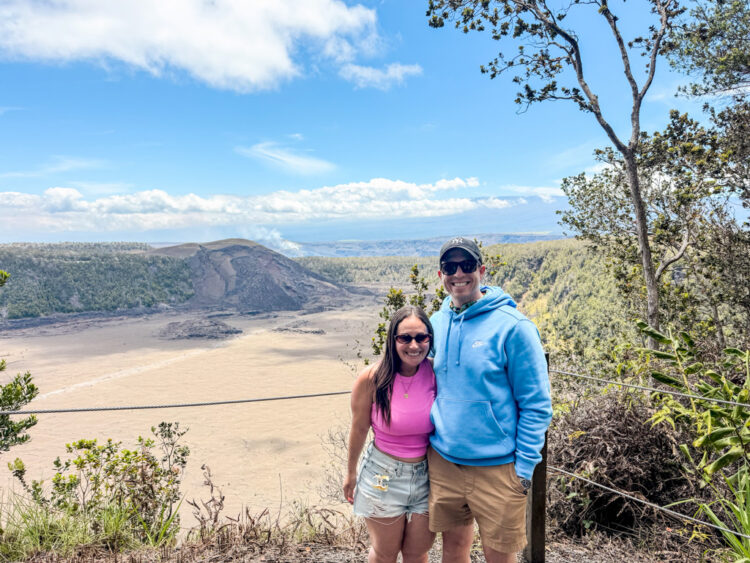
We definitely didn’t see everything in the park, but we still left feeling like we experienced a LOT.
And if you’re driving from Kona like we did, leave early. Between stopping at Punaluʻu Bake Shop (yum!) and Punaluʻu Black Sand Beach on the way down, it’s very easy to accidentally use up half your morning before even entering the park.
Stop 1: Visitor Center and First Views of Kīlauea
My first stop at any National Park? The visitor’s center! So of course that’s what I did on our day trip to Hawaii Volcanoes National Park. At the Kīlauea Visitors Center, check current conditions, see what’s open, ask about volcanic activity, and grab maps and trail information. And of course grab some souvenirs (I always love getting a national park sticker or two)
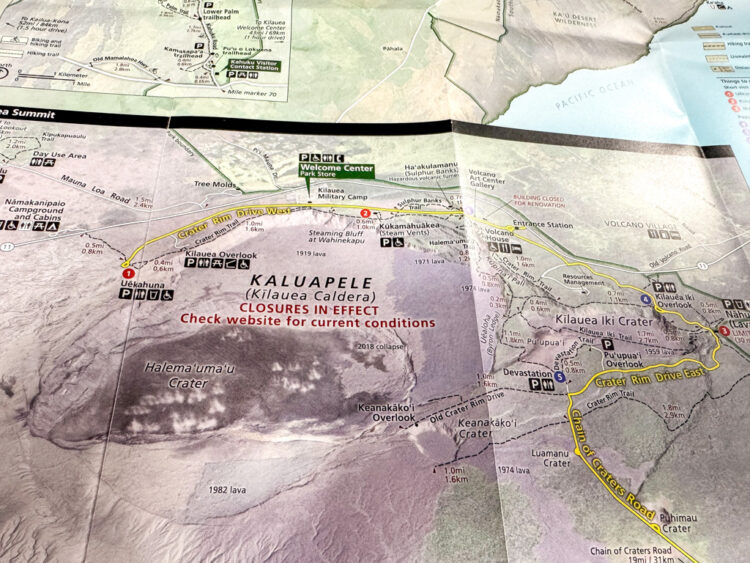
Things change constantly in this park depending on volcanic activity, so it’s worth getting updated information before driving around.
Just FYI, on our visit, the official visitor center was closed under maintenance so they were using the Kilauea Military Camp as the Welcome Center/Park Store. So don’t be surprised if you’re directed there too.
Stops 2 and 3: Kīlauea Overlook + Uekahuna Viewpoint
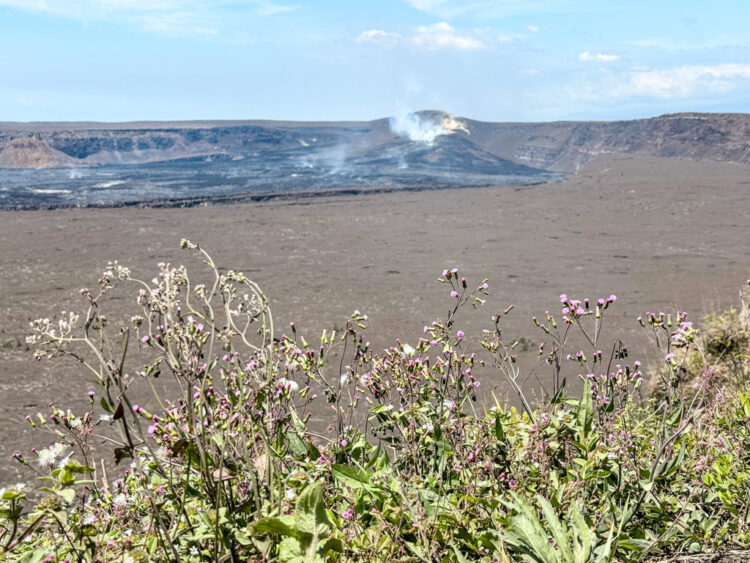
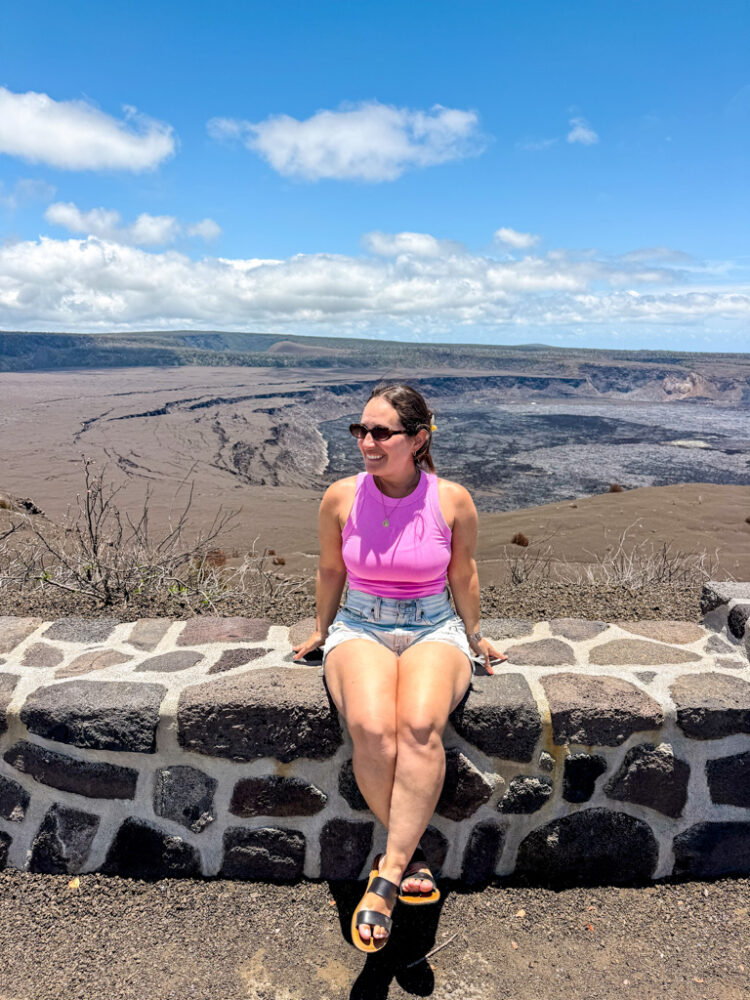
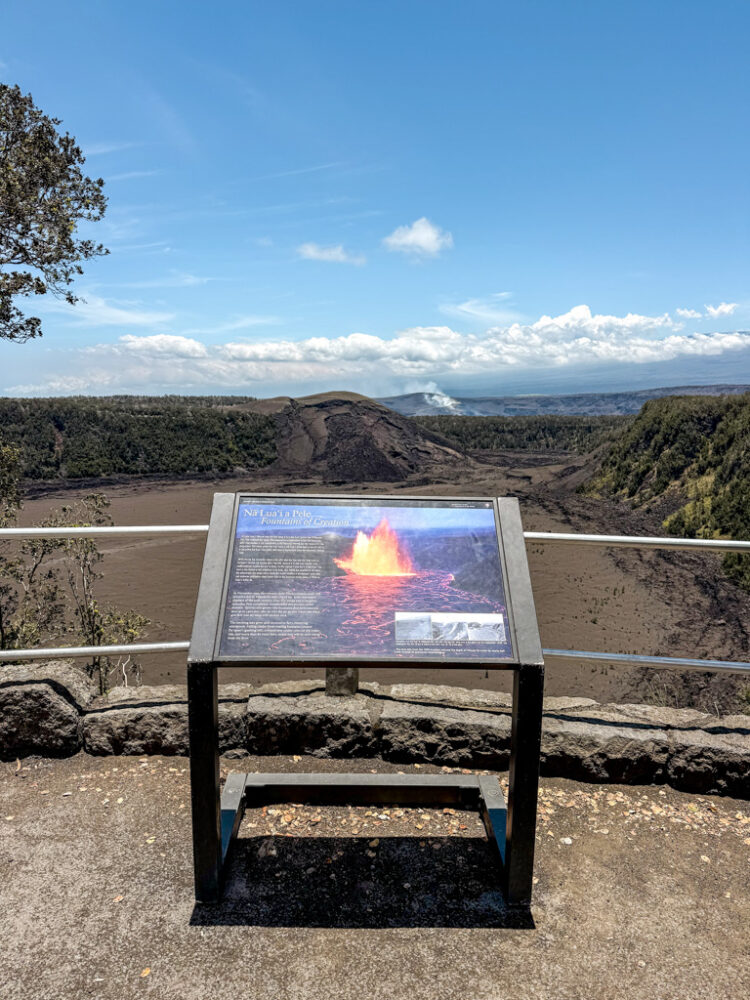
From there, it’s time for your first real look at the volcano. Drive west along Crater Rim Drive and within just a few minutes, you’ll reach the overlooks surrounding Halemaʻumaʻu Crater.
This is where the scale of Kīlauea really starts to hit you. Photos genuinely don’t capture how massive, raw, and otherworldly the landscape feels in person.
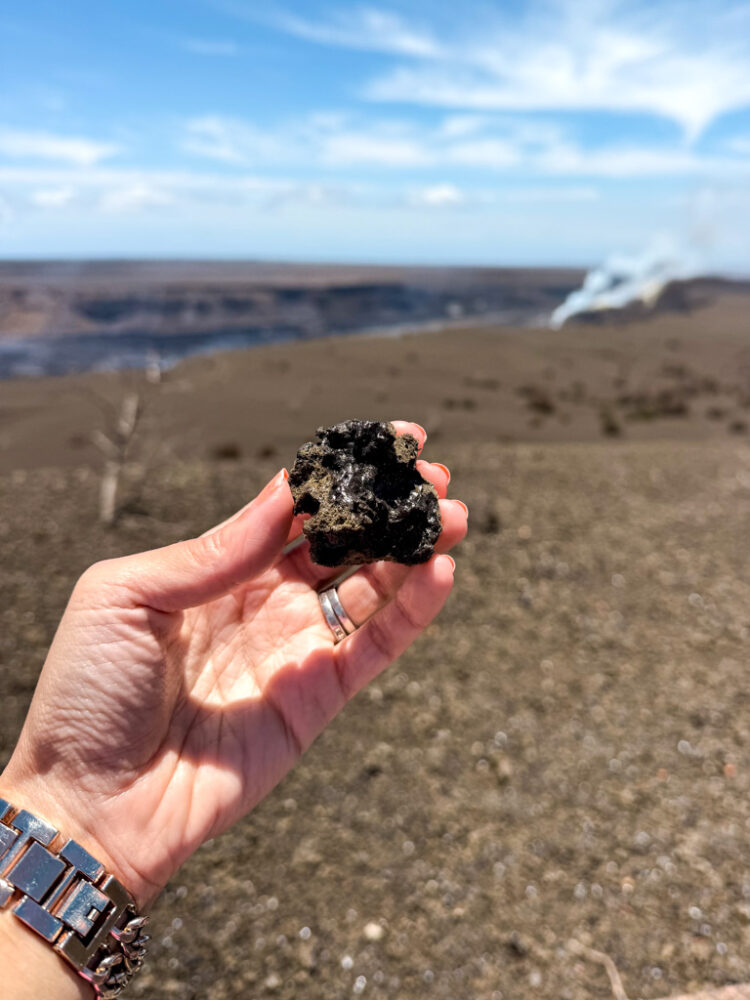
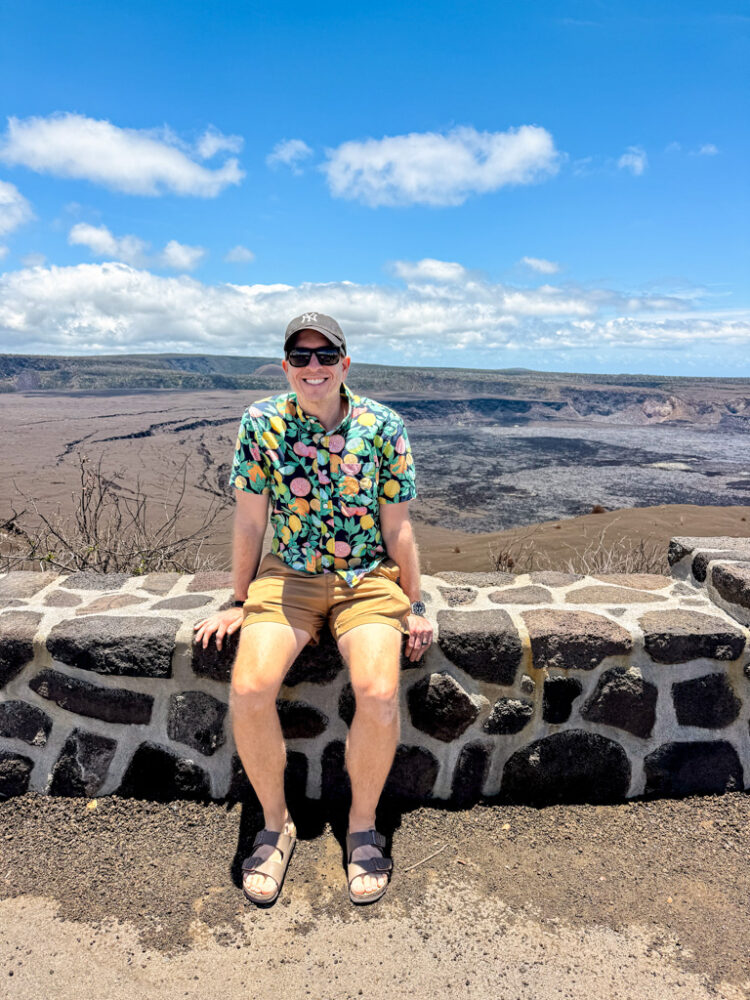
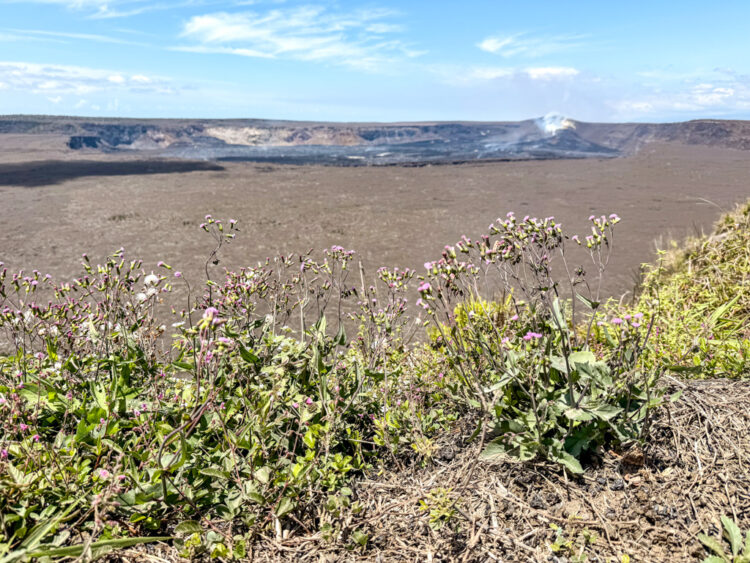
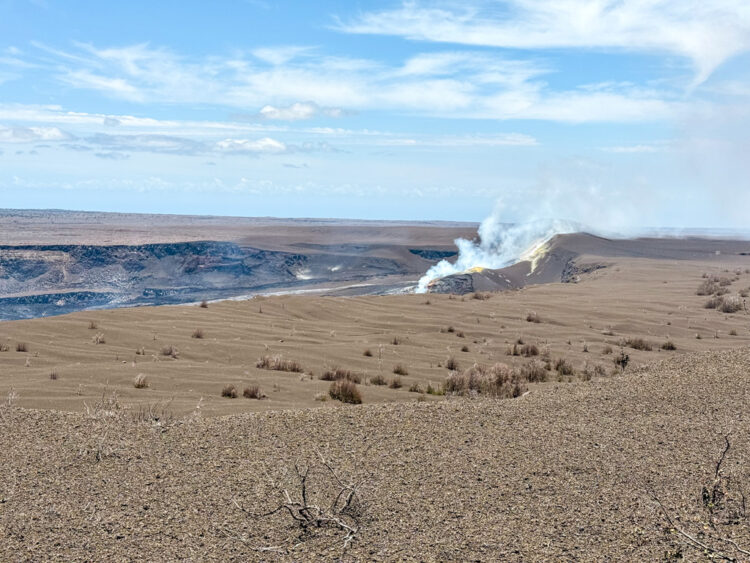
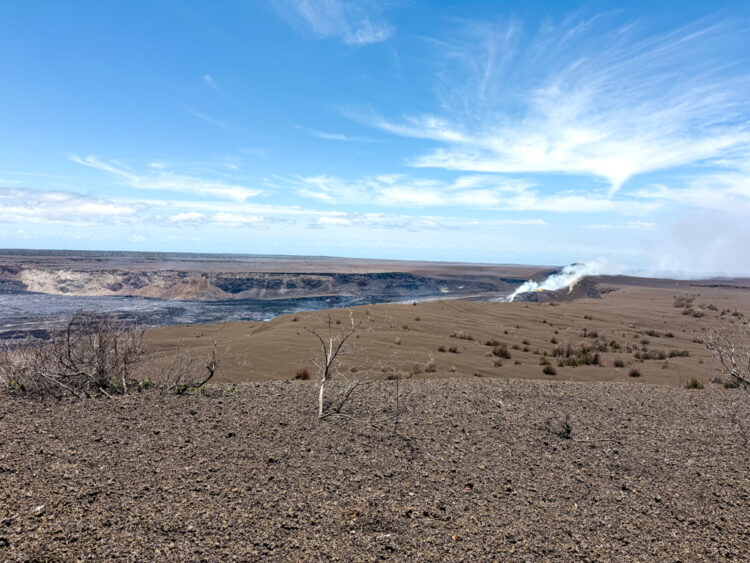
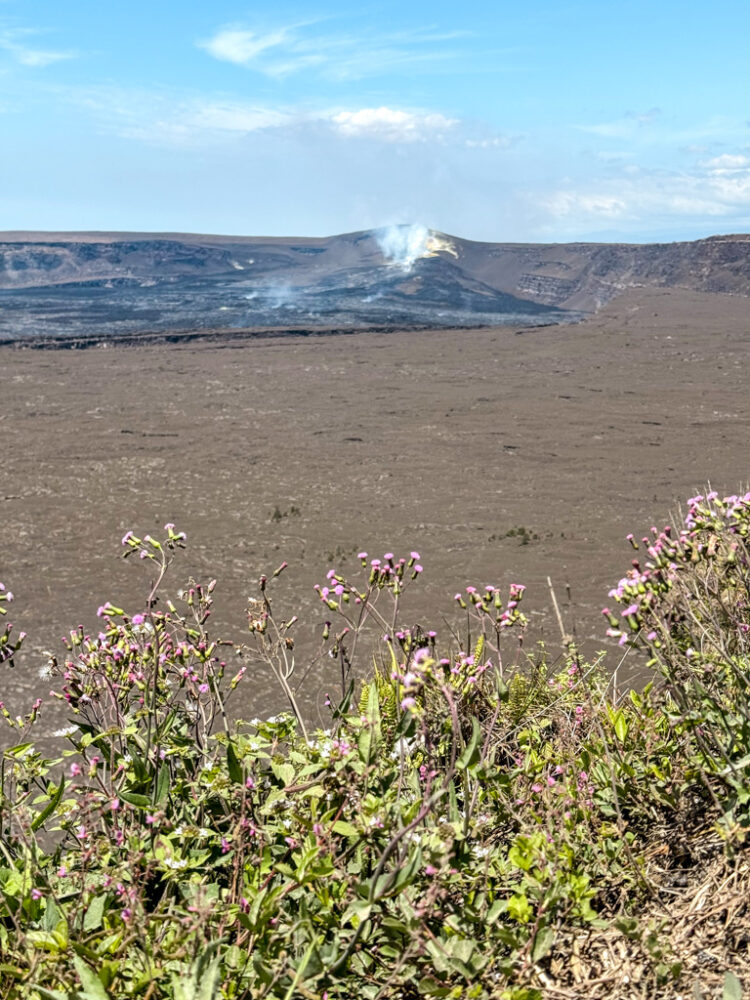
And honestly? I didn’t realize we’d actually be seeing steam and billows of smoke rising from the crater, so it completely caught us off guard at first. I think I assumed that if lava wasn’t actively erupting everywhere, the volcano would just kind of… sit there looking dormant. Nope.
Depending on volcanic activity during your visit, you might see:
- Steam rising from the crater (what we saw!)
- Volcanic haze drifting across the landscape
- Fresh lava rock from recent eruptions
- Lava glow at night if activity levels are high enough
One thing I found really fascinating was how quiet parts of the park felt despite how geologically active the area is. You’re basically standing on top of one of the world’s most active volcanoes, yet everything can feel oddly calm and still at the same time.
You can visit both Kīlauea Overlook and Uēkahuna Viewpoint or just choose one, but we personally thought both were worth stopping at. They’re only a few minutes apart, so it’s easy to do both without adding much extra time.
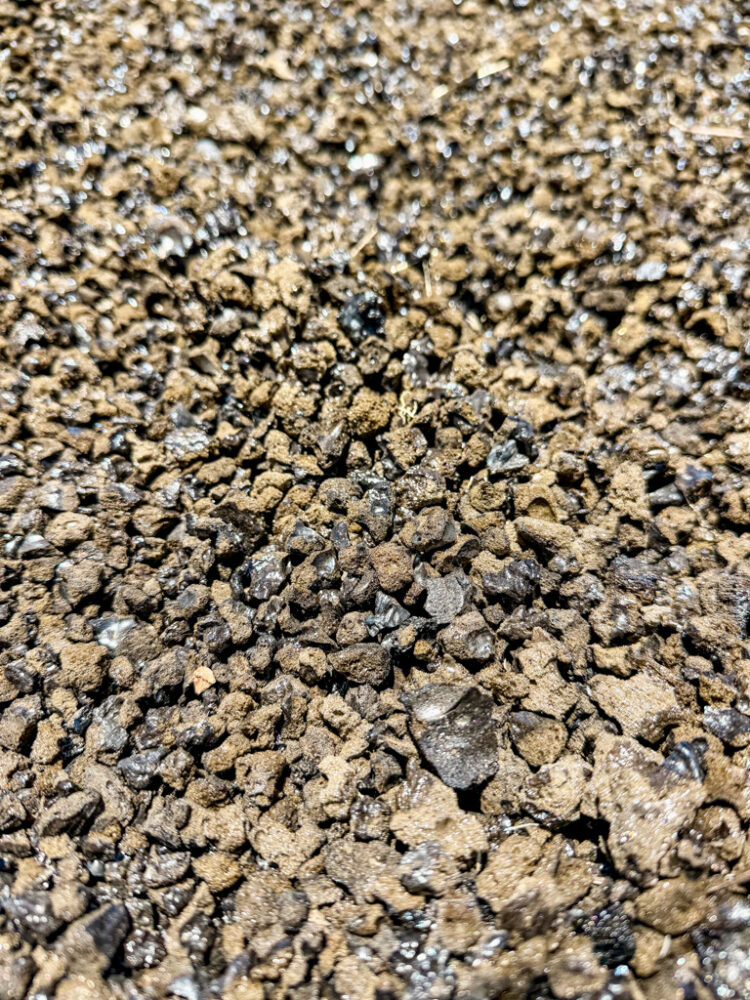
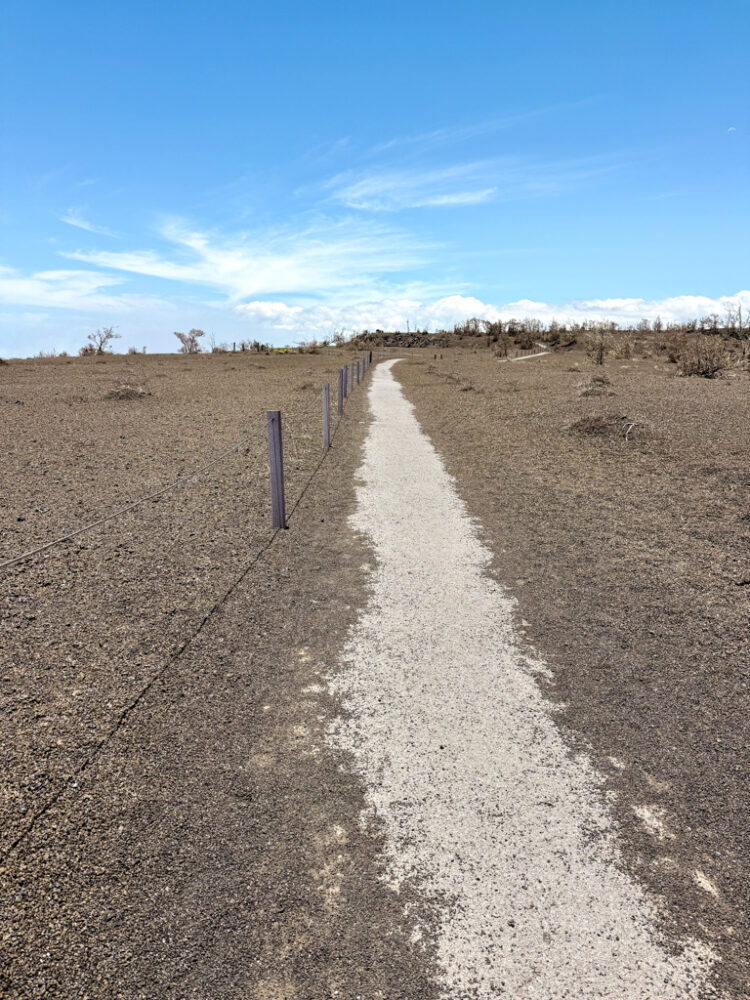
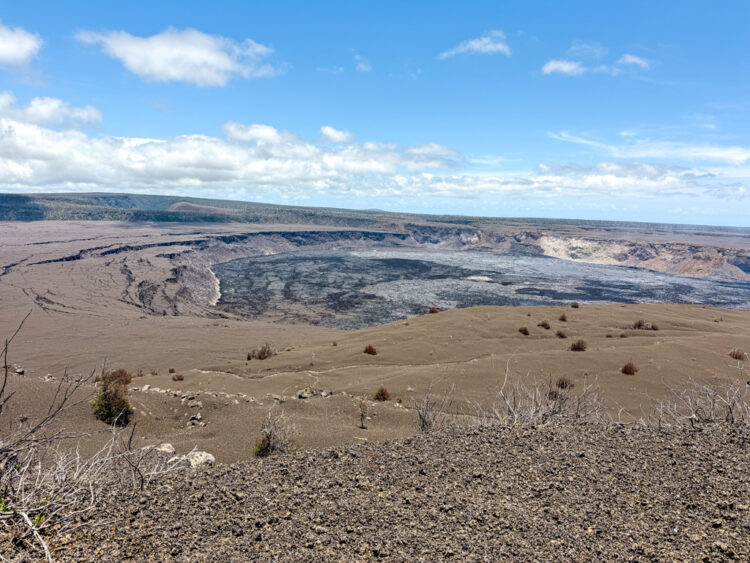
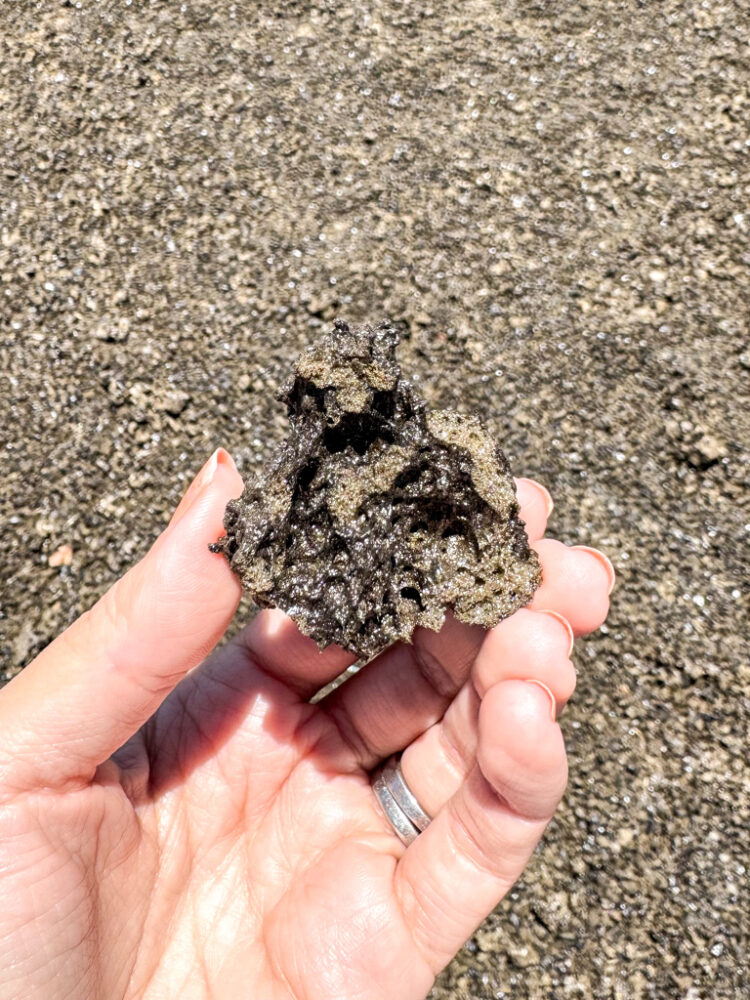
This is also where we first saw Pele’s Hair and Pumice. The ranger told us the fresh pumice scattered around the area was from the eruption that had happened only a few days earlier, which honestly felt so surreal. You’re basically looking at brand-new land material straight from the volcano itself. The fact that we were literally holding pieces of rock the volcano had just spit out days earlier? Absolutely wild.
Stop 4: Steam Vents (Kūkamāhuākea) + Steaming Bluff
Next, head toward the geothermal section of Hawaiʻi Volcanoes National Park.
The Steam Vents (Kūkamāhuākea) and nearby Wahinekapu (Steaming Bluff) are both quick stops, but absolutely worth pulling over for.
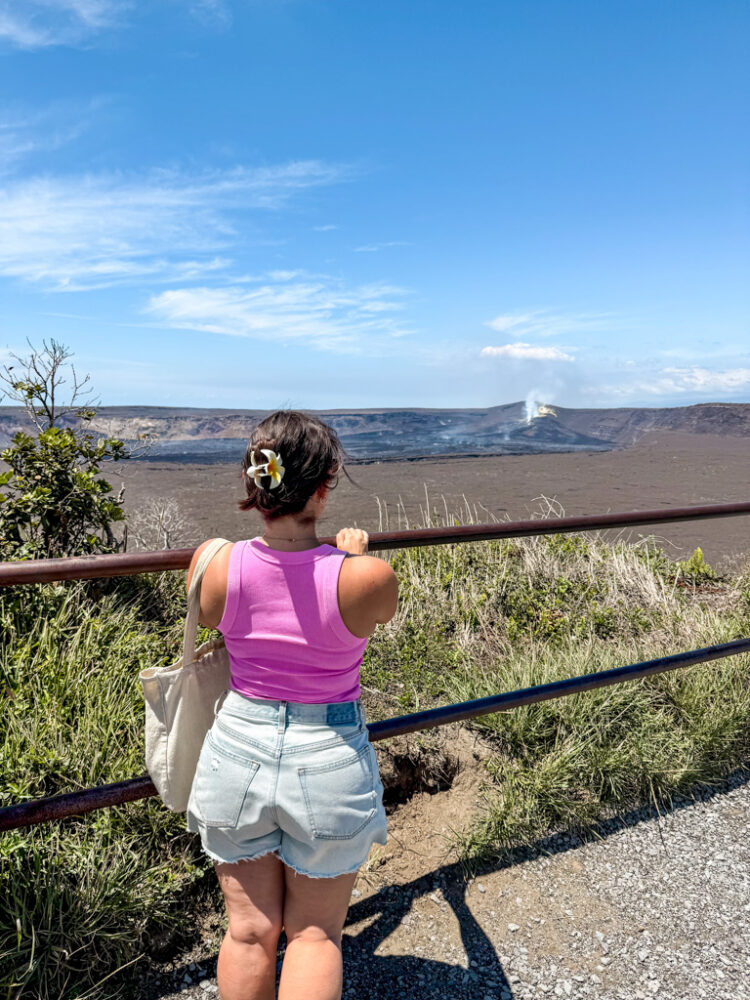
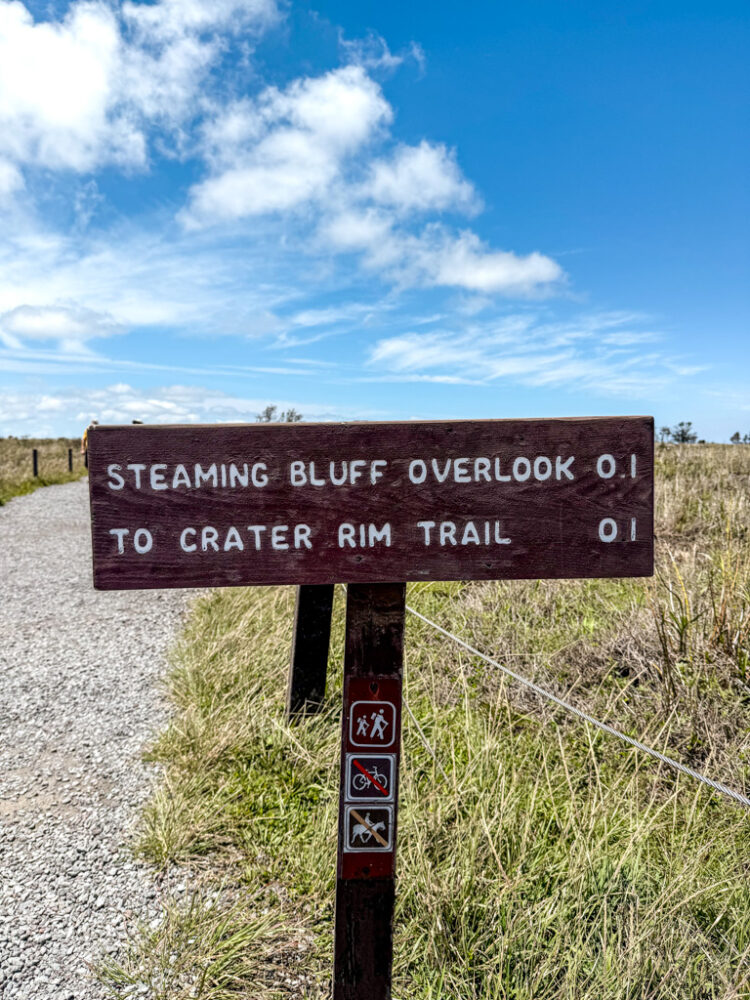
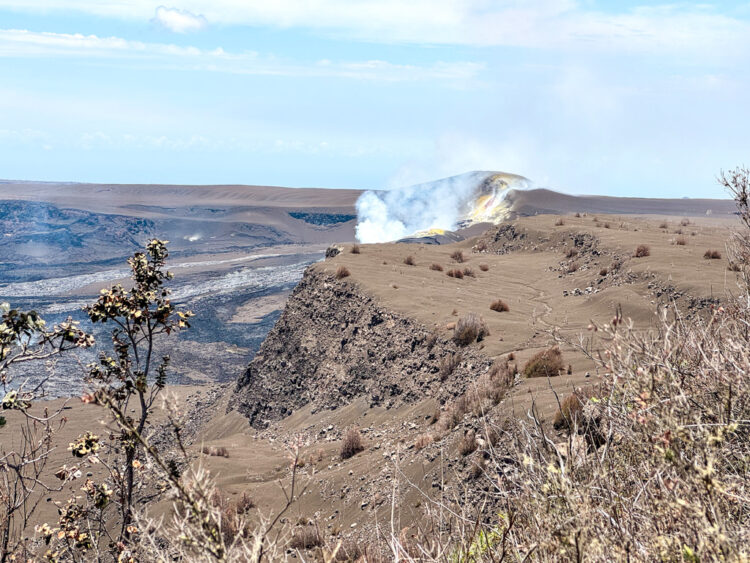
Seeing steam literally rise out of cracks in the earth is one of those moments that really reminds you this island is still actively forming beneath your feet. It doesn’t feel like you’re visiting some ancient volcanic site from thousands of years ago – the landscape here is still alive and constantly changing.
If you visit in the morning when temperatures are cooler, the steam tends to look even more dramatic. And yes… the sulfur smell is very real. You’ll probably catch at least one person nearby making a “smells like rotten eggs” comment within the first 30 seconds.
Nearby, you can also walk the short Haʻakulamanu (Sulphur Banks) Trail. This easy boardwalk trail takes you past steaming vents and colorful mineral deposits stained bright yellow and orange from volcanic gases. It’s short, informative, and one of the easiest ways to see geothermal activity up close without committing to a longer hike. We somehow missed this easy trail soooo don’t make the same mistake we did, whoops!
Honestly, this whole area feels a bit like walking through an active volcano science experiment – but in the coolest possible way.
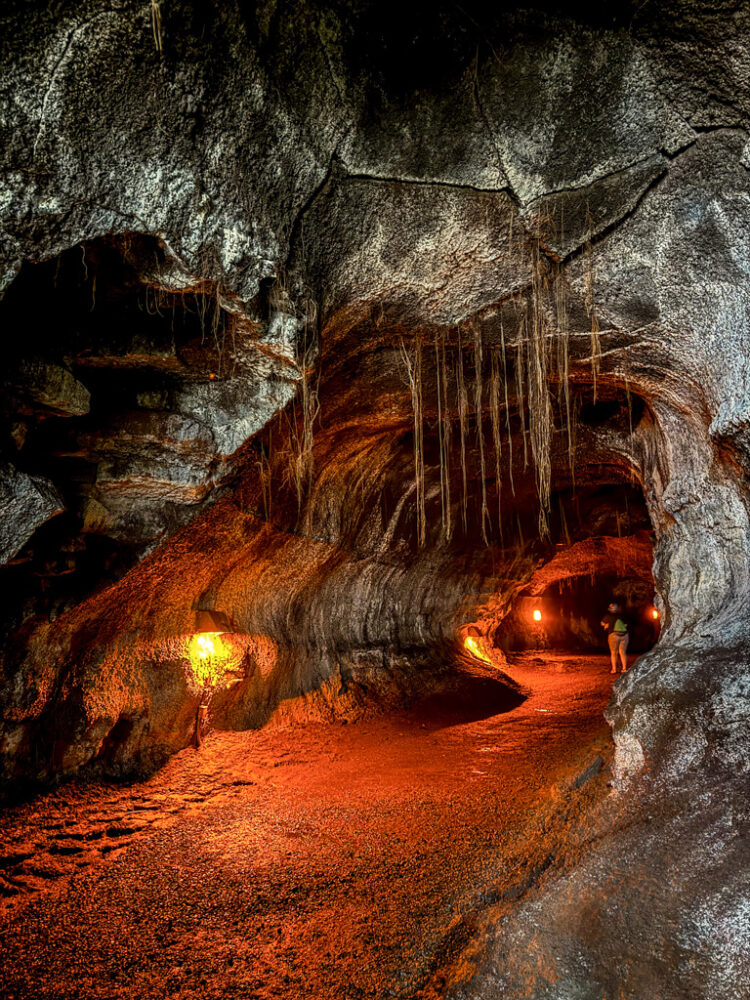
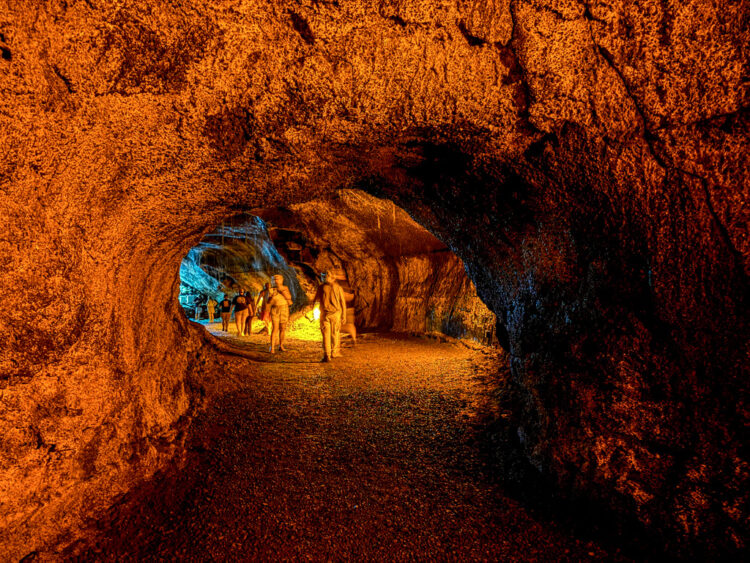
Stop 5: Nāhuku (Thurston Lava Tube)
This ended up being one of my favorite stops in all of Hawaiʻi Volcanoes National Park. I mean, we were literally walking through an underground cave formed by flowing lava – which honestly still sounds fake when I type it out.
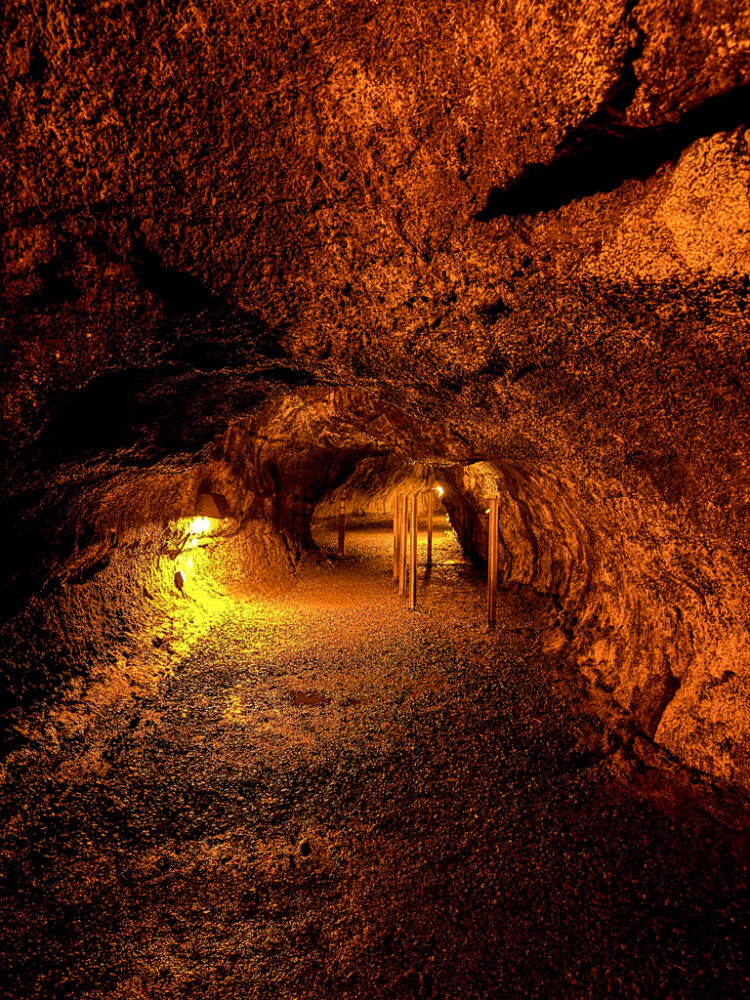
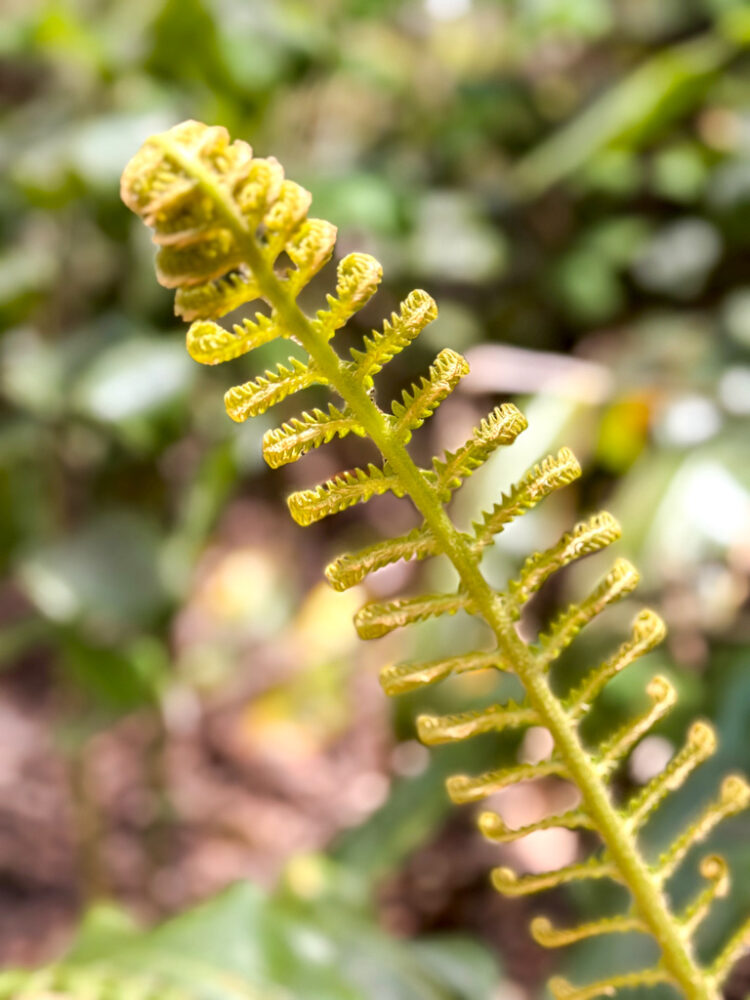
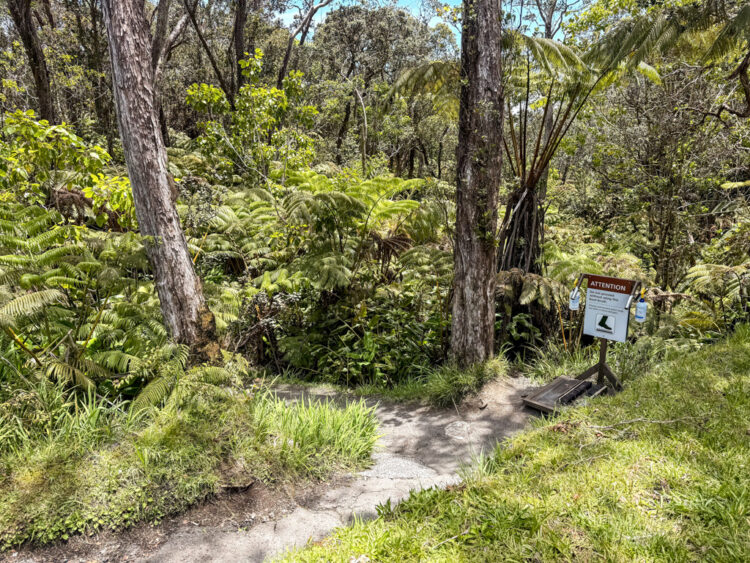
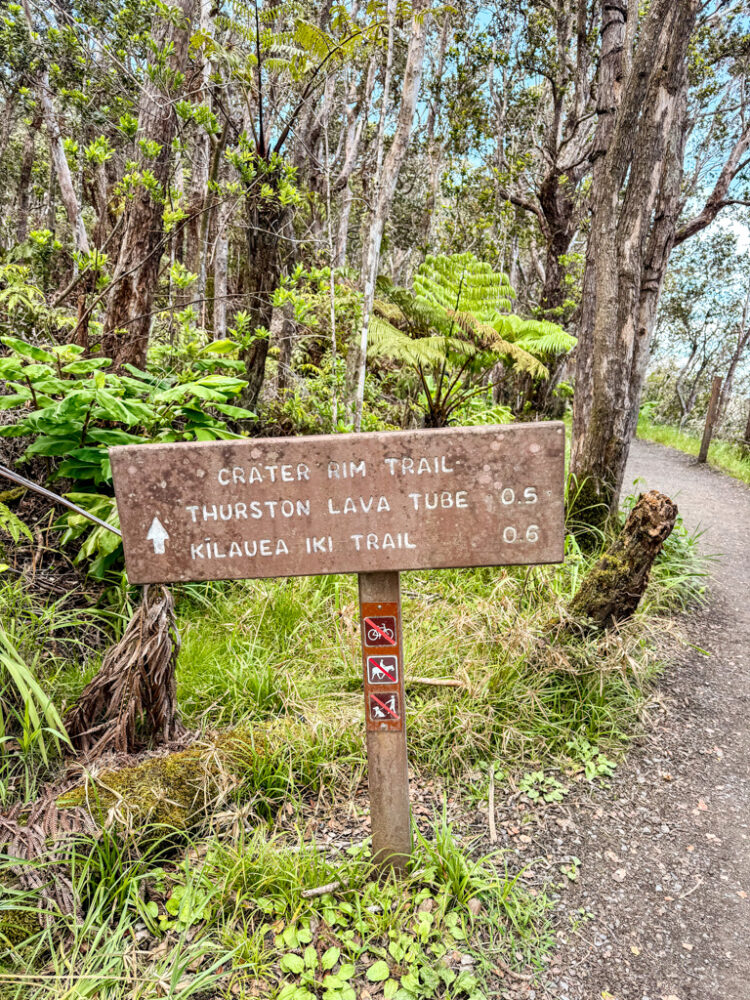
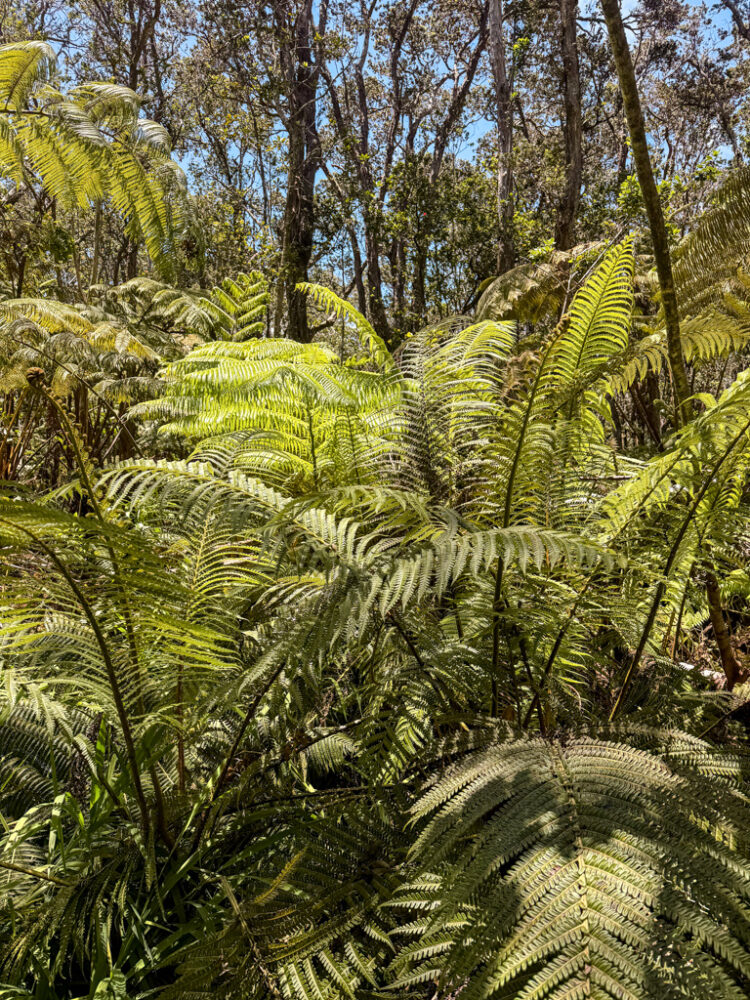
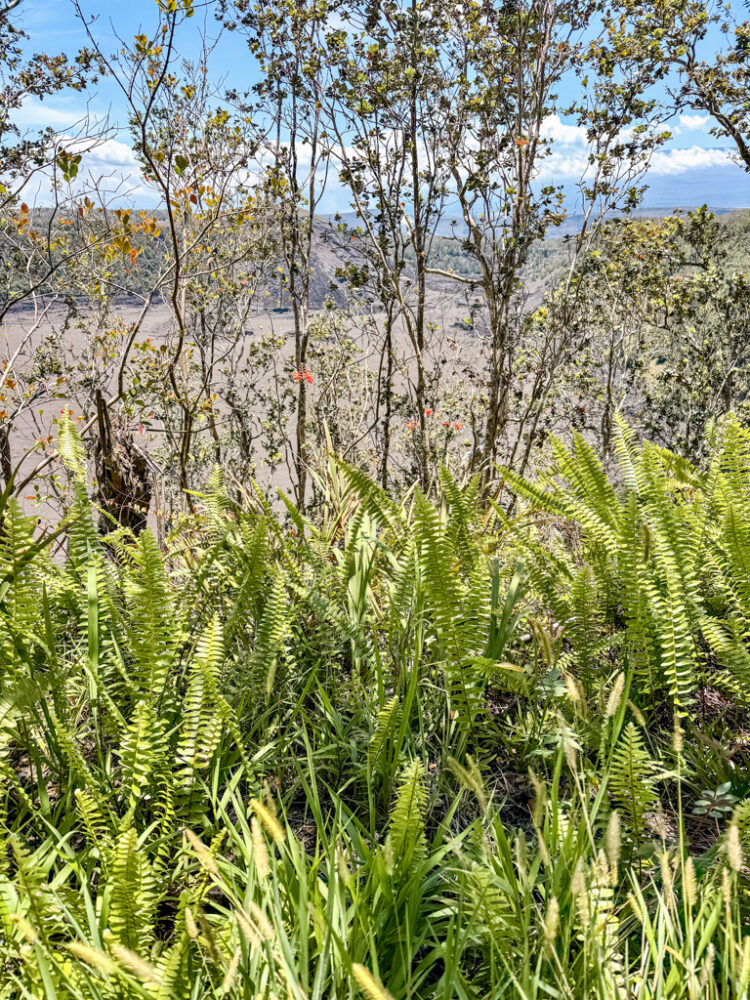
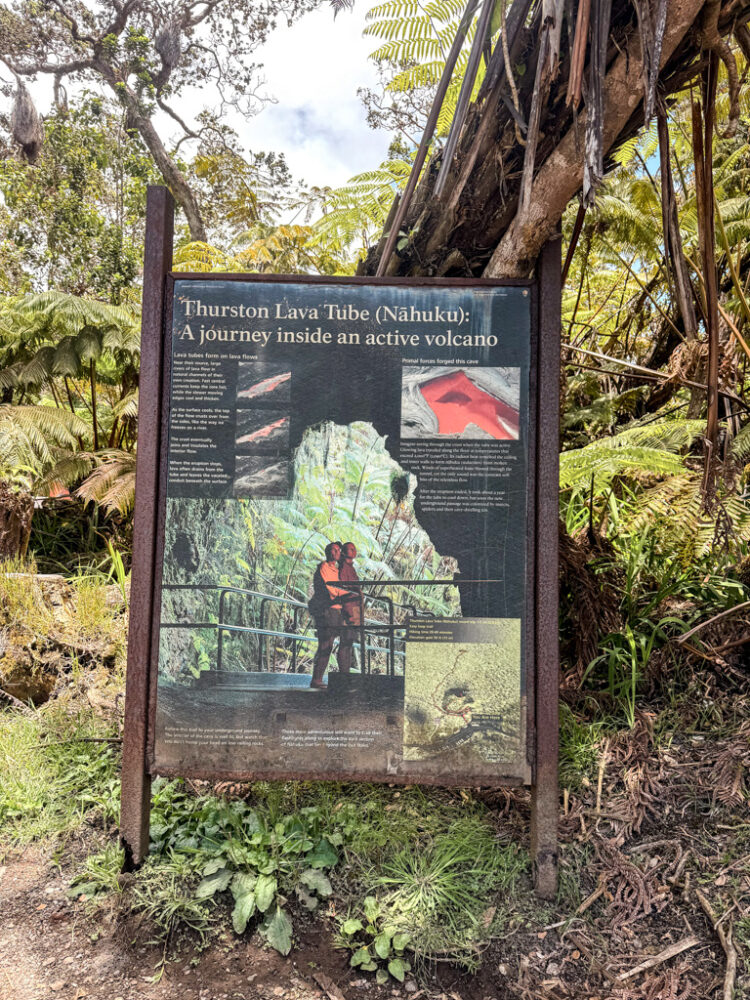
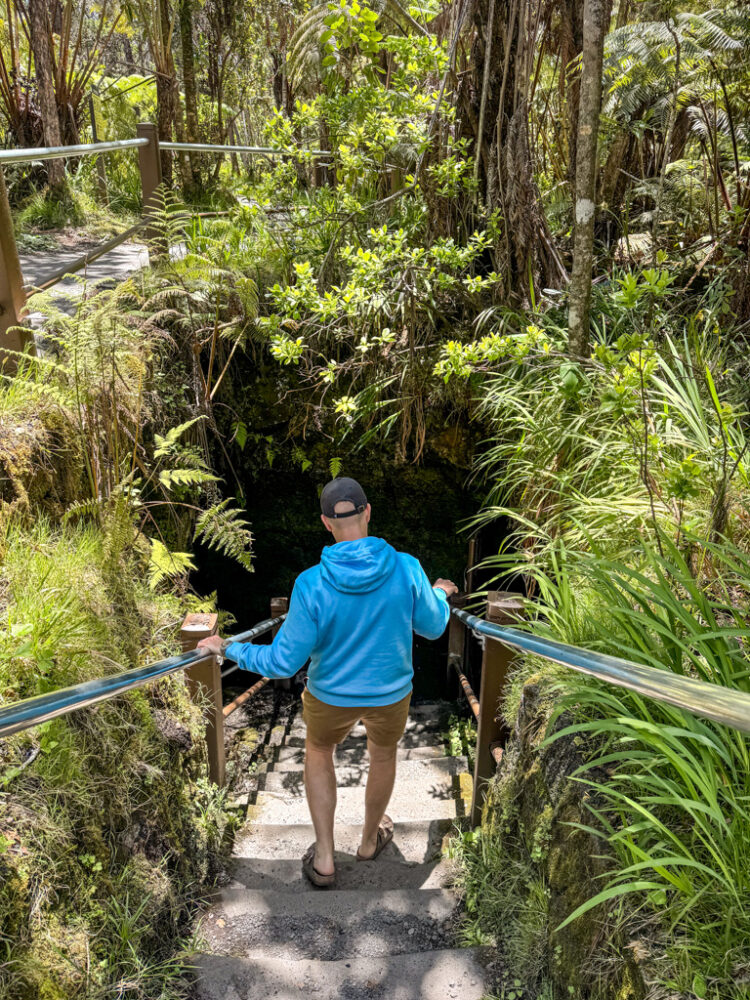
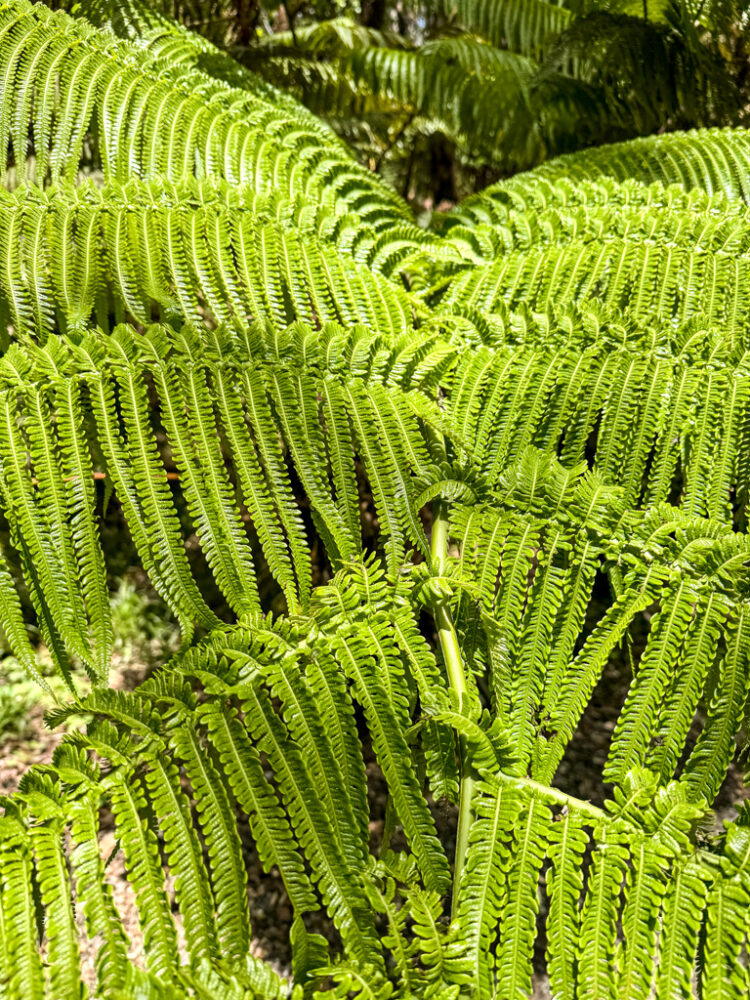
Nāhuku (Thurston Lava Tube) starts with a short walk through dense rainforest filled with giant ferns and lush greenery (kinda like in Olympic National Park up in Washington), and then suddenly… you’re inside a massive underground tunnel created by molten lava hundreds of years ago.
The lava tube is estimated to have formed around 500 years ago during an eruption from Kīlauea. Basically, the outer layer of a river of lava cooled and hardened while molten lava continued flowing underneath it. Once the eruption ended and the lava drained away, it left behind this giant hollow tunnel.
Like yes, logically I understood what a lava tube was before visiting (I think…). But physically walking through a cave that was literally carved out by rushing molten lava made it all click in a completely different way. It’s such a cool reminder that this island is still constantly being shaped and changed by volcanic activity.
And the contrast here is what really got me. One minute everything is green, tropical, and misty, and the next you’re underground surrounded by black volcanic rock. Hawaiʻi Volcanoes National Park does this constantly – the landscapes change so dramatically every few minutes that the entire park feels almost surreal at times.
A few important things to know:
- Parking here fills up very fast (and I mean, very fast)
- Earlier is definitely better
- Overflow parking is available nearby
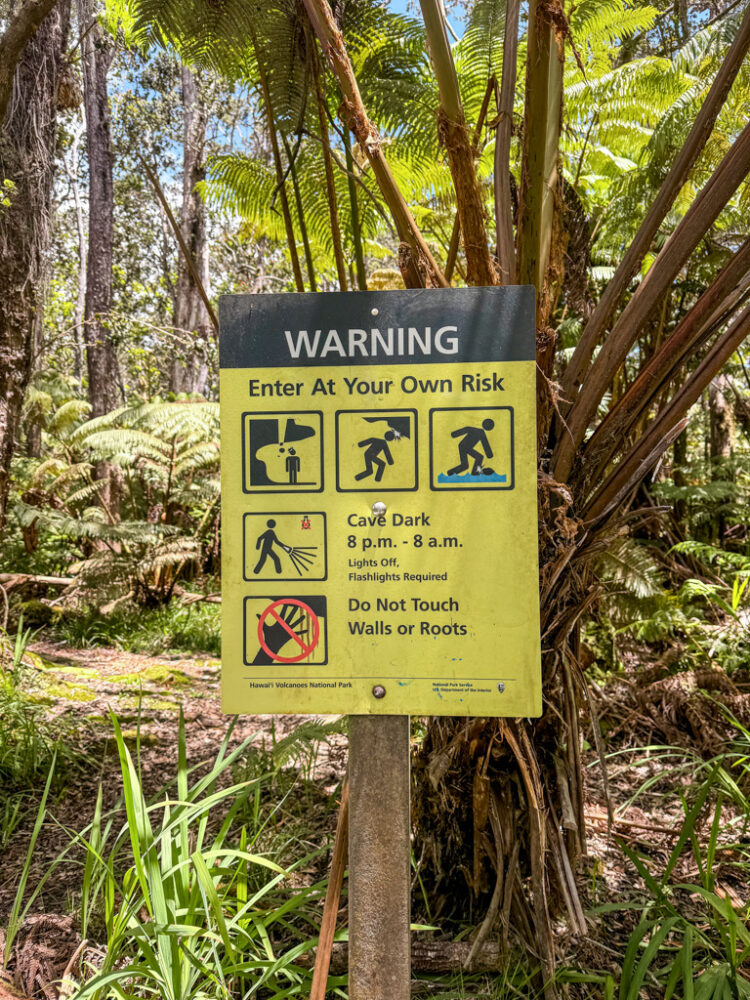
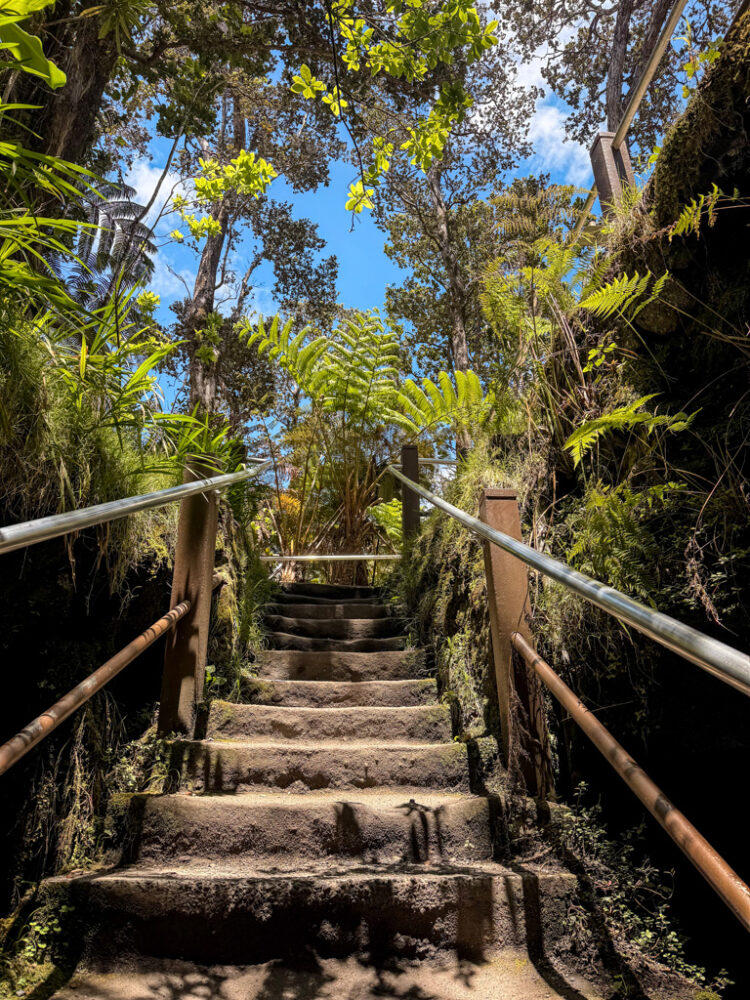
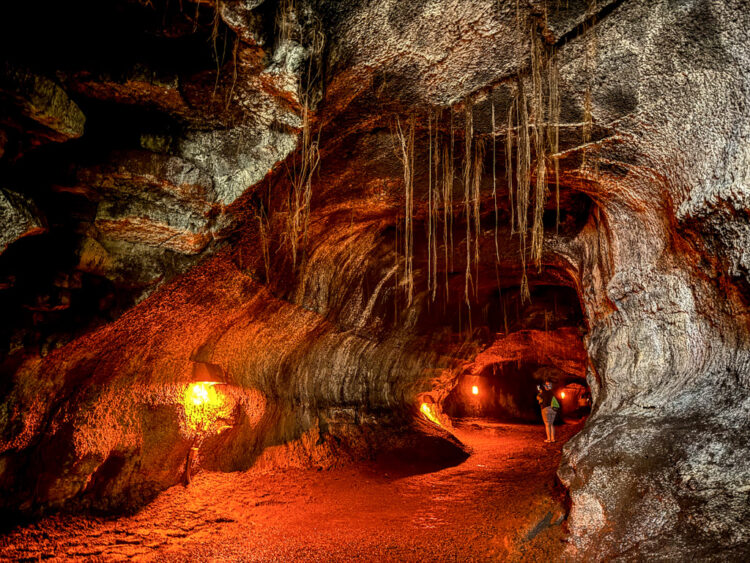
Be careful when walking through the lava tube because it can be dark, wet, and slippery in sections. I was wearing sandals and definitely watched every step I took. Looking back, I’d absolutely recommend sneakers instead.
We actually had to use overflow parking, which adds close to an extra mile each way, but honestly we didn’t really mind. The entire walk is surrounded by beautiful rainforest scenery, and after spending so much time in the car that day, we probably needed the extra steps anyway, haha.
Stop 6: Devastation Trail Area
Next up was Devastation Trail, and I’ll be honest – we definitely didn’t do the whole thing.
It’s a short, paved loop (about a mile round trip), but I swear it felt way longer than that, and the path we followed definitely wasn’t paved, haha (I think we accidentally walked on Byron Ledge Trail instead, so be sure to find the right path before starting).
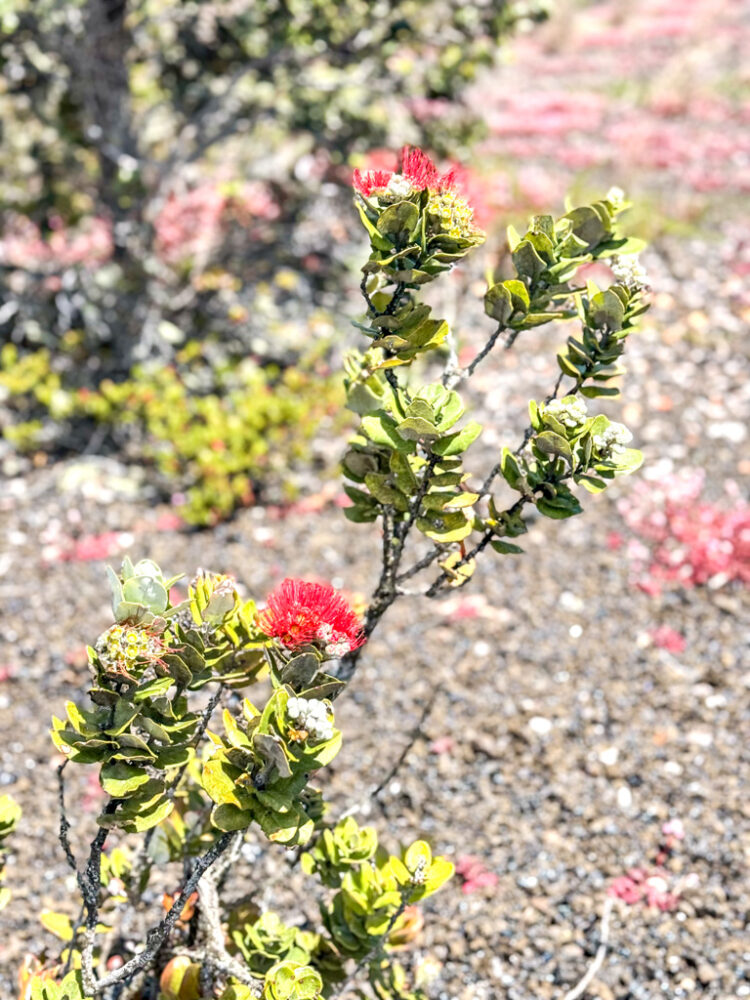
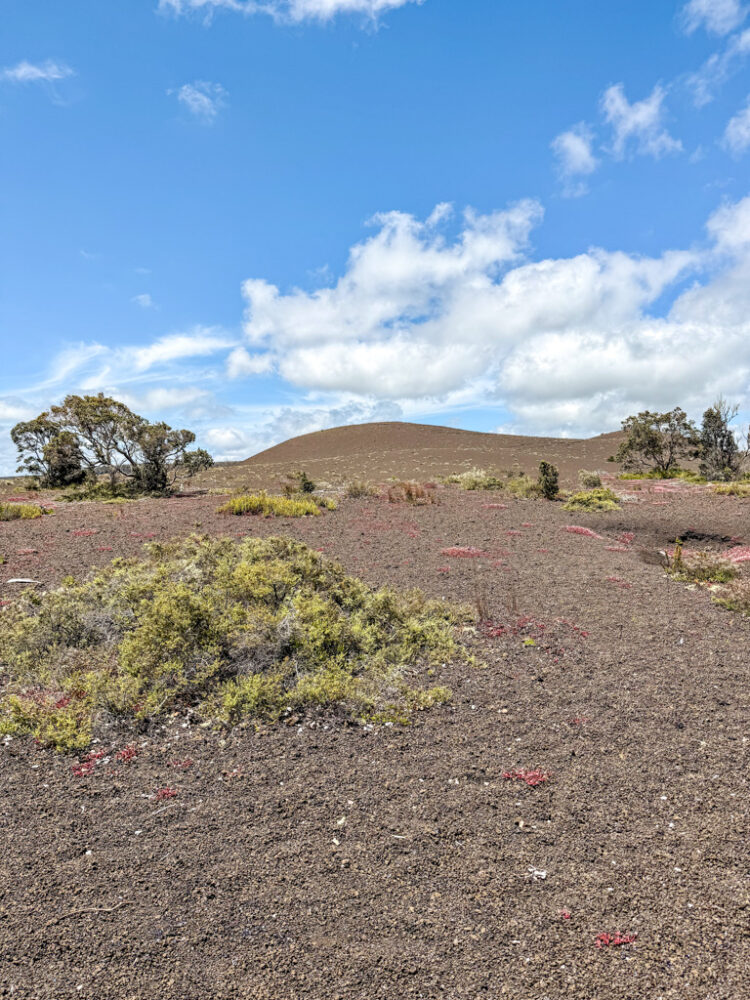
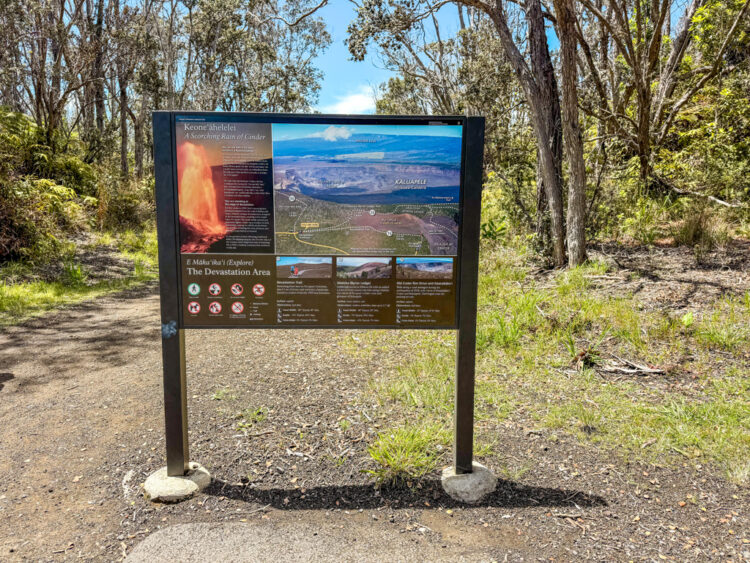
And we didn’t even finish it! Probably because we were already getting tired and rocks kept getting stuck in my sandals (whoops – poor footwear choice on my end; be smarter than me and wear sneakers instead).
Immediately, it felt totally different from everything else we’d seen in Hawaiʻi Volcanoes National Park.
The landscape is stark. Dark. Almost eerily quiet compared to the steam vents and crater viewpoints. And I wasn’t even entirely sure at first what I was looking at – until it clicked that we were walking across a battered, charred landscape shaped by past eruptions.
This area was heavily impacted by the 1969 Kīlauea Iki fountain eruption, when massive lava fountains and explosive activity sent volcanic cinders (scoria) raining across the landscape. The result was a thick blanket of volcanic material that completely buried the area and left behind the barren, almost lunar-looking terrain you see today.
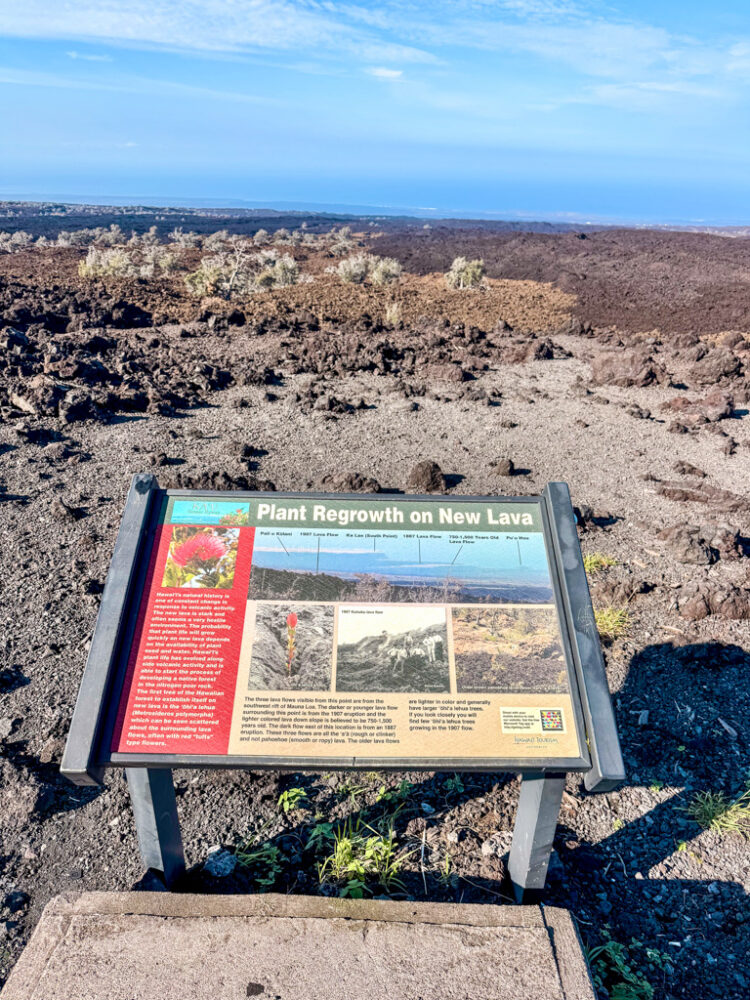
Even now, decades later, you’re still walking through the aftermath of that eruption. Vegetation is slowly coming back in patches, but a lot of it still feels raw and exposed, like the land is still very much in the process of recovering.
Which honestly makes the whole walk even more surreal.
Stop 7: Chain of Craters Road
Now for what ended up being one of my favorite parts of the entire park – Chain of Craters Road! Probably because I’m an absolute sucker for the ocean, haha.
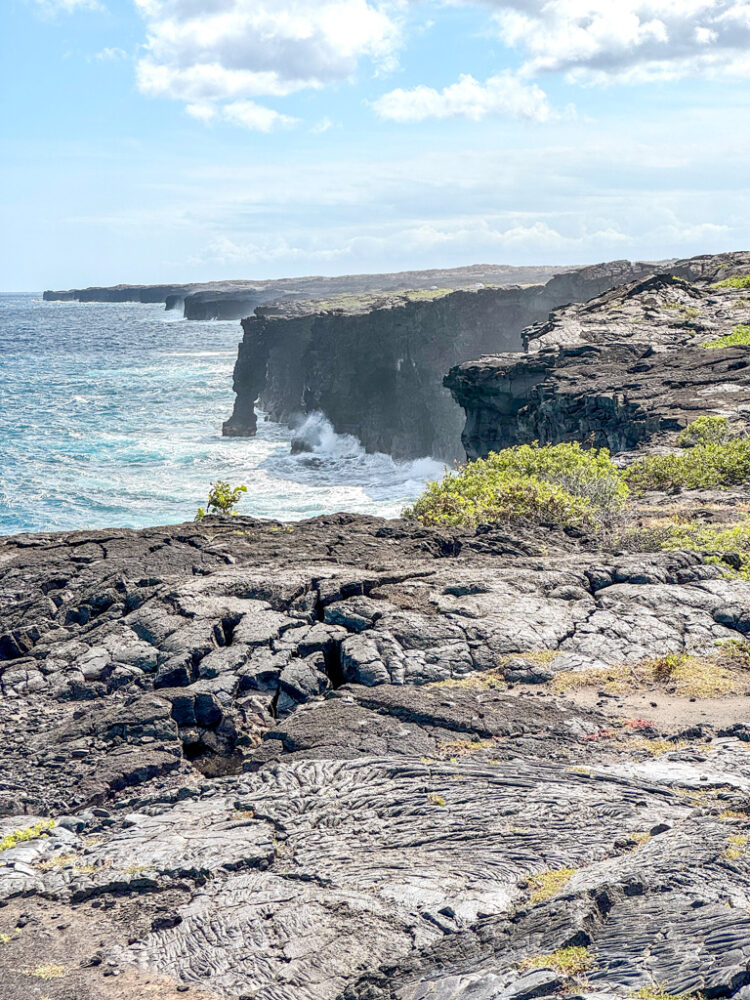
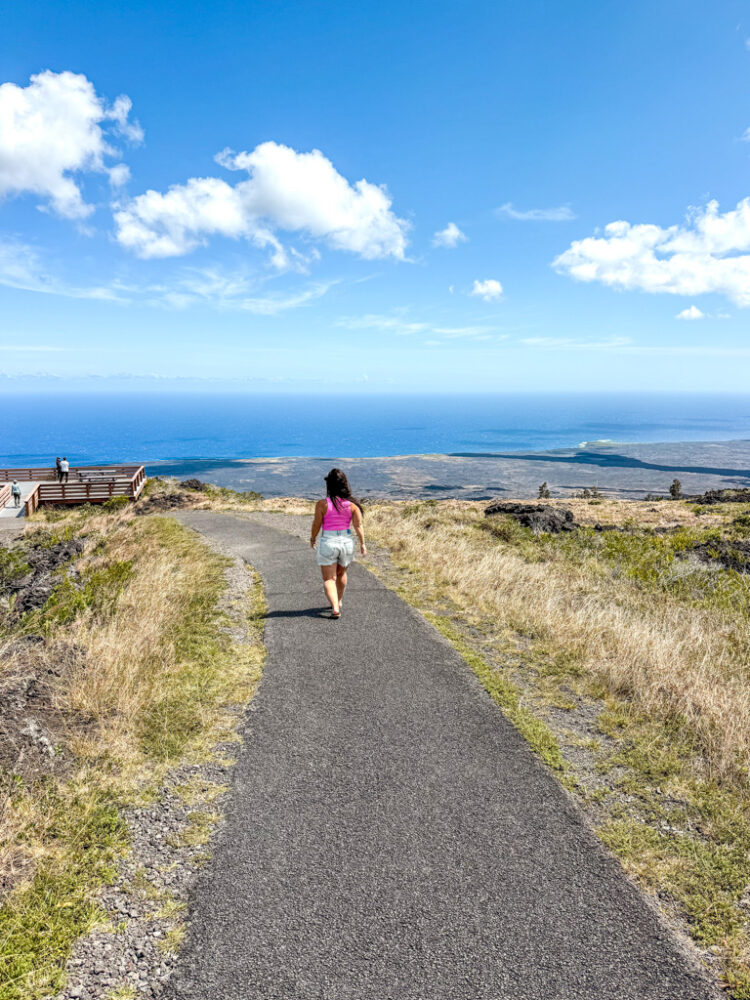
This 19-mile road winds from the higher elevations of Hawaiʻi Volcanoes National Park all the way down toward the Pacific Ocean, and the scenery changes on the drive constantly! You never know what you’ll see next.
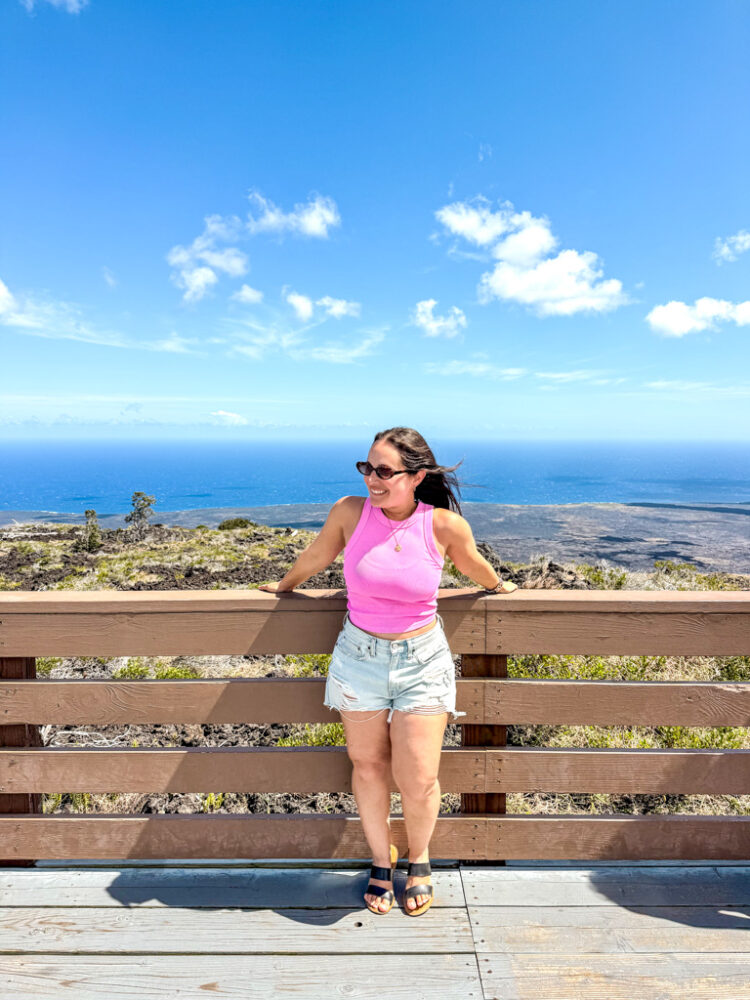
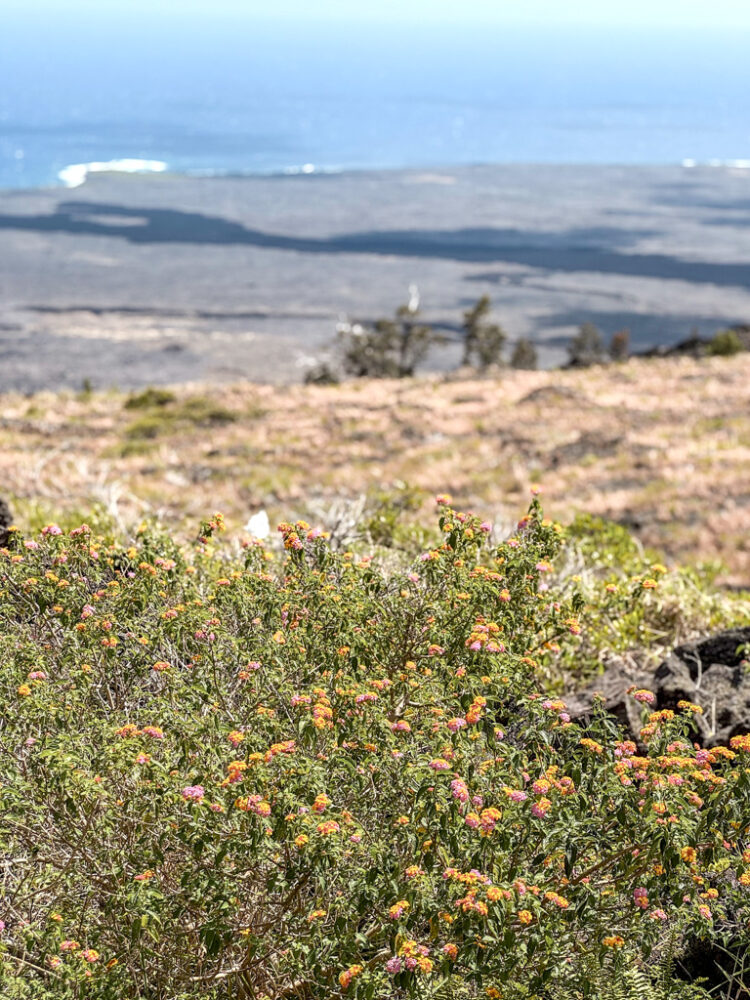
You’ll pass:
- hardened lava fields
- old lava flows
- volcanic craters
- jagged black rock formations
- dramatic coastal viewpoints
Honestly, parts of this drive didn’t really feel like Earth. It’s just miles of black lava rock in every direction, with no break in the landscape. My husband had to remind me to put my camera away and just take it in, lol.
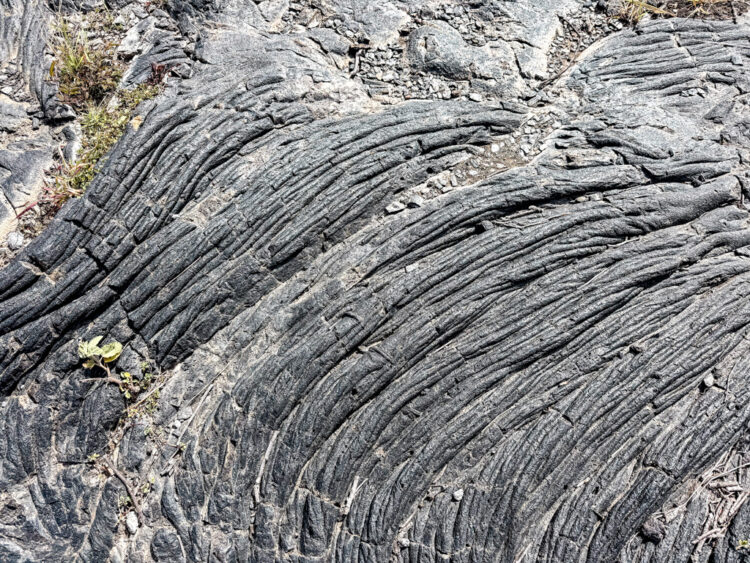
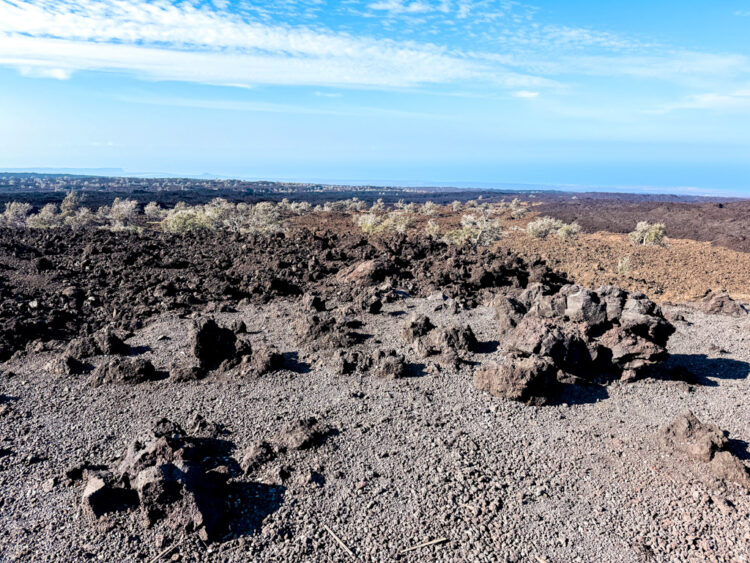
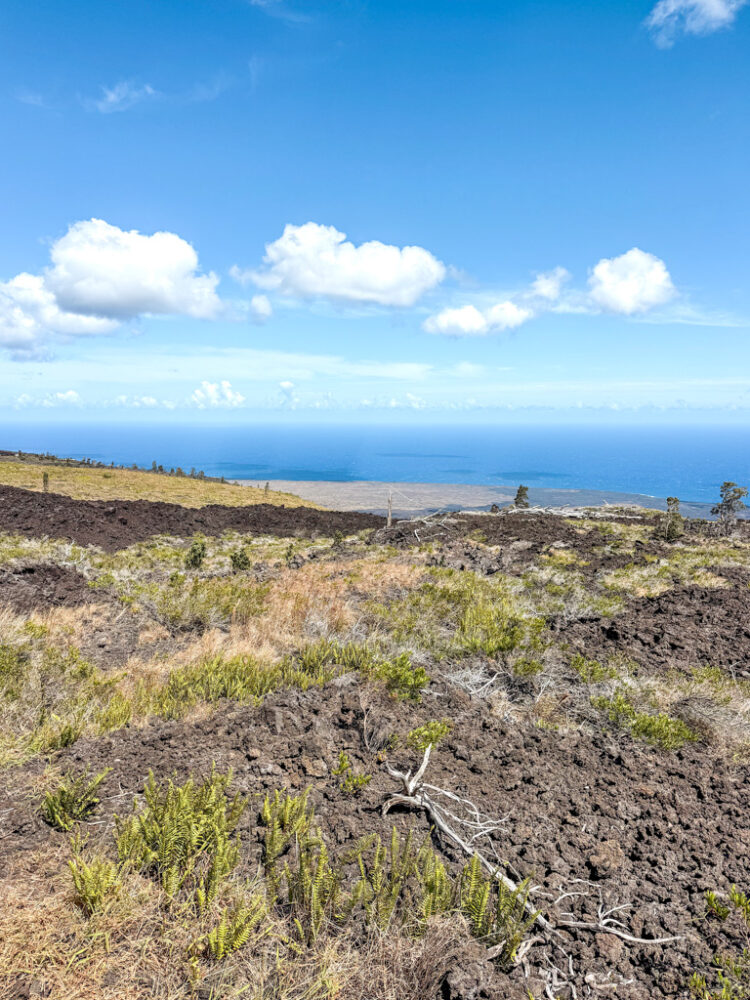
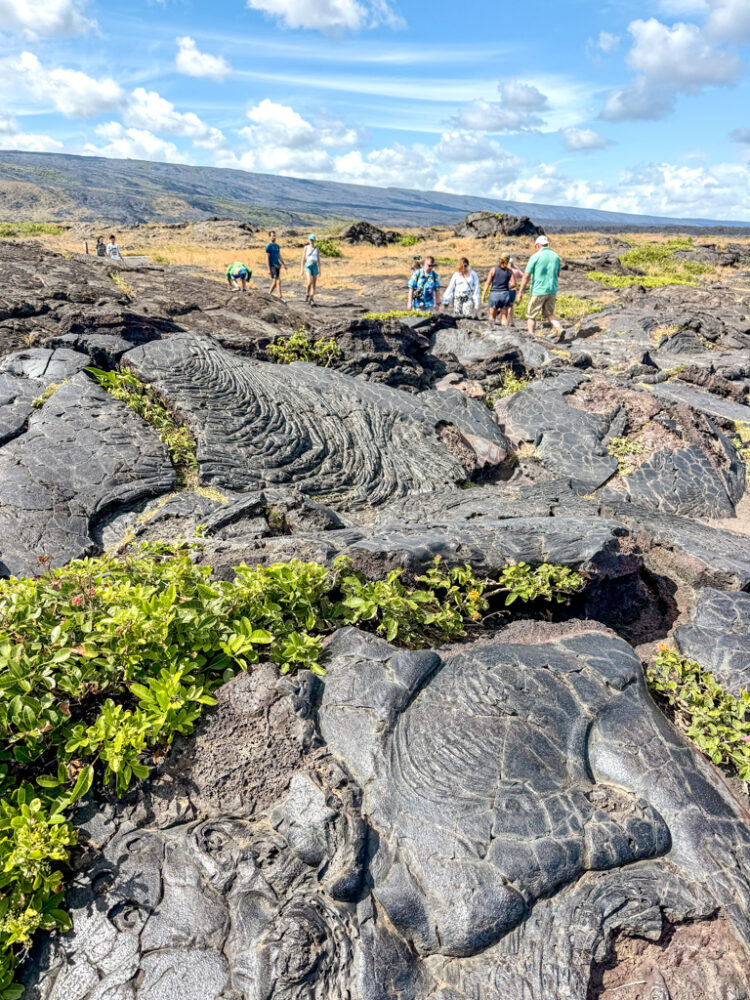
What surprised me most was the scale of the lava fields. You’ll drive past huge stretches of hardened lava that completely buried everything in their path during past eruptions. It really makes it clear how powerful and fast-moving these flows can be.
Be sure to make time for random scenic pull-offs along the drive because some of the best views honestly aren’t even the “main” stops.
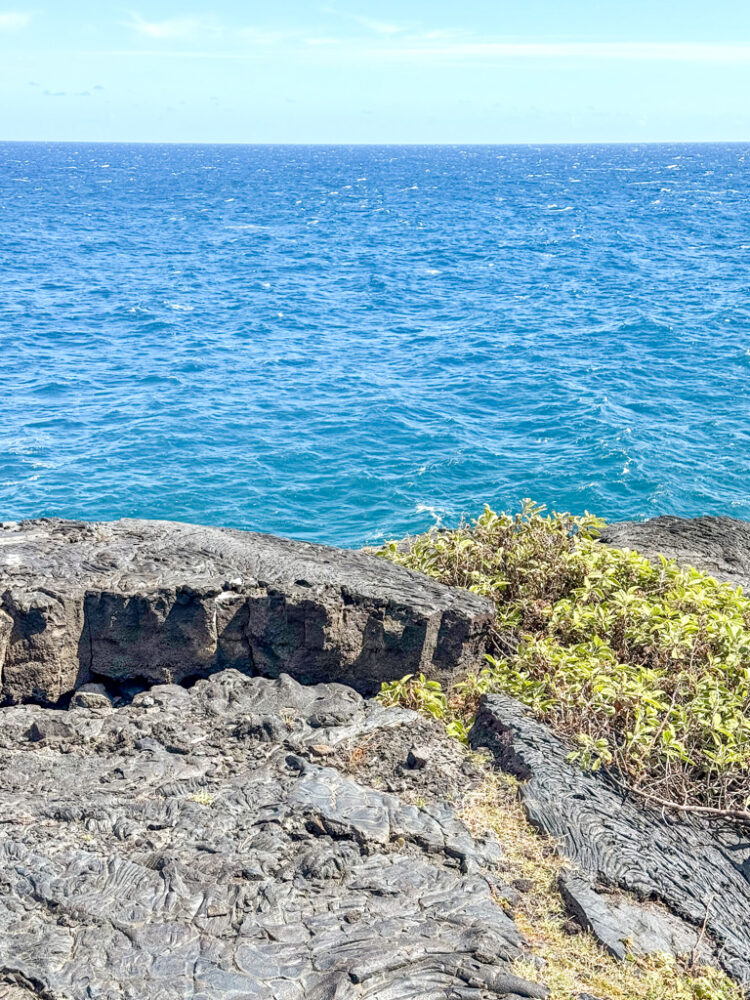
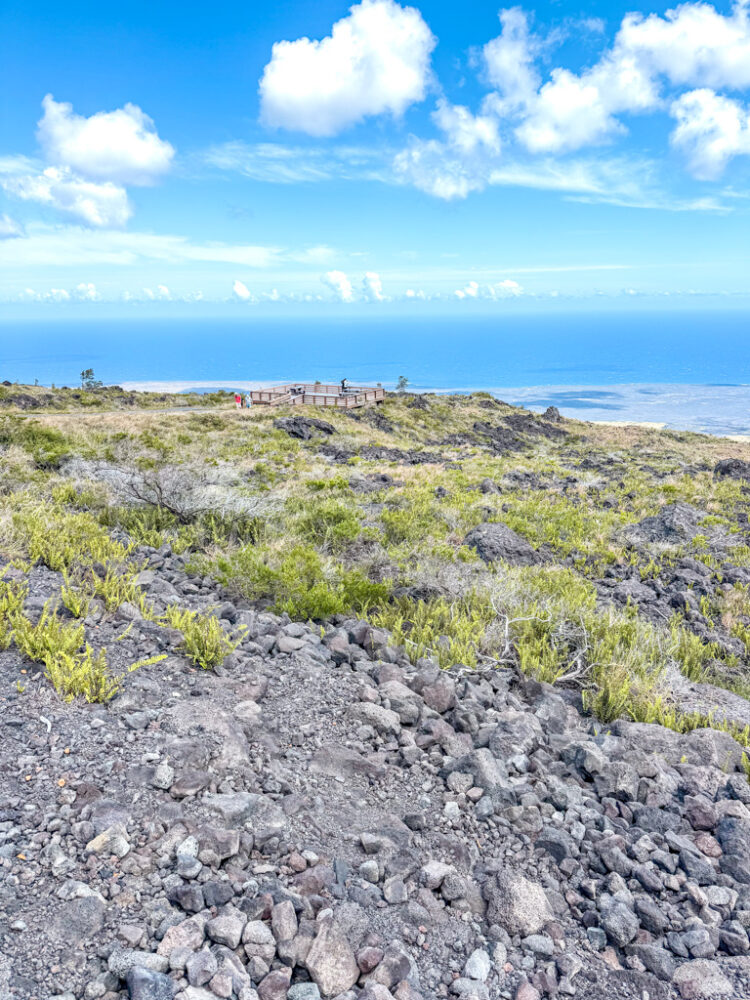
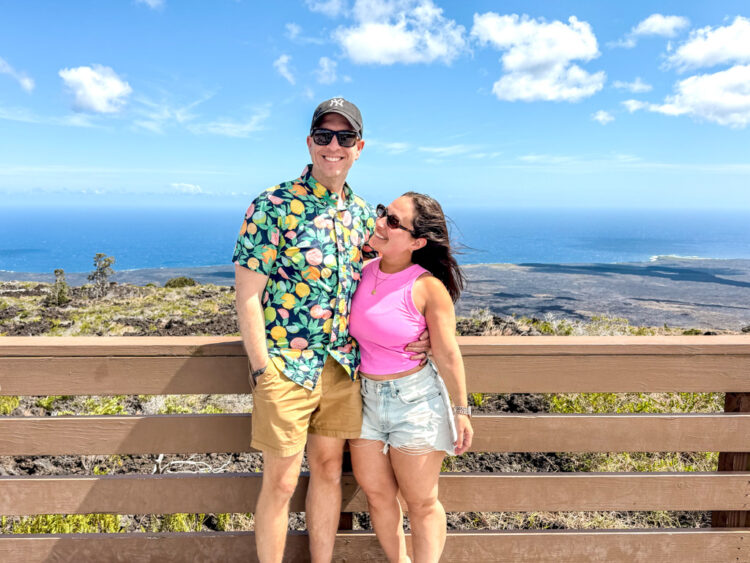
There’s a few official lookouts, but we loved stopping at Kealakomo Overlook – you get this wide-open view of the Pacific Ocean with sweeping lava fields in the foreground. The contrast is what makes this stop so good – black lava fields right up against the deep blue ocean.
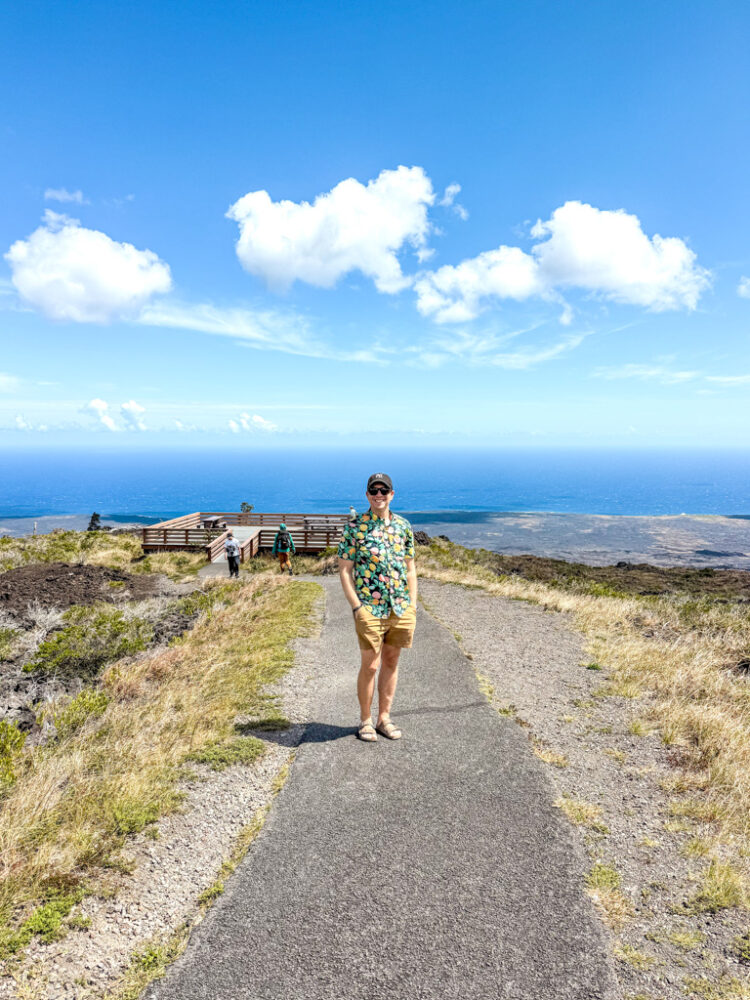
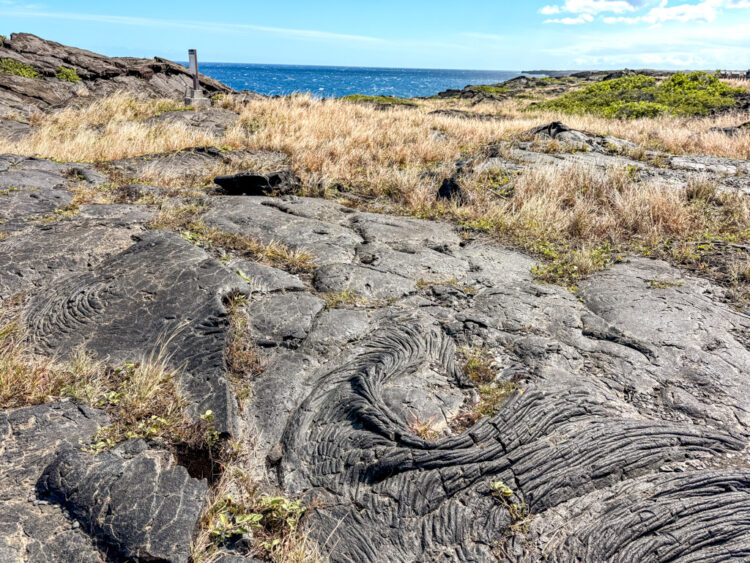
You can also stop at the Puʻuloa Petroglyphs if you want to see ancient Hawaiian carvings etched into hardened lava flows. The petroglyph field contains thousands of carvings created over centuries, making it one of the most significant archaeological sites in the park.
To be completely transparent, we skipped this because we were downright tired and didn’t feel like doing another longer walk, haha. In hindsight, I kind of wish we had at least done the boardwalk a little to see a few petroglyphs. Oh well – there’s always next time.
Stop 8: Hōlei Sea Arch
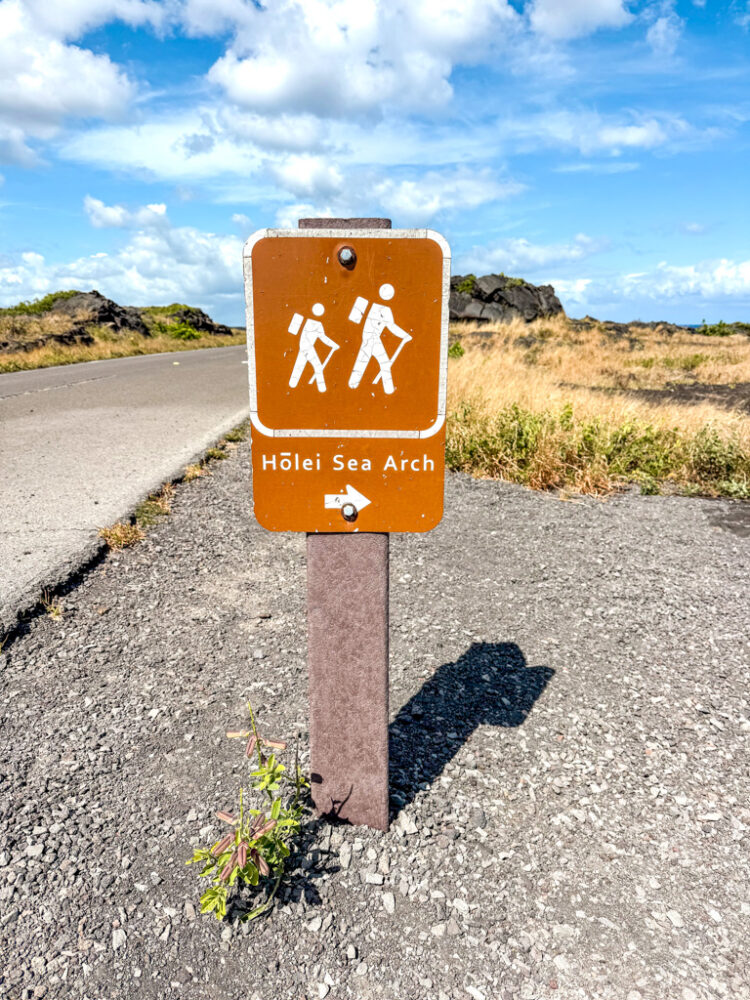
At the very end of the road, you’ll reach Hōlei Sea Arch, a natural lava rock formation carved by ocean waves over time. It used to be part of the cliffside, but constant erosion from the Pacific has slowly worn away the softer rock, leaving this arch-shaped opening right along the coastline.
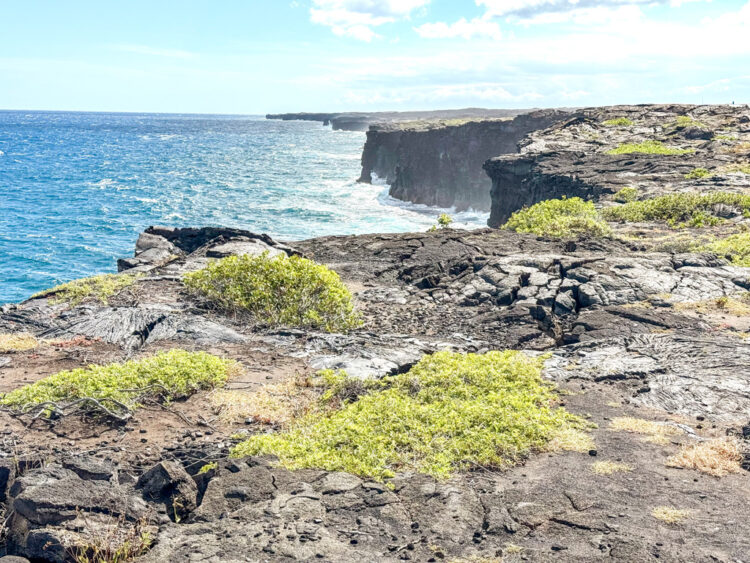
And you bet it’ll keep on collapsing over time as erosion continues (kinda like how the Twelve Apostles at Port Campbell National Park along the Great Ocean Road in Australia keep collapsing).
Okay, full honesty: the sea arch itself is a little underwhelming because the viewpoint is fairly far away, and it looks smaller in person than you might expect from photos. I took mine at 2x or 3x for sure. You’ll need to walk a few minutes to get to the actual coast so don’t expect to see it right away.
BUT I still absolutely think you should drive all the way down here because the drive is really the highlight, not the arch itself. The landscape along the way is unreal – endless lava fields, dramatic coastal cliffs, and waves crashing against black rock formations that feel almost prehistoric.
Even if the final stop isn’t the most exciting viewpoint in the park, the drive down feels like the payoff.
Optional Add-Ons If You Have Extra Time or Energy
If you’ve still got energy left after the main stops (we did not!), there are quite a few additional hikes and trails you can add depending on how active you want your day to be. My husband didn’t really wanna drive back to Kona in the dark (I don’t blame him), so we left the park around 4pm and made it back for a stunning sunset.
Kīlauea Iki Trail
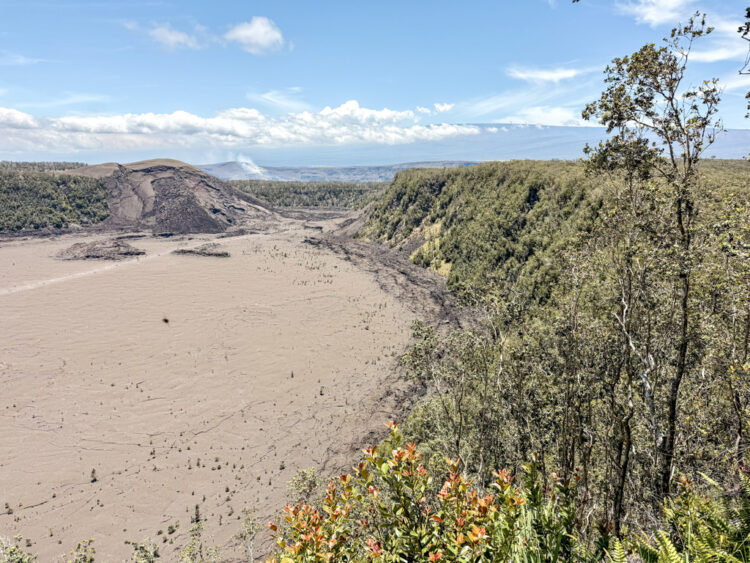
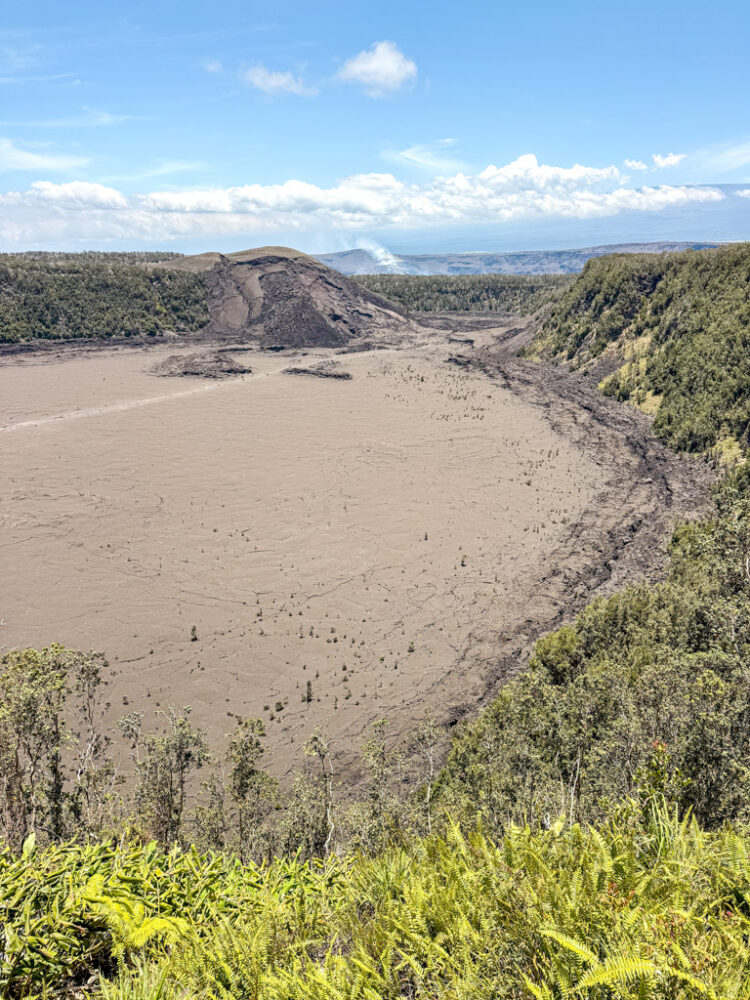
If I went back and had more time/energy, this is probably the hike I’d prioritize most. The Kīlauea Iki Trail loop takes you down through rainforest and onto the floor of an old volcanic crater, where you’ll literally walk across hardened lava from past eruptions.
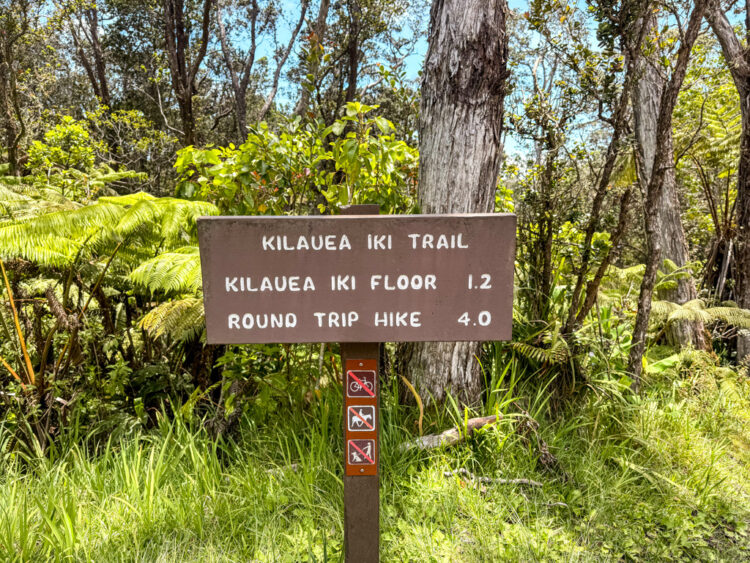
The landscape looks completely surreal – huge cracked lava fields surrounded by steep crater walls and steam vents still rising from parts of the ground. It’s one of the park’s most popular hikes for a reason. Definitely plan to wear sturdy hiking boots if this trail is on your bucket list.
The trailhead is near the Nāhuku (Thurston Lava Tube) area, which is also why overflow parking nearby can actually work out nicely if you plan on combining both.
Just note that it’s moderately challenging, so expect uneven terrain and bring water because the crater floor gets HOT and exposed midday.
Crater Rim Trail
You can also walk sections of the Crater Rim Trail, which connects various overlooks and volcanic features throughout the park. You definitely don’t need to hike the entire thing, but shorter sections are a nice way to stretch your legs between drives.
Hope this helps you plan a wonderful one day in Hawaii Volcanoes National Park! Are you headed to the Big Island soon?!




Leave a Reply