Hoping to plan the perfect 3 days in Cusco, Peru?! You’re in the right place! I’m sharing my ultimate Cusco itinerary, including exactly what to see, where to eat, and the best day trips to take.
There’s a reason Cusco is on everyone’s Peru itinerary – it’s absolutely amazing! As soon as I arrived, I could tell this historic Andean city would completely steal my heart – in all the best ways possible! I promise you, from ancient Incan ruins and colorful markets to charming cobblestone streets, incredible Peruvian food, and some seriously epic mountain scenery, there’s a LOT to love here. If you’ve only got 3 days in Cusco, don’t worry – I’ll show you exactly how to make the most of it.

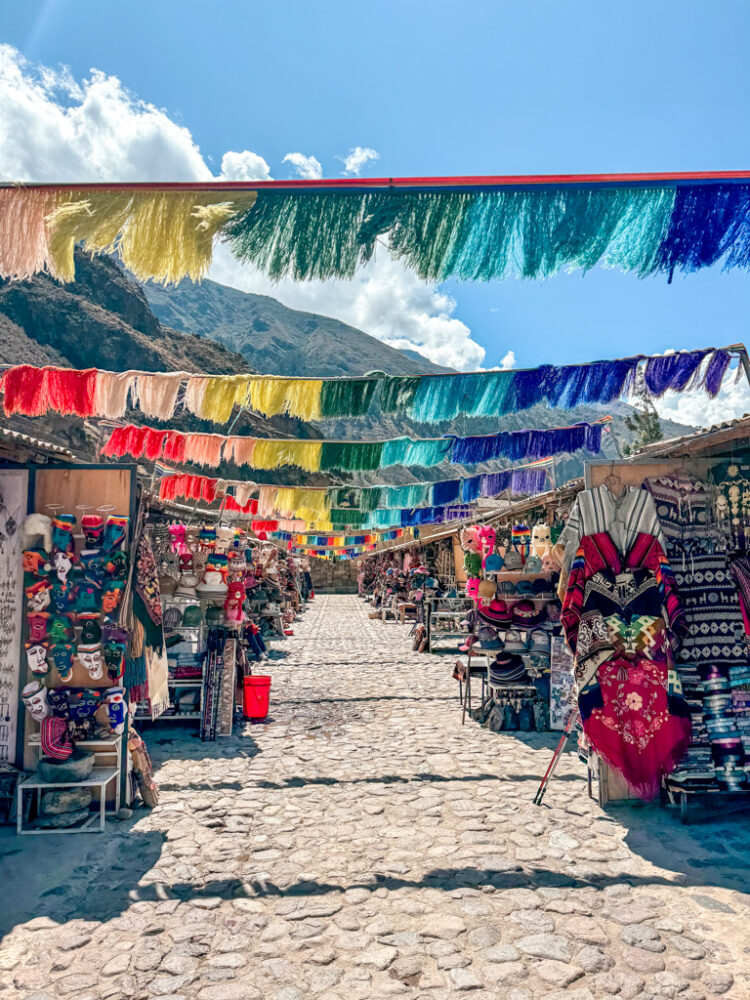

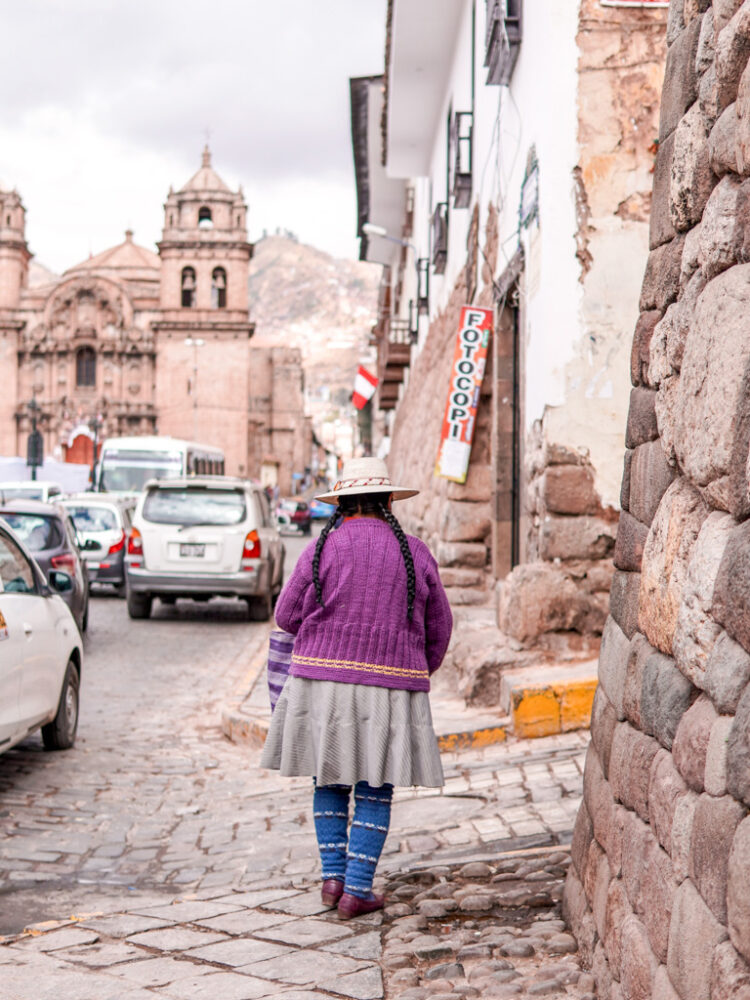
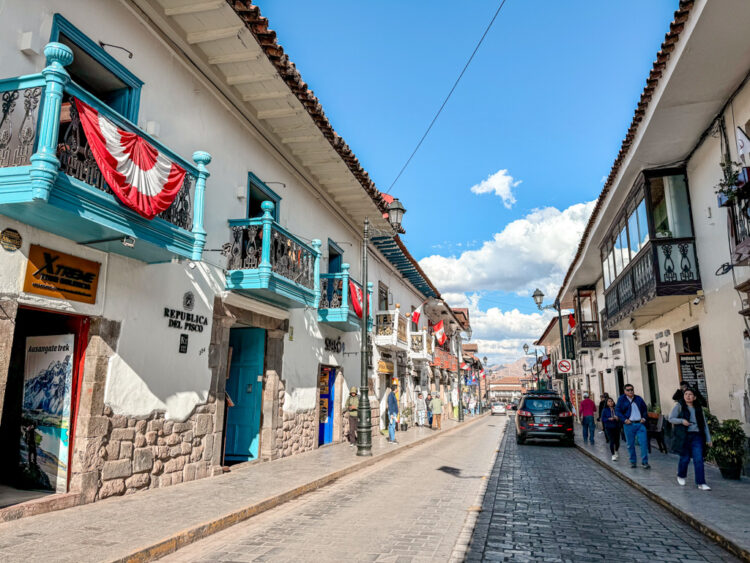
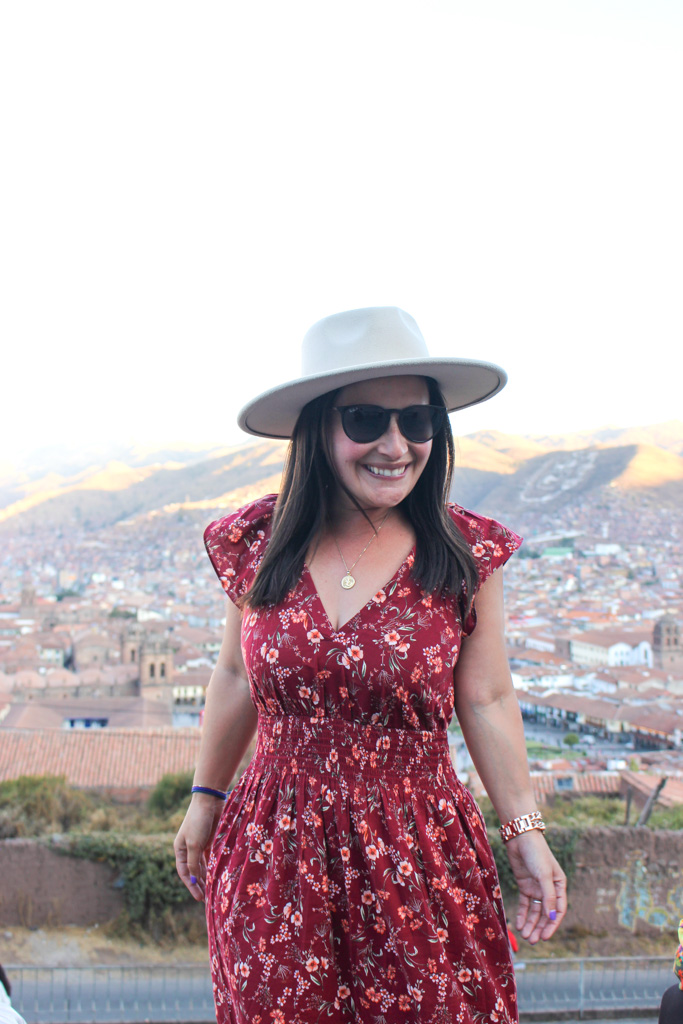
Imagine terracotta rooftops stacked along steep hillsides, snow-capped Andean peaks rising in the distance, and narrow cobblestone streets winding through a city built on layers of Incan foundations and Spanish colonial architecture. Add lively plazas, colorful artisan markets, cozy cafés, and way too many cups of coca tea, and you’ve got Cusco. This historic city may sit more than 11,000 feet above sea level, but it’s overflowing with history, culture, and character. And I loved every second of it (yes – even when I couldn’t catch my breath because of the altitude…).
By the time I got to Cusco, I was already a couple of weeks into my 3-week Peru trip – having explored Lima, the coastal deserts of Paracas and Huacachina, the dramatic landscapes of Arequipa and Colca Canyon, and the surreal beauty of Lake Titicaca. But Cusco still felt like a whole new chapter. There was SO much to see and do, and I quickly realized I could’ve used another day or two here!
Was it amazing? Yes. Did I drink my weight in coca tea? Also yes. Would I do it all again? 1000%.
Just FYI – Cusco is HIGH. Like, really high (just like Arequipa!). If you’re coming straight from sea level, especially somewhere like Lima, you’re probably going to notice the altitude. So if you have some flexibility in your Peru itinerary, I’d actually give that extra day to Cusco. This 3 day Cusco itinerary is pretty packed, and having an extra day would give you some time to explore at a slower pace and let your body adjust before tackling the Sacred Valley and Rainbow Mountain.

But if 3 days in Cusco is all you’ve got, don’t worry – you can still fit in A LOT. Just be prepared for some busy days (and probably a little huffing and puffing along the way, haha). So let’s get to it – the most perfect Cusco itinerary coming right up! But first, some important logistics.
Information on 3 Days in Cusco
Where is Cusco?
Cusco is tucked high in the Peruvian Andes, right in southeastern Peru. Sitting at around 3,400 meters (11,150 feet) above sea level, it’s one of the highest major cities in the world – so yeah, the altitude here is no joke! Especially if you’re coming straight from somewhere like Lima, which sits right at sea level.
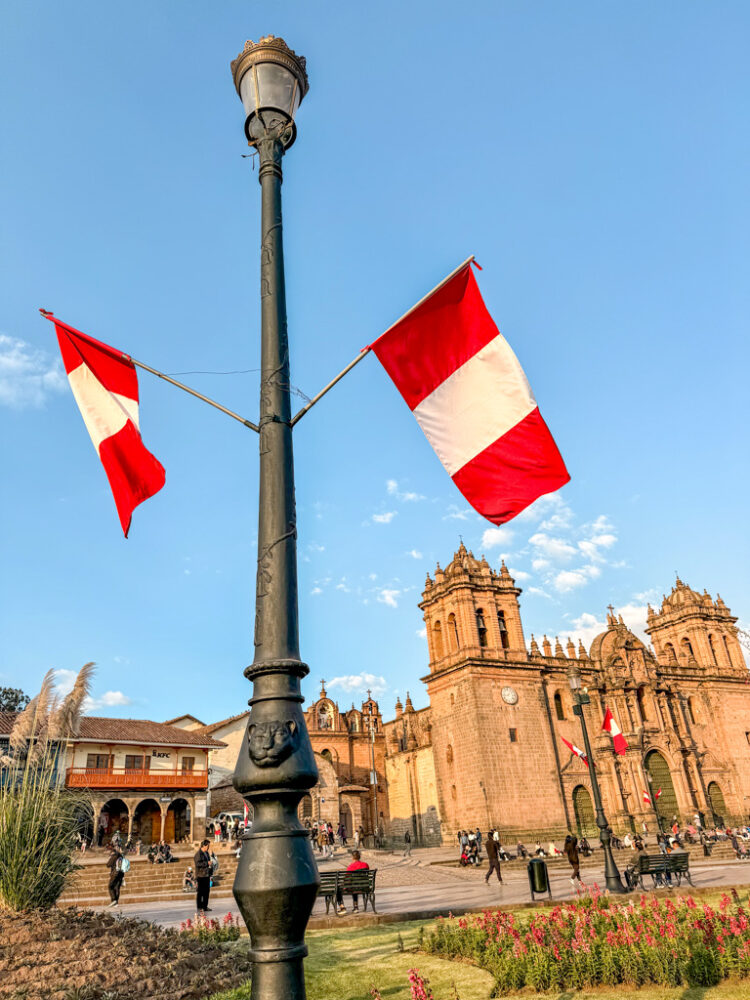
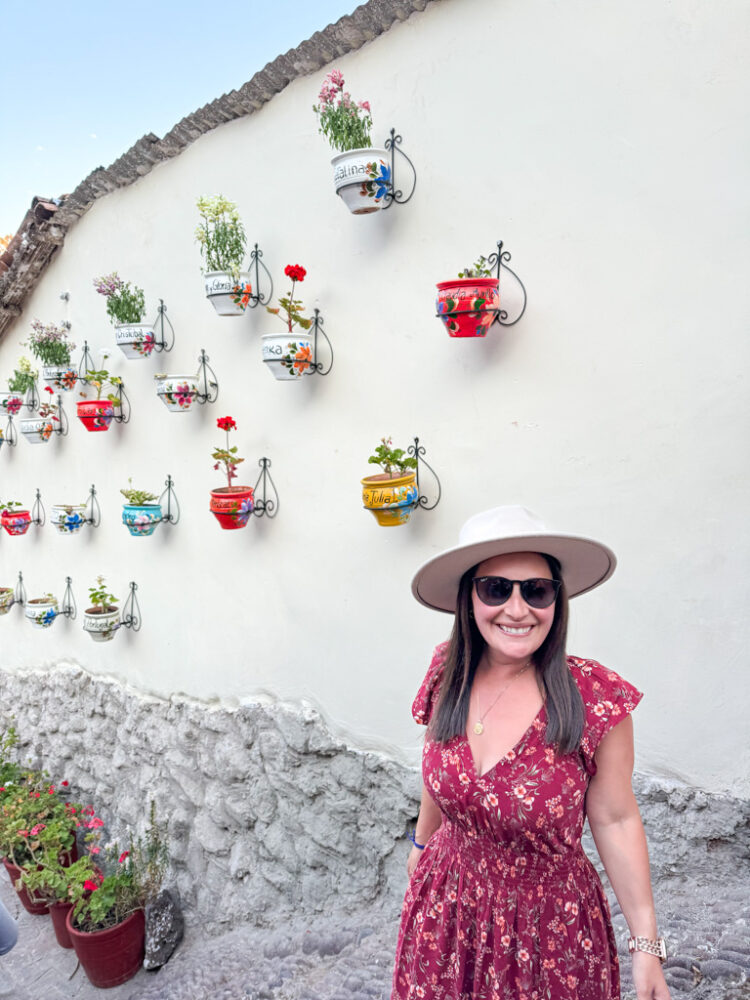
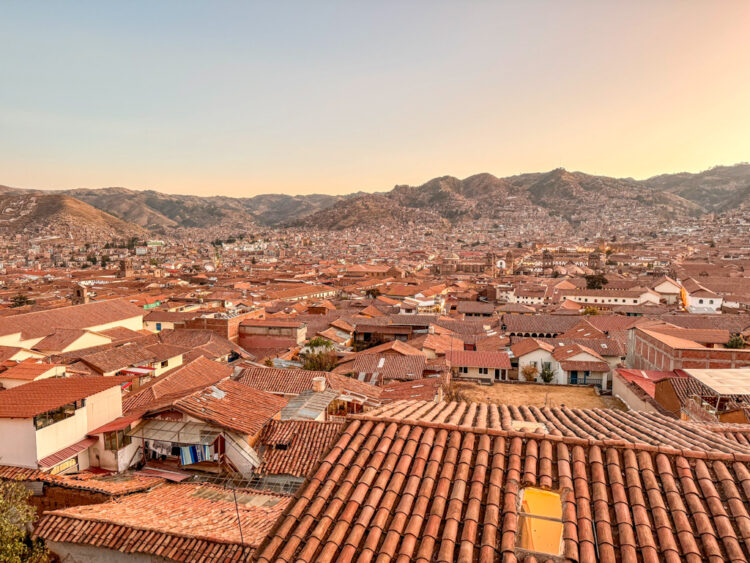
This historic city is about 570 kilometers (355 miles) southeast of Lima, surrounded by dramatic Andean mountains and valleys. And because of its location, the city has a pretty unique mix of landscapes – think steep hillsides, snow-capped peaks, green valleys, and those gorgeous terracotta rooftops Cusco is known for. SWOON!
Its location also makes Cusco the perfect base for exploring some of Peru’s biggest bucket-list attractions. Think Machu Picchu, the Sacred Valley, and Rainbow Mountain, which is a big part of why Cusco ends up on pretty much every Peru itinerary (makes sense, right?!)
And honestly, that’s one of the things I loved most about Cusco! You can spend the morning wandering ancient Incan ruins and colorful markets in the city, then head out into the Andes for some seriously incredible scenery. Talk about the best of both worlds!
How to Get to Cusco
Flying Internationally
Unless you’re already traveling around South America, you’ll almost certainly need to fly into Lima first. Jorge Chávez International Airport (LIM) is Peru’s main international gateway, with nonstop flights from cities throughout North America, Europe, and Latin America. Unfortunately, there’s no nonstop flights from my home airport of SFO, so I had to connect in Los Angeles.
From Lima, it’s just a quick 1½-hour domestic flight to Cusco’s Alejandro Velasco Astete Airport (CUZ). Flights run throughout the day, with plenty and plenty of options, so it’s by far the easiest (and most popular) way to reach the city.
Just remember – going from Lima to Cusco means going from sea level to more than 11,000 feet, so your body is probably gonna have some opinions about that, haha. Take it slow when you first arrive and give yourself some time to adjust to the altitude.
From Elsewhere in Peru
If you’re already traveling around Peru, getting to Cusco is thankfully pretty straightforward!
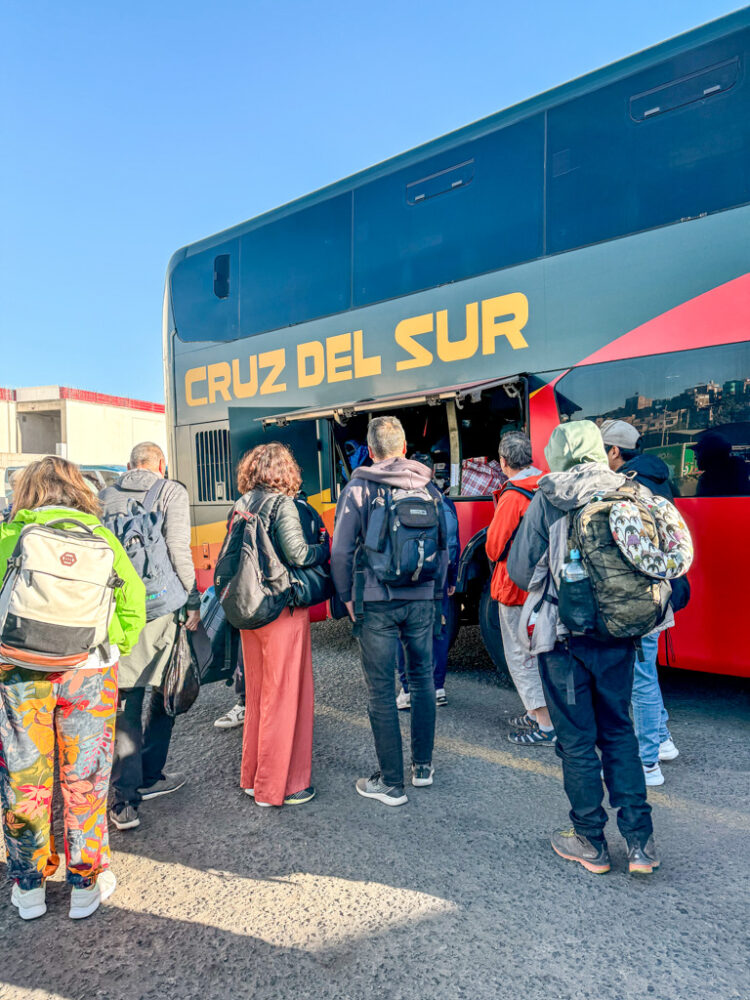
- From Lima: A quick 1½-hour flight is the easiest option. There are overnight buses as well, but at around 20-24 hours (ugh, no thanks!), I personally think flying is well worth the extra cost.
- From Arequipa: Direct flights take about an hour, while overnight buses typically take 10-12 hours.
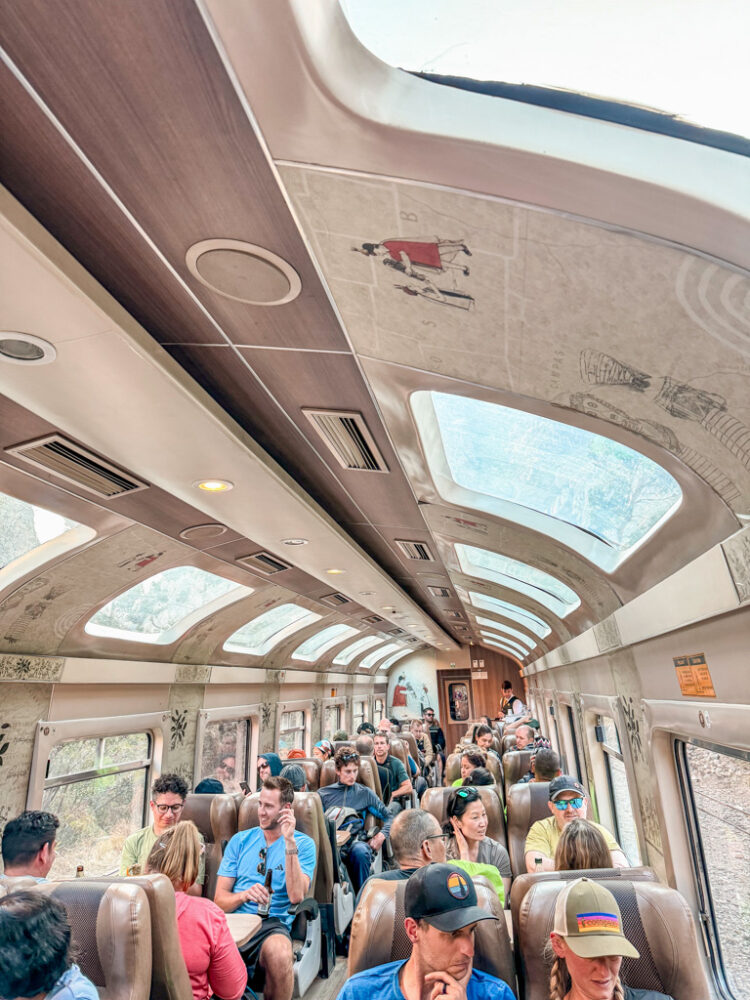
- From Lake Titicaca (Puno): This is one of Peru’s most popular travel routes. You can take an overnight bus, a daytime tourist bus with sightseeing stops (the option I recommend if you have the time), or even the luxurious Belmond Andean Explorer train.
- From the Sacred Valley or Machu Picchu: Most travelers return to Cusco after visiting Machu Picchu. Whether you’re coming from Ollantaytambo, Urubamba, or Aguas Calientes, it’s an easy combination of train and car (or bus) back to the city.
- From the Amazon: If you’re visiting Puerto Maldonado, there’s short direct flights to Cusco that take about an hour, making it super easy to combine Peru’s rainforest with the Andes. I actually flew from Cusco to Puerto Maldonado on LATAM, and it was oh so easy!

From Other South American Countries
Cusco is also pretty easy to reach from other parts of South America, although most international routes require a connection. Many travelers fly from cities like Santiago, Bogotá, Buenos Aires, or Quito via Lima before continuing on to Cusco. If you’re traveling overland, one of the most popular backpacking routes is through Bolivia, crossing near Lake Titicaca before continuing on to Cusco by bus.
And honestly, if you’re already traveling around Peru, I’d fly whenever it makes sense. Peru is HUGE, and some of those bus journeys are really long. I love a scenic bus ride as much as the next person, but I’m not trying to spend 24 hours on one when I could be exploring Cusco instead, haha.
Altitude in Cusco: What You Need to Know
If there’s one thing you should know before spending 3 days in Cusco, it’s this: the altitude is no joke. Before visiting Peru, I was ridiculously worried about it – to the extent that I almost cancelled my trip, haha. But after learning some tips, I felt a lot more prepared and decided to go for it – and thankfully, I ended up being just fine!
Cusco sits at approximately 11,150 feet (3,400 meters) above sea level. To put that into perspective, that’s higher than most people in the U.S. have ever been. It’s significantly higher than places like Denver (5,280 feet), Lake Tahoe (6,225 feet), and Mammoth Lakes (7,880 feet).
If you’ve ever felt a little winded in the mountains, you’ll likely notice the elevation here too.
Some travelers barely notice the altitude, while others experience headaches, shortness of breath, dizziness, fatigue, or nausea. And yup, unfortunately, there’s no way to know ahead of time how your body will react.
Psst: If you’ve already been to other high-altitude destinations (like Arequipa or Lake Titicaca), your body may already be pretty much acclimated. BUT Cusco has stairs and hills unlike the others (you just wait and see…), so I still recommend taking it a bit slow on your first day.
Thankfully, I felt surprisingly good throughout my time in Cusco. Before my trip, I talked with my doctor and was prescribed Diamox (acetazolamide), which I started taking before arriving at altitude. Whether it was the medication, staying hydrated, or just plain luck, I never experienced altitude sickness. I could definitely tell I was over 11,000 feet (especially when walking uphill…) but overall, I felt much better than I expected.
A few things that can help with the altitude:
- Talk to your doctor about Diamox before your trip. Many travelers take it as a preventative medication, but it’s not right for everyone.
- Take it slow on your first day. Save strenuous hikes for after you’ve had some time to acclimatize.
- Drink lots of water and electrolytes. The dry mountain air can dehydrate you faster than you realize.
- Go easy on the alcohol, at least at first. It can make altitude symptoms worse.
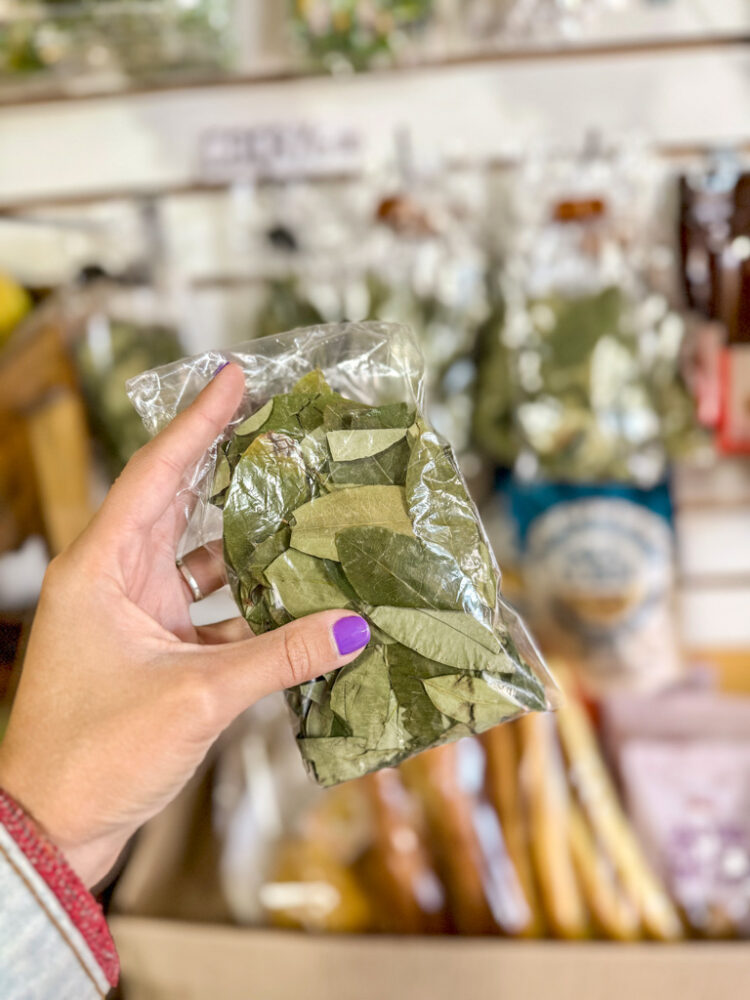
- Try coca tea. It’s served at many hotels and restaurants around Cusco and has been used for centuries as a traditional remedy for altitude. I drank plenty during my stay!
One thing I wouldn’t recommend? Scheduling Rainbow Mountain for your first full day.
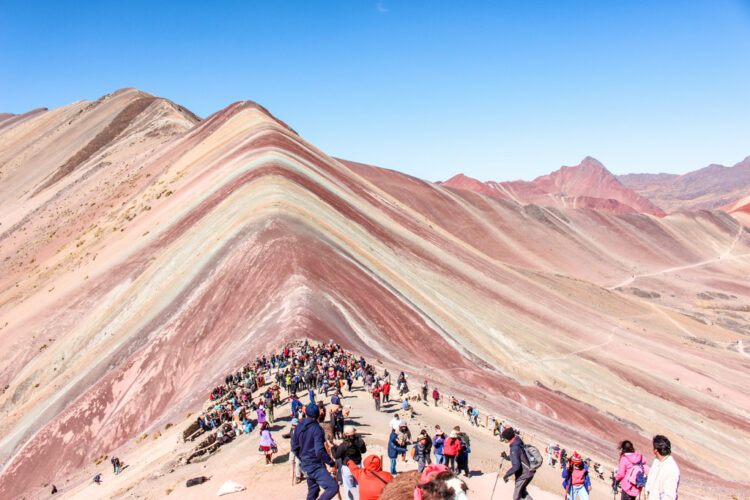
Rainbow Mountain sits at roughly 17,000 feet (5,200 meters) – that’s nearly 6,000 feet higher than Cusco and almost three times the elevation of Denver. Even people who feel perfectly fine in Cusco can struggle at Rainbow Mountain, which is why I recommend giving yourself at least a day or two to acclimatize first.
Everyone adjusts differently, but planning your itinerary with the altitude in mind can make a huge difference. That’s actually why I structured this 3-day Cusco itinerary the way I did – you’ll ease into the city first before deciding if you’re ready for bigger adventures.
How to Get Around Cusco
I tend to love cities that are easy to explore on foot, and Cusco definitely fits the bill! The historic center is surprisingly compact, with most of the major attractions clustered around Plaza de Armas and the charming San Blas neighborhood (both included on this Cusco itinerary of course!).
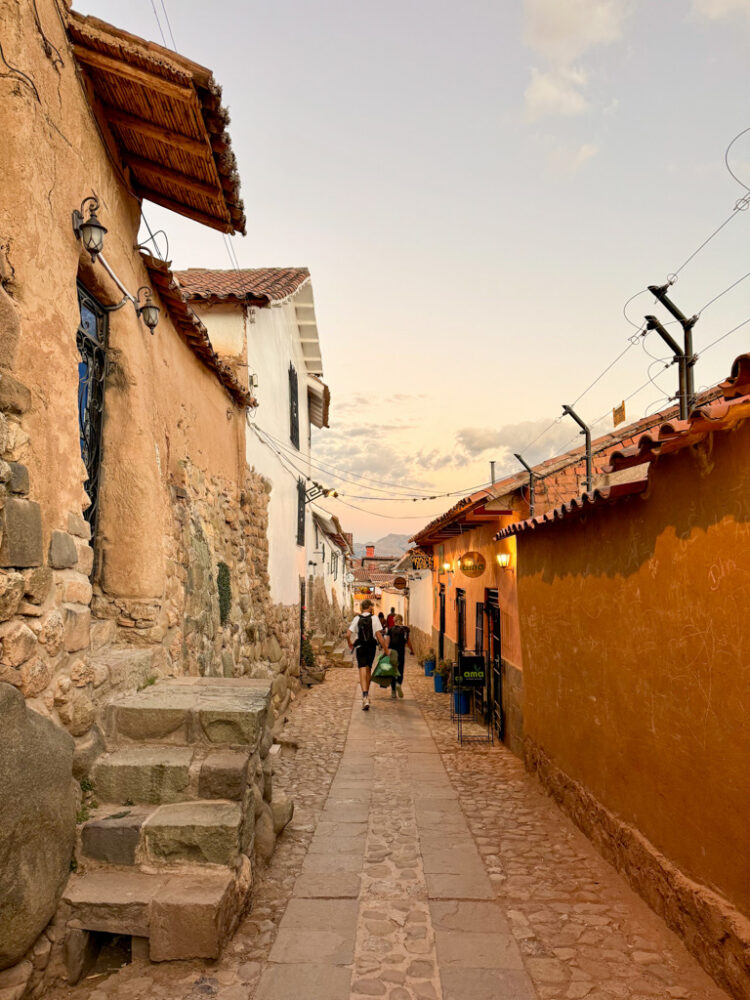
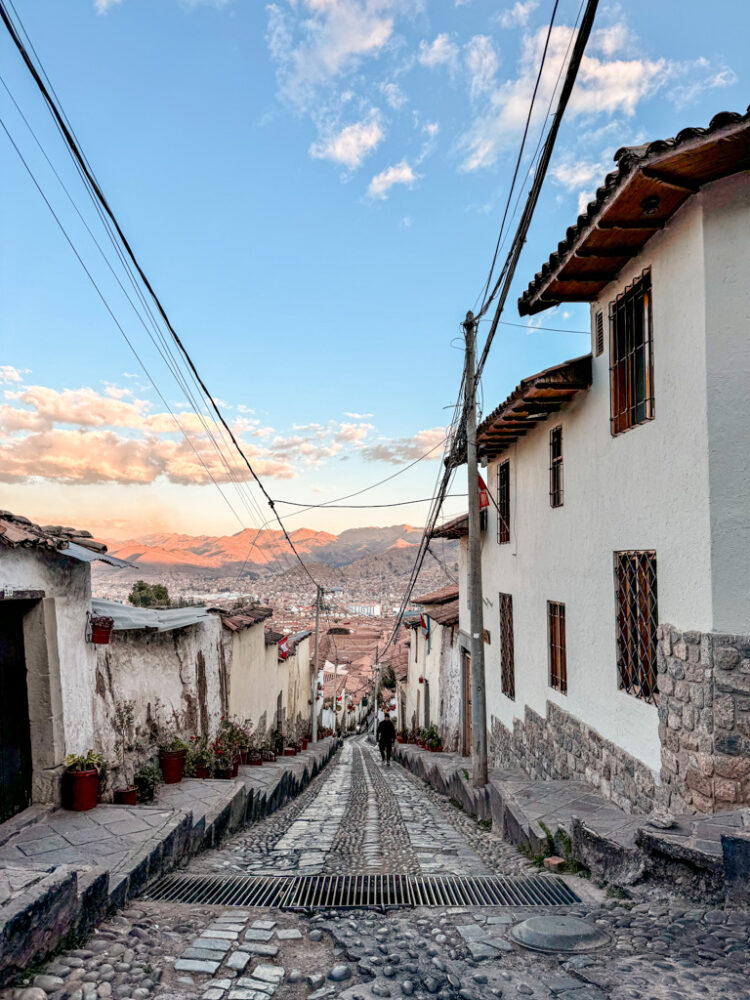
Wandering the narrow cobblestone streets is honestly one of the best parts of visiting Cusco – you never know when you’ll stumble upon a hidden courtyard, an adorable café, or another impossibly photogenic alleyway.
But remember, altitude! So while everything looks close on a map, plan to take things slower than you normally would. I still averaged around 20,000 steps a day, so comfortable walking shoes are definitely a must (leave those heels at home, you definitely won’t want them here).
If you’d rather save your energy (or your lungs), there’s thankfully a few other options.
- Taxis: Cheap, plentiful, and probably the best option for reaching places like Sacsayhuamán or Cristo Blanco without hiking uphill. Just agree on the fare before getting in if the taxi doesn’t use a meter.
- Ride-sharing: Uber operates in Cusco, although it’s not quite as common as local taxis meaning you may have to wait a while for one to pick you up.
- Public transportation: Local buses and colectivos are inexpensive, but honestly, most visitors won’t need them since the main tourist areas are so compact.
- Car: I definitely wouldn’t recommend renting a car if you’re only visiting Cusco. Between the narrow one-way streets, limited parking, and chaotic traffic, it’s far more hassle than it’s worth.
For most visitors spending 3 days in Cusco, I’d recommend exploring the historic center on foot and using inexpensive taxis whenever you venture farther afield. That’s exactly what I did, and it was by far the easiest way to get around!
Brief History of Cusco
Cusco is really old – like, one of the oldest continuously inhabited cities in the Americas old. And the coolest part? You don’t have to go looking for its history because it’s literally everywhere.
The city was once the capital of the Inca Empire, which grew into the largest empire in pre-Columbian America. At its height, it stretched from modern-day Colombia all the way south into Chile and Argentina, with Cusco right at the center of it all. It was the political, cultural, and religious heart of the empire, so yeah… this was kind of a big deal!
Then the Spanish arrived in 1533 and, well, things changed a lot. They conquered Cusco, destroyed many Incan temples, and built churches, monasteries, and colonial mansions right on top of the existing Incan foundations. And that’s actually one of the things that makes Cusco so fascinating today – you can literally see Incan and Spanish architecture layered on top of each other throughout the city.
Walking around Cusco, you’ll constantly stumble across pieces of its past, from the famous 12-Angled Stone and those ridiculously precise Incan walls to grand colonial churches overlooking Plaza de Armas. It’s basically impossible to wander around Cusco without accidentally stumbling into something thousands of years old. How cool is that?!
When to Spend 3 Days in Cusco
I mean… is there really a bad time to visit Peru? Not really, haha. But there are definitely a few things to consider before planning your 3 days in Cusco. The weather can make a pretty big difference here, especially if you’re planning to squeeze in outdoor adventures like Rainbow Mountain and the Sacred Valley.
For a 3 day Cusco itinerary, I’d personally aim for the dry season, especially if this is your first visit. Clear skies make a HUGE difference when you’re surrounded by mountains (you wanna actually see them, right?!), and having less chance of rain is always a bonus. Nobody wants to hike Rainbow Mountain through a muddy mess, haha.
Dry Season (May-September)
This is generally considered the best time to visit Cusco, and for good reason. Think sunny days, blue skies, and very little rain – pretty much perfect conditions for exploring the city, hiking Rainbow Mountain, visiting the Sacred Valley, and heading to Machu Picchu.
The downside? Everyone else knows this too, lol. This is peak tourist season, so hotels can book up months in advance, trains to Machu Picchu sell out (and they frequently do), and the city’s most popular attractions can get pretty crowded. If you’re visiting during these months, I’d definitely book your accommodations, tours, and Machu Picchu tickets as early as possible.
For reference, I visited in July, and honestly, I thought the weather was pretty much perfect. Warm, sunny afternoons, cool mornings and evenings, and hardly any rain. I couldn’t have asked for better sightseeing weather.
Shoulder Season (April & October)
If you’re looking for a happy medium, April and October are hard to beat. You’ll generally get fewer crowds than during peak season, temperatures are still pretty pleasant, and while there’s a slightly higher chance of rain, you can still get plenty of sunshine.
Basically, you get some of the benefits of dry season without quite as many people everywhere. Win-win!
Rainy Season (November-March)
This is Cusco’s wettest time of year, with January and February typically seeing the heaviest rainfall. Afternoon showers are common, hiking trails can get muddy, and those gorgeous mountain views aren’t always guaranteed.
That being said, rainy season isn’t all bad. You’ll find fewer tourists, greener landscapes, and sometimes lower hotel prices. Just make sure to pack a rain jacket and keep your plans a little flexible.
BUT, if this is your first time visiting Cusco and you have the flexibility to choose your dates, I’d personally avoid the rainy season. You don’t want to make it all the way to Peru only to have clouds covering the views you’ve been dreaming about!
Psst – one important thing to note: if hiking the Inca Trail is on your bucket list, it’s closed every February for maintenance. So if that’s part of your Peru plans, definitely keep that in mind when choosing your dates.
Are 3 Days in Cusco Enough?
I actually think 3 days is the sweet spot for Cusco. Not only does it give you enough time to explore the city’s incredible history, wander neighborhoods like San Blas, and eat your way through some fantastic restaurants, but it also gives your body time to adjust to the altitude before tackling bigger adventures.
For reference, I actually had 4 days in Cusco, but that’s only because the rest of my group was hiking the Inca Trail while I decided to skip it (no regrets!). That gave me an extra day to slow down, revisit my favorite spots, linger over long meals, and simply enjoy the city’s atmosphere without feeling like I had to be constantly sightseeing. And after traveling for almost 3-weeks, you bet I was utterly exhausted, haha.
That said, I should mention one thing. When people say they’re spending “3 days in Cusco,” they often mean using Cusco as a base, not necessarily spending all three days inside the city itself. That’s why I recommend dedicating your first day to exploring Cusco and acclimatizing, then using the next two days for day trips (or an extra day in Cusco if you decide to skip Rainbow Mountain).
Cusco Itinerary FAQS
Currency in Cusco: Peru uses the Peruvian Sol (PEN). Thankfully, ATMs are easy to find throughout Cusco, especially around Plaza de Armas and the historic center. I never had a problem taking out cash! Although most hotels and nicer restaurants accept credit cards, you’ll definitely want cash for smaller cafés, local markets, street food stalls, and taxis.
Language: The main language is Spanish, and I highly recommend you learn a few basic phrases! Yes, you’ll hear some English in the touristy areas (most of Cusco, haha), but it’s not as universally spoken as places like Europe. Also, just FYI, in some areas around Cusco and the Sacred Valley, you may also hear Quechua, the Indigenous language of the Andes.
Tipping & Etiquette: Tipping in Peru isn’t strictly required (like the norm in the US), but it’s definitely appreciated! In restaurants, 5-10% is standard if a service charge isn’t already included. Small tips for guides (especially on day trips like Sacred Valley or Rainbow Mountain) are very common and expected. For taxis, rounding up is usually enough.
A few extra tips:
- Altitude is everything here. Don’t underestimate it. Take your first day slow in Cusco before doing anything strenuous.
- Coca tea is everywhere. Most hotels offer it for free, and it’s a traditional remedy locals use to help with altitude adjustment.
- Book Machu Picchu and train tickets in advance. Especially during dry season – availability can (and does!) sell out weeks ahead.
- Start sightseeing early in the morning. Cusco’s main plazas and viewpoints are much quieter before tour groups kick in.
- Dress in layers. Mornings and evenings can be chilly (I wish I packed an extra sweater!), but afternoons warm up quickly once the sun is out. Layers are key!
- Sun protection is no joke. At high altitude, the sun feels way stronger than you expect – even on cooler days. Slather on that sunscreen my friends!
- Comfy shoes are essential. Everything is cobblestone, steep, or both – yup, just trust me. You’ll be walking more than you think. Leave the heels at home.
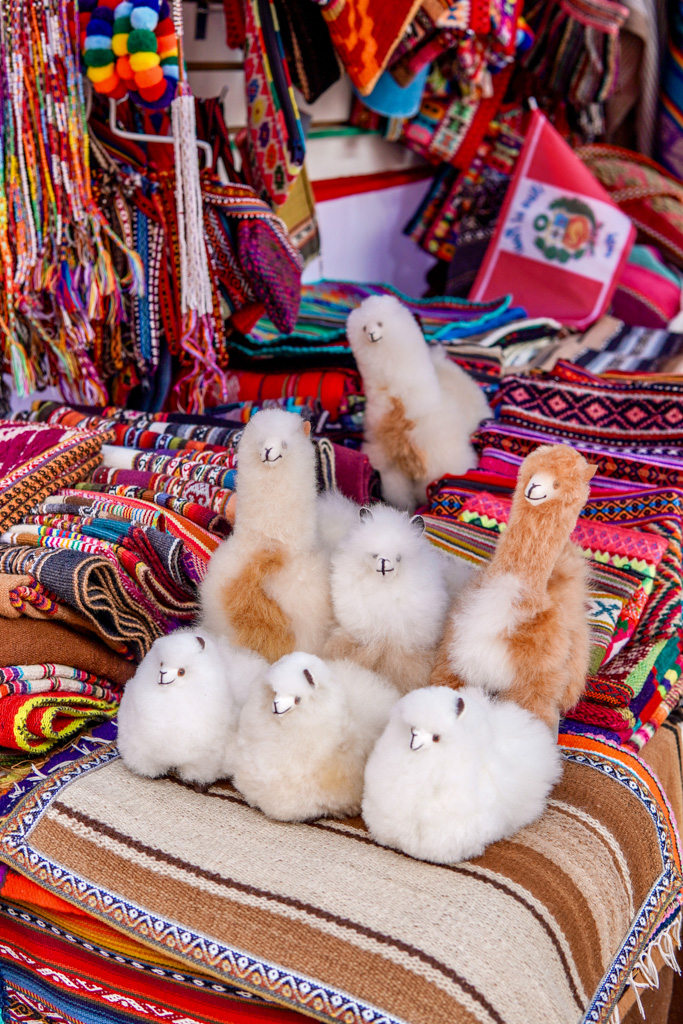
- Alpaca everything is real. You’ll see it everywhere – sweaters, blankets, scarves. Just double-check if it’s alpaca vs. alpaca blend if you’re shopping for quality of course.
Where to Stay in Cusco
There’s SO many places to stay in Cusco, from simple hostel beds to gorgeous luxury boutique hotels. My biggest tip is to choose somewhere near the main square (Plaza de Armas), but honestly, I wouldn’t overthink it too much. As long as your hotel is clean, safe, and in a convenient location, you’re probably good to go – I read reviews like a hawk, so that’s usually my main criteria!
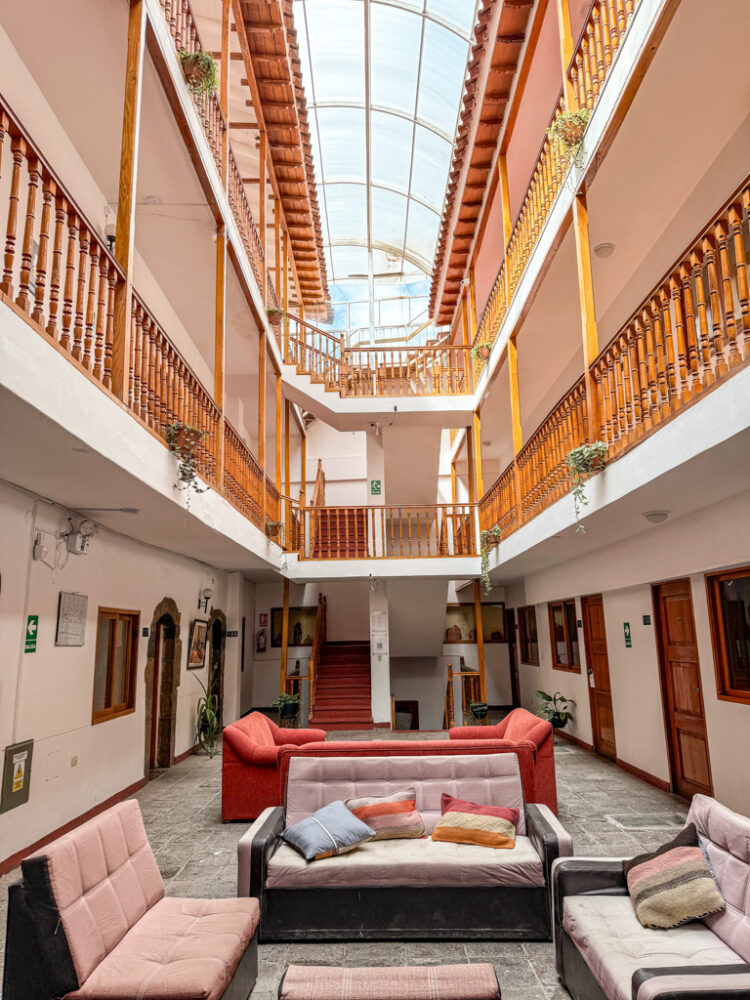
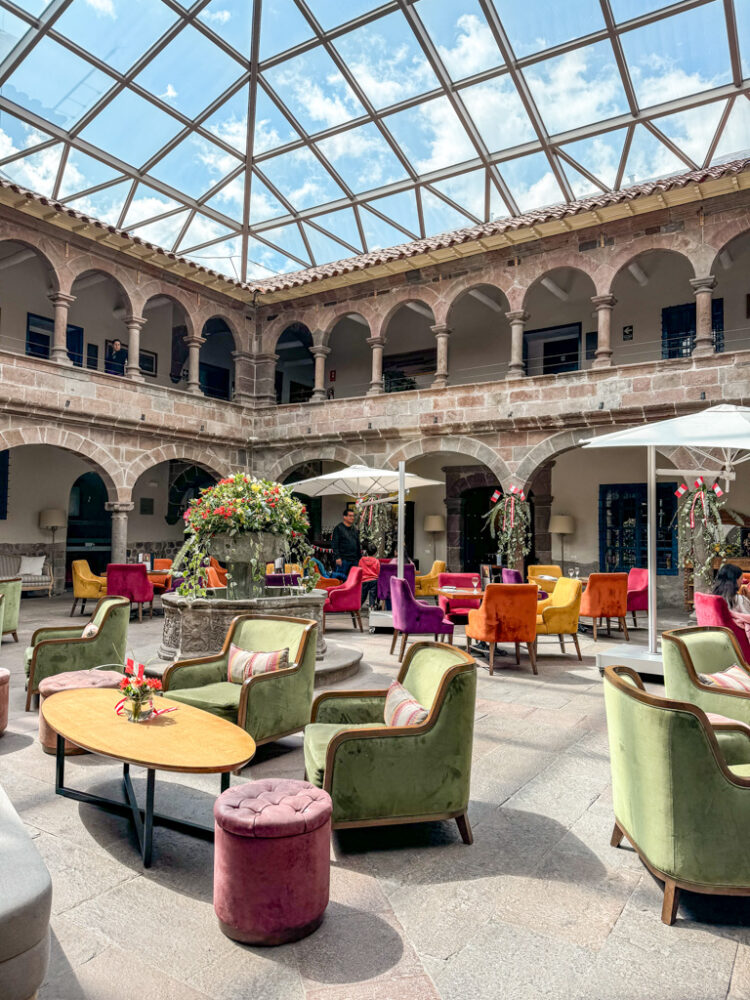
And don’t be skeptical if you find a hotel room that costs way less than you’re used to paying in the USA or Europe. Cusco has some seriously affordable options, and remember: the whole point of this 3 day Cusco itinerary is to be out and about, NOT in your hotel room all day, haha.
Here’s a few highly-rated options: Black Llama Hostel Cusco ($), Hotel Hacienda Sonqori Centro Histórico ($), El Mariscal Cusco ($), Casa Matara Boutique ($), Wyndham Costa del Sol Cusco ($$), Aranwa Cusco Boutique Hotel ($$), Palacio del Inka, a Luxury Collection Hotel, Cusco ($$$), Monasterio, A Belmond Hotel Cusco ($$$$ if you’re feeling fancy/celebrating a special occasion).
And now, what you’ve been waiting for, a complete 3 days in Cusco itinerary!
3 Days in Cusco Itinerary
A few notes on this Cusco itinerary:
- This Cusco itinerary assumes you have a full 3 days in Cusco. If you get in mid-day or at night, you’ll really want an extra day in order to fit everything in, especially if you wanna see both the Sacred Valley and Rainbow Mountain (those are each full day trips).
- This 3 day Cusco itinerary does NOT include Machu Picchu – because that’s a completely separate adventure (and honestly deserves its own dedicated planning). Most travelers either do Machu Picchu before or after Cusco as part of a multi-day trek or train journey through the Sacred Valley. I did the train journey leaving from Ollantaytambo and loved it!
- Avoid Rainbow Mountain at first. If you’re flying from Lima (at sea level) to Cusco (way higher altitude), DO NOT visit Rainbow Mountain on your first day in Cusco. Give yourself time to acclimate, as Rainbow Mountain is even higher than Cusco.
- You’ll be doing a lot of walking. Cusco looks small on a map, but the steep hills and cobblestone streets can be surprisingly intense at altitude. Comfortable shoes are non-negotiable (I learned this very quickly after my first uphill walk in San Blas, haha).
- Always listen to your body. If you’re feeling any signs of the altitude, that’s your key to slow down, even if it means missing a thing or two on this Cusco itinerary. Trust me, you won’t be pleased with yourself if you get really sick. Go hang at a cute cafe (and hydrate!) for a while or just go back to your hotel and relax.
Day 1: Full Day Exploring Cusco
Welcome to Cusco! Today’s all about taking things a little slower while your body adjusts to the altitude – but don’t worry, you’ll still pack a ton into your first day. Think bustling local markets, centuries-old Incan ruins, colorful colonial streets, incredible food, and one of the prettiest neighborhoods in all of Peru. Not a bad way to kick off your 3 days in Cusco, right?
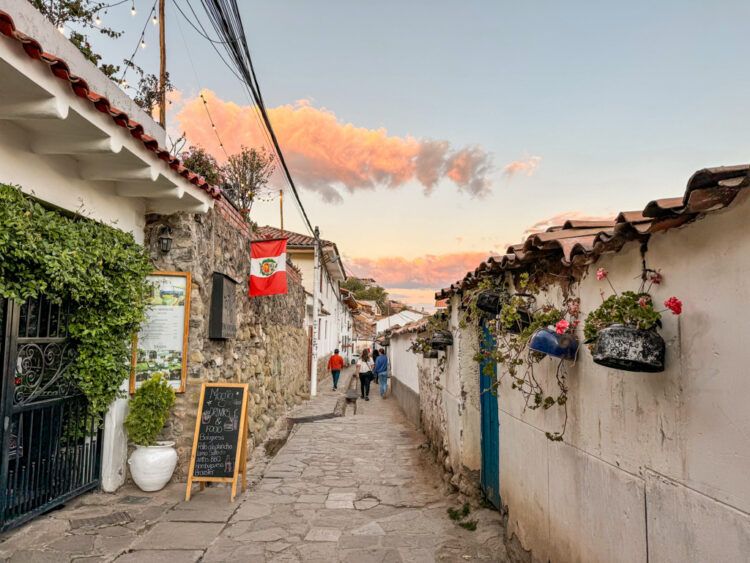
I arrived to Cusco after a busy few days in Lake Titicaca, so appreciated being able to ease into things a bit and explore the city at a more relaxed pace..
Again, one VERY important thing to keep in mind: Cusco sits at more than 11,000 feet above sea level, so don’t be surprised if simply walking up a hill leaves you completely winded. Seriously. Take your time, drink plenty of water, and don’t feel like you have to rush through this itinerary. Your body will thank you!
Stop 1) Breakfast at Jack’s Café
First things first: COFFEE! And breakfast, obviously. Head straight to Jack’s Café, one of Cusco’s most beloved breakfast spots (and after one meal here, you’ll totally understand the hype). It’s basically the perfect place to ease into your first morning, especially if you’re still getting used to that whole 11,000-feet-above-sea-level thing.
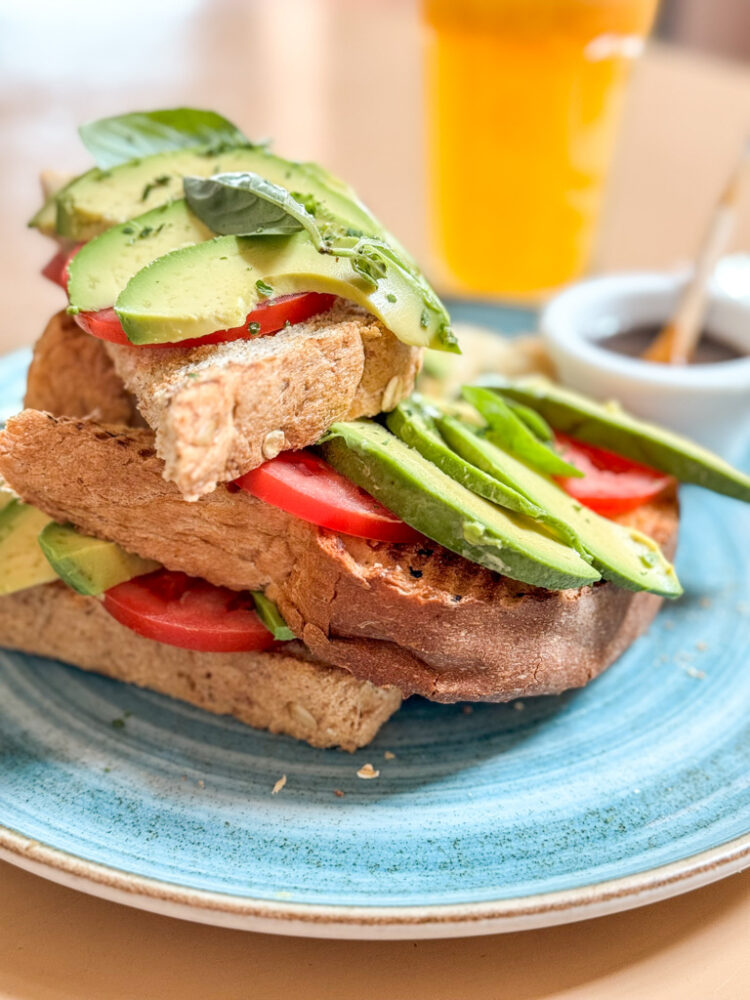
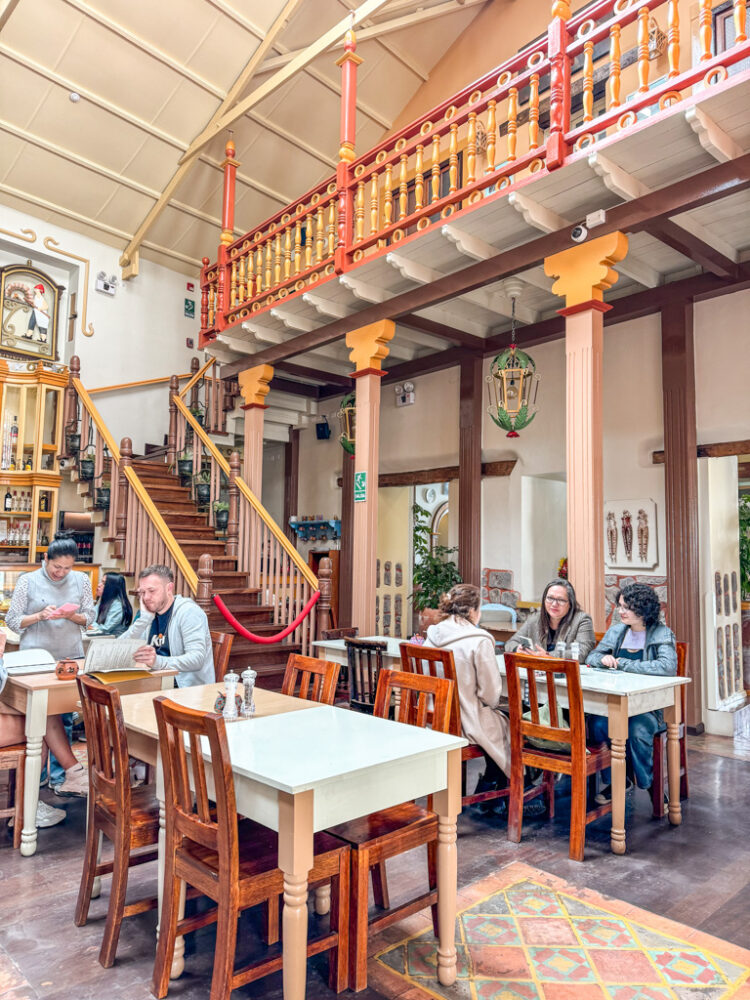
The menu is massive, with plenty of American and Western comfort food if you’re craving something familiar, and the portions are HUGE. Like, come hungry. The space is also surprisingly large, so you don’t feel like you’re crammed into a tiny café with 47 other tourists.
Whether you’re craving fluffy pancakes, avocado toast, eggs Benedict, or a giant breakfast burrito (what I crave when I miss home), they’ve got you covered. And everything I had was fresh and delicious. I loved it so much that I actually ate here twice (and devoured a giant watermelon juice each time, haha).!
Not looking for a giant breakfast? I get it! If Jack’s Café feels like more food than you want first thing in the morning, there are plenty of cute cafés around Cusco where you can grab a coffee, fresh juice, pastry, smoothie bowl, or lighter breakfast instead. Organika Bakery & Coffee, Qura, and Taza Verde are all great options, while Florencia y Fortunata is the one I’d pick if you’re mostly here for the coffee (don’t miss the maiz morado alfajores – it’s kinda legendary here).
Stop 2) Explore San Pedro Market
Walk off your breakfast and make your way to San Pedro Market, Cusco’s oldest and most famous market. And fair warning: this place is BIG, busy, and a little chaotic. But honestly, that’s half the fun!
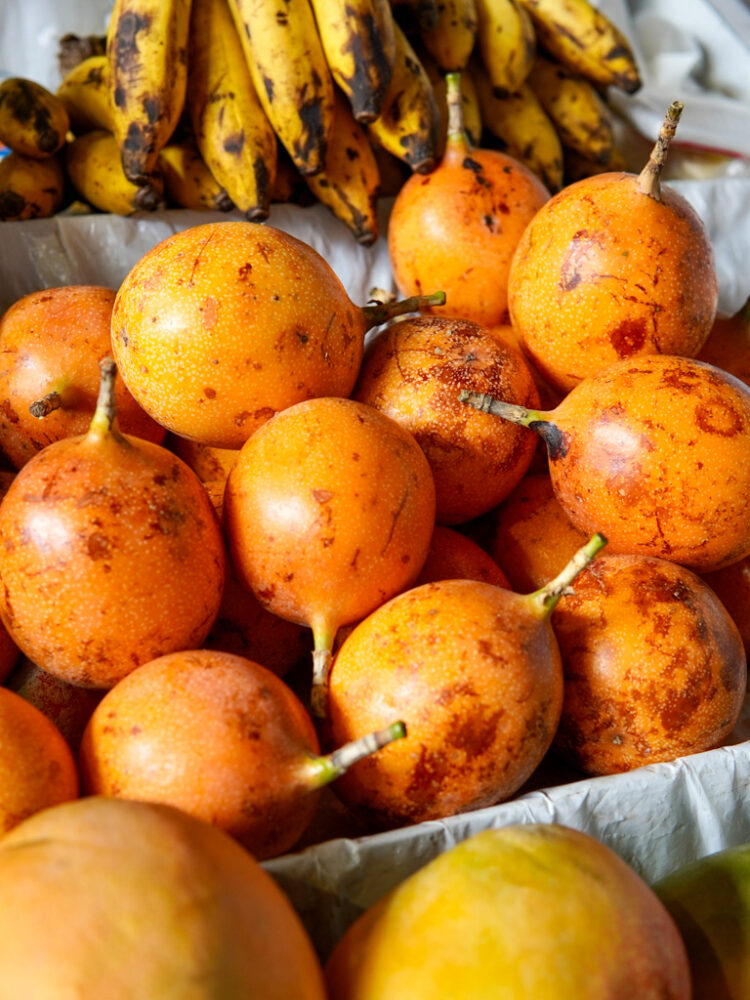
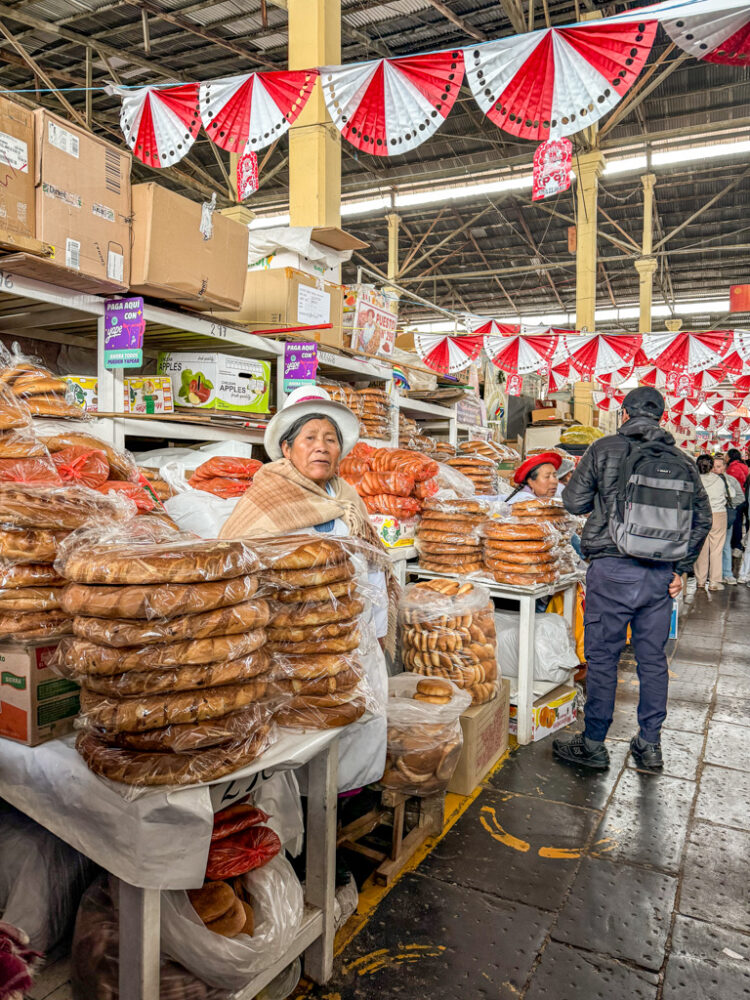
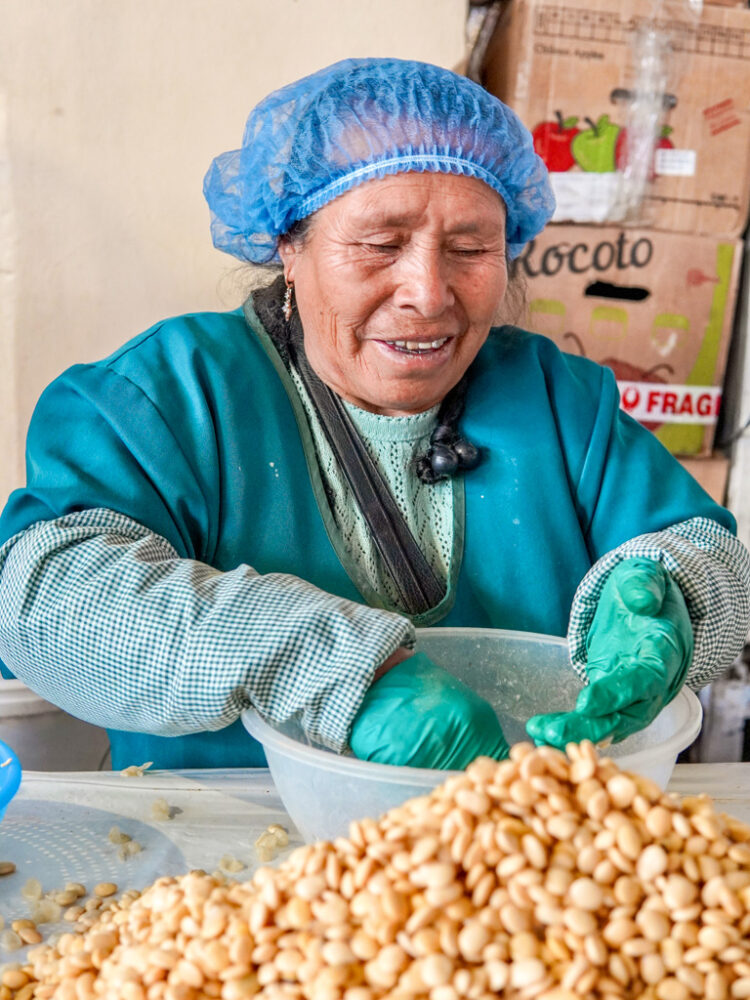
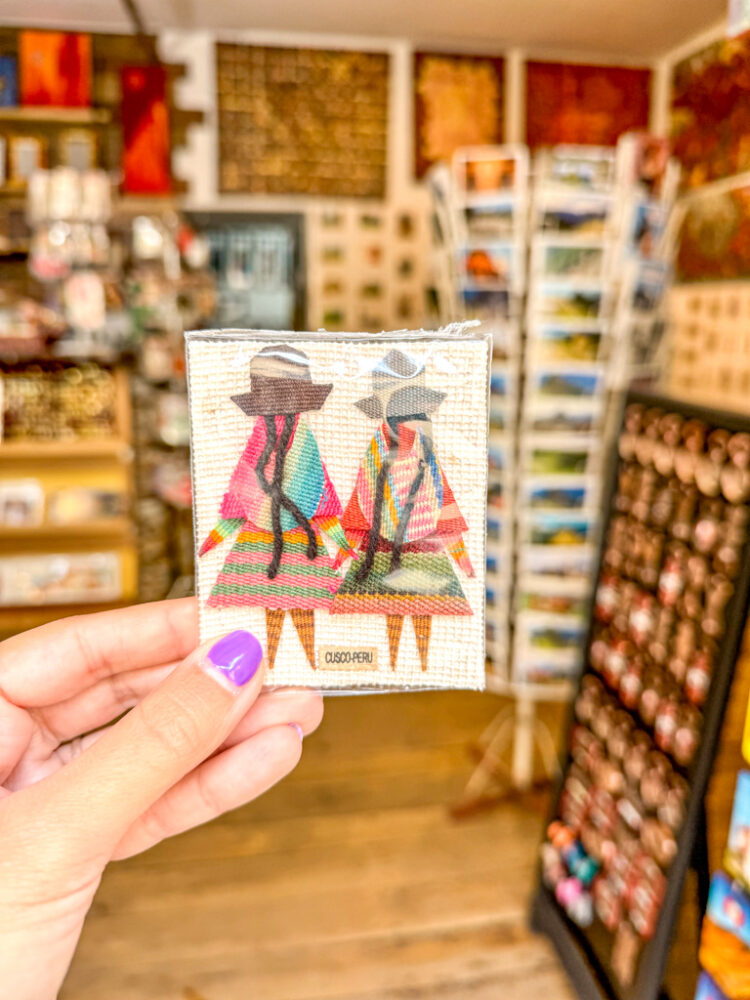
If you’re anything like me, you could spend forever wandering places like this. Fresh fruit piled sky-high, colorful flowers, local women in traditional dress, endless juice stands, handmade textiles, spices, cheeses, pink salt, souvenirs… it’s sensory overload in the absolute best way.
And if you start getting hungry (maybe you had a lighter breakfast), this is actually a great place to grab a snack or two. You’ll find plenty of local food at really affordable prices, and it’s a fun way to try something a little more authentic than a sit-down tourist restaurant. Plus, whatever you do, don’t miss the fresh fruit juices! There’s juice stands everywhere, and they’re the perfect little pick-me-up while you’re wandering around.
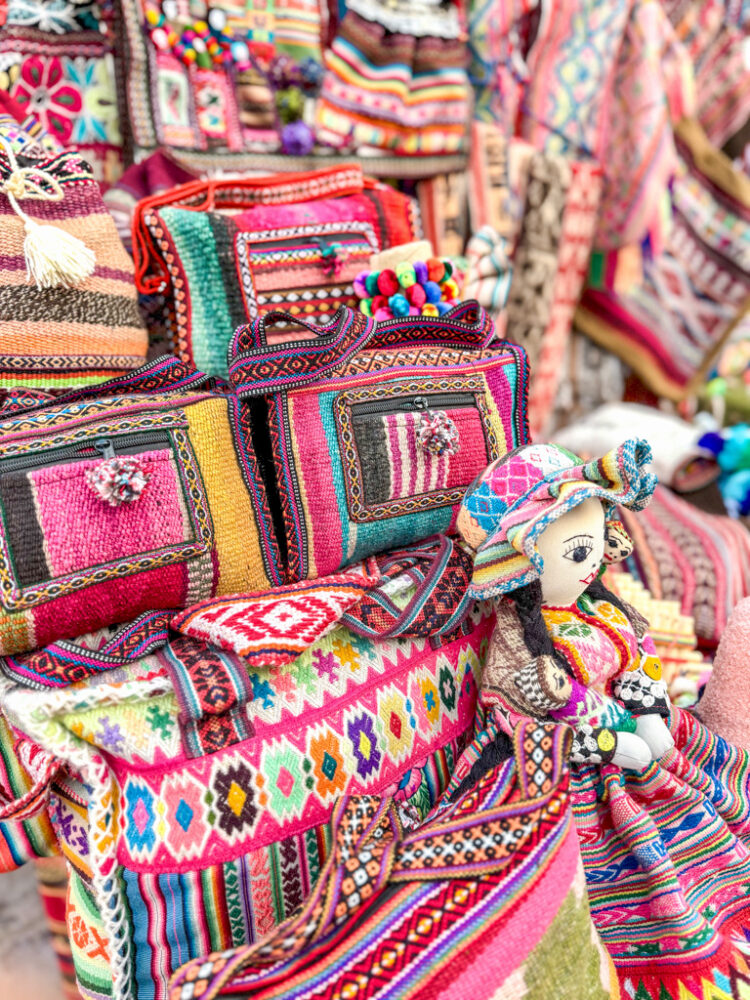
If you’re shopping for alpaca textiles or souvenirs, don’t be afraid to haggle a little – it’s expected here! And if you’ve ever been to a market in Mexico, you’ll probably feel right at home with the crowds, vendors, and general chaos, haha.
Even if you don’t buy a thing (my suitcase was already bursting at the seams), it’s such a fun glimpse into everyday life in Cusco.
Stop 3) Plaza de Armas + Cusco Cathedral
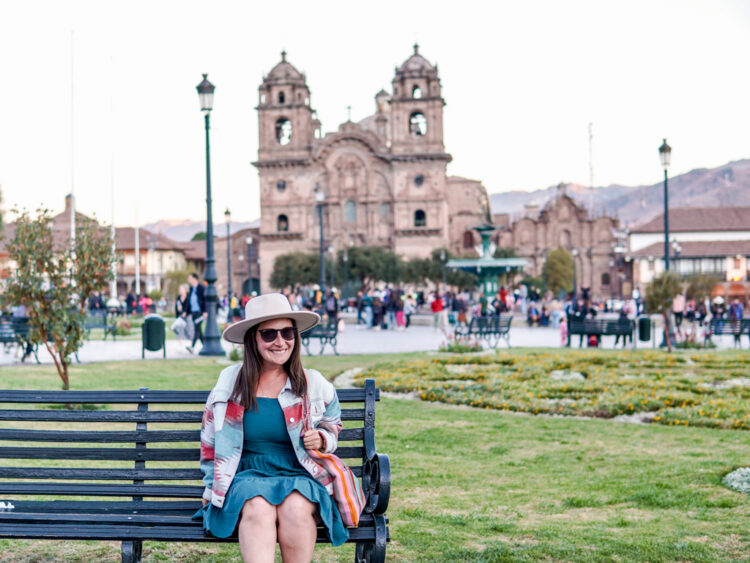
No visit to Cusco is complete without spending some time in Plaza de Armas, the city’s gorgeous main square. This is basically the heart of Cusco, and it’s one of those places where you’ll probably find yourself multiple times throughout your trip (I know I did, lol).
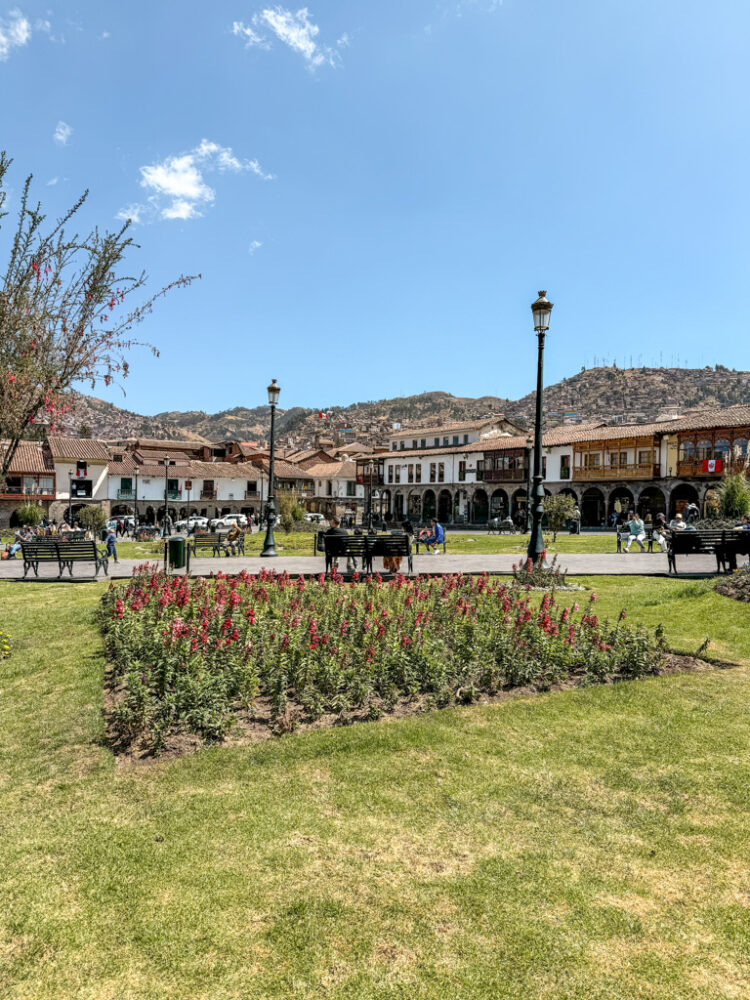
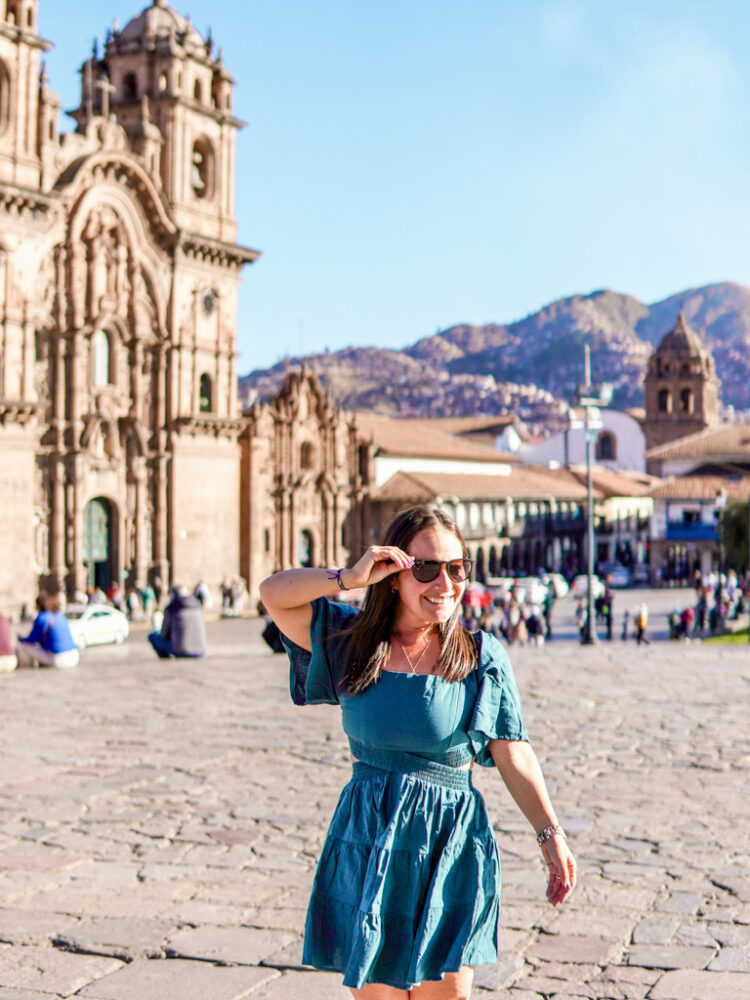
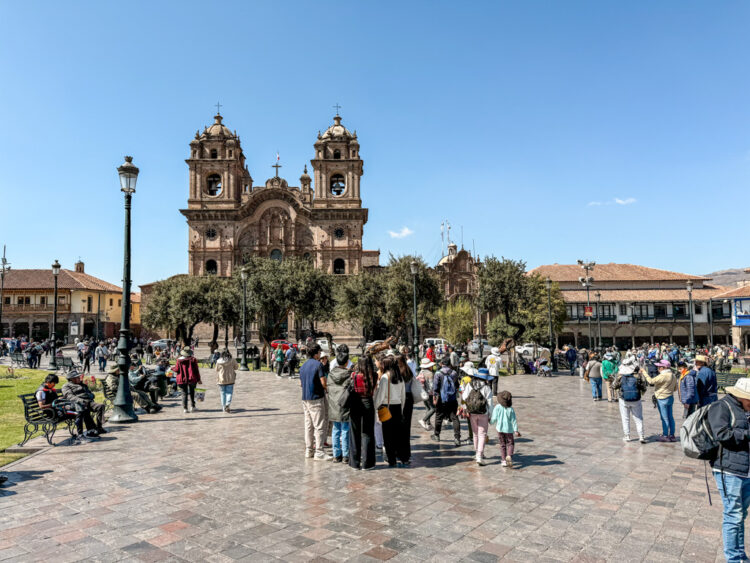
The plaza is centered around a fountain and pretty gardens, with grand colonial buildings and the cathedral surrounding it on all sides. It’s full of life, history, and such a vibrant atmosphere that even if you don’t have anything specific planned, it’s a fun place to just grab a bench, people-watch, and take it all in.
And if you happen to be here after dark, come back at night! The colonial buildings and cathedral are beautifully lit up, and the whole plaza has a completely different vibe. It’s definitely worth seeing both during the day and at night.
While you’re here, pop inside Cusco Cathedral. Even if churches aren’t usually your thing (they’re honestly not always mine either), this one’s worth a look. The gold-covered altars, intricate wood carvings, and centuries of history are seriously impressive. And considering how much history has happened right here, it feels pretty freaking cool to stand inside and take it all in.
Stop 4) Visit Qorikancha (Temple of the Sun)
Just a short walk from Plaza de Armas is Qorikancha, once the most sacred temple in the entire Inca Empire. And honestly, this ended up being one of my favorite historical sites in Cusco because it tells the story of the city so perfectly.
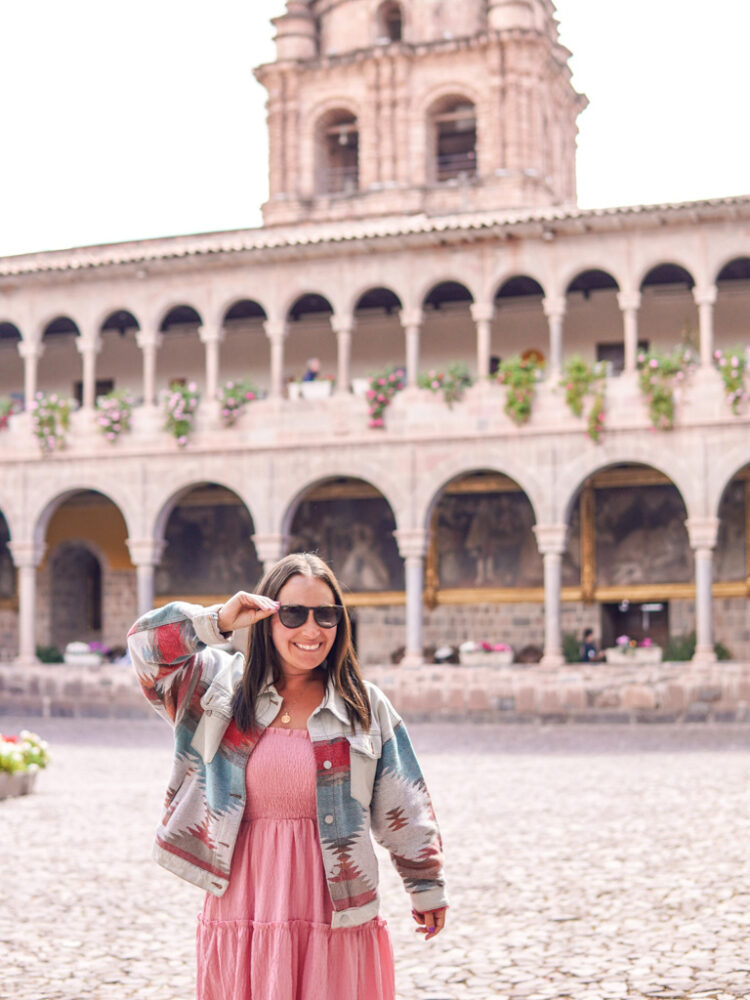
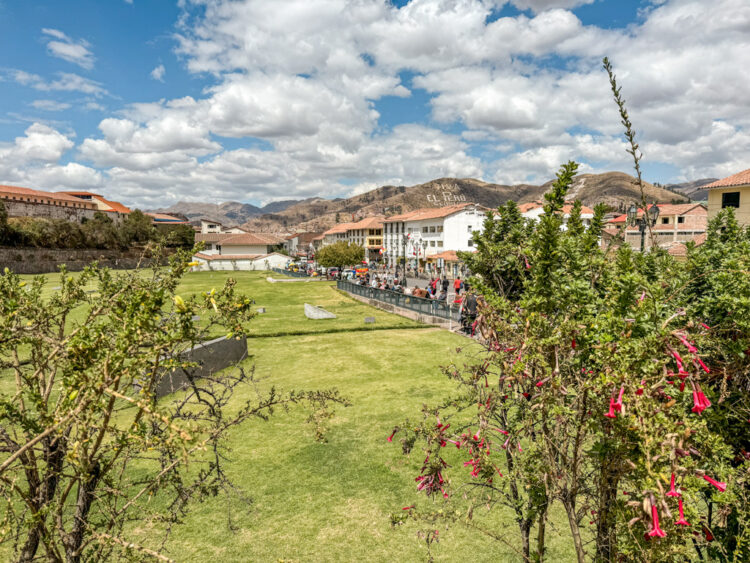
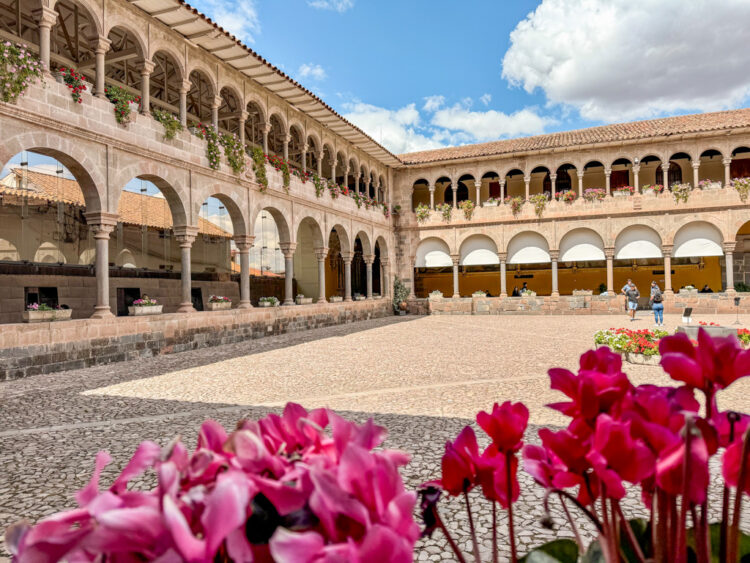
The Incas built these unbelievably precise stone walls (including some pre-Inca stonework) and created an important religious complex here. Then the Spanish arrived and built an entire church directly on top of it. Yep… literally on top of it. Talk about layers of history!
A few things to know before you visit:
- Consider hiring a guide. I’m gonna be honest – I was a tad confused for most of my visit because there are SO many layers of history here, and I didn’t always know what I was looking at. Having someone explain what you’re seeing would make a huge difference.
- Check out the courtyard gardens in the back. They’re easy to miss, but definitely worth wandering through.
- Bring cash. The entrance only accepts cash, so don’t show up with an empty wallet like I almost did, haha.
- Expect crowds. Qorikancha is popular for a reason, so don’t expect to have the place all to yourself.
Seeing the two architectural styles literally stacked on top of each other is fascinating, and it’s something you really won’t find anywhere else. You can see the incredibly precise Incan stonework right alongside Spanish colonial architecture, and it’s such a cool visual reminder of just how much history is packed into this city.
Stop 5) Lunch at Morena Peruvian Kitchen or Nuna Raymi
By now, you’ll definitely be hungry for lunch. I know I was! And thankfully, Cusco has no shortage of amazing places to eat.
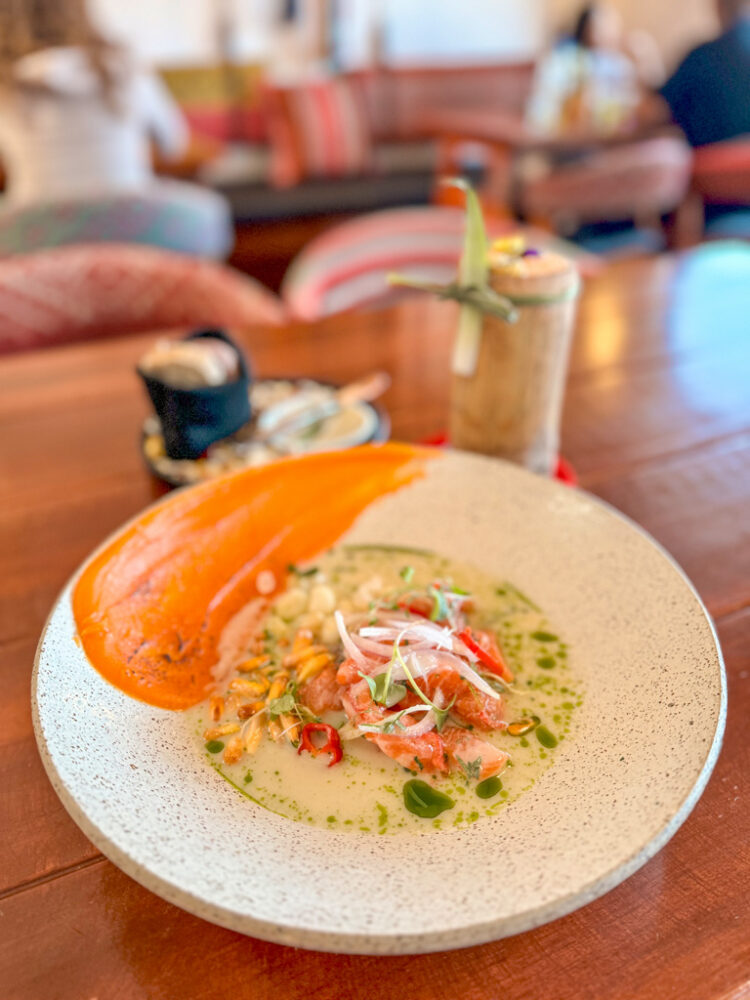
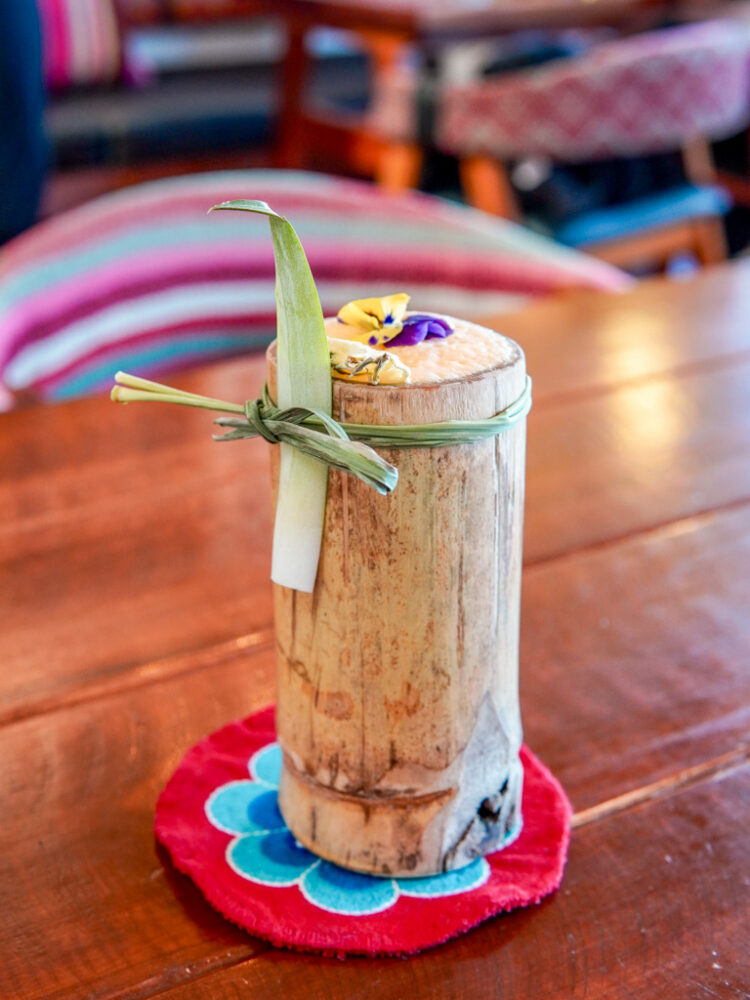
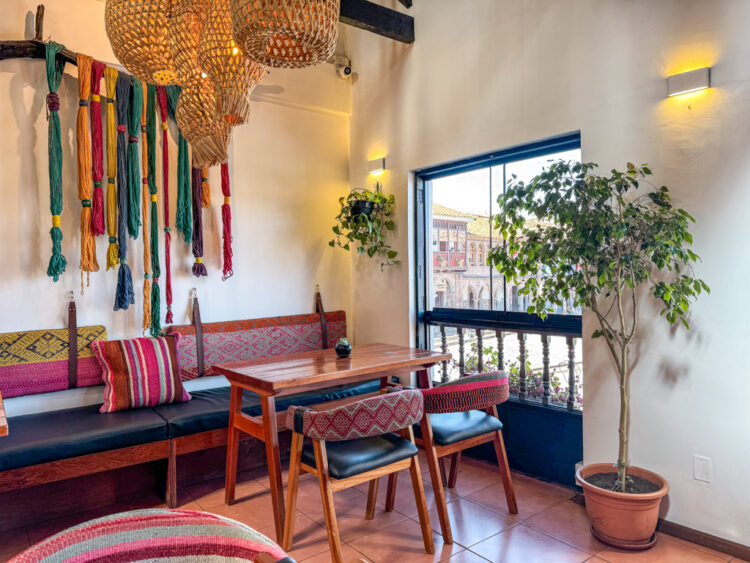
If you’re looking for a fun, trendy spot, grab a table at Morena Peruvian Kitchen. It’s one of Cusco’s most popular restaurants, serving elevated Peruvian classics with a twist in a gorgeous dining room just steps from Plaza de Armas. Think alpaca risotto, trout ceviche, Andean chicken soup, and plenty of other creative dishes. I went with the trout ceviche, and everything I saw coming out of the kitchen looked freaking delicious.
A couple things to know about Morena:
- Ask for a window seat. You’ll get beautiful views over the rooftops and Plaza de Armas below, which makes lunch feel even more special.
- Make a reservation! This place is popular for a reason, so don’t assume you’ll be able to just walk in – yes, even for lunch.
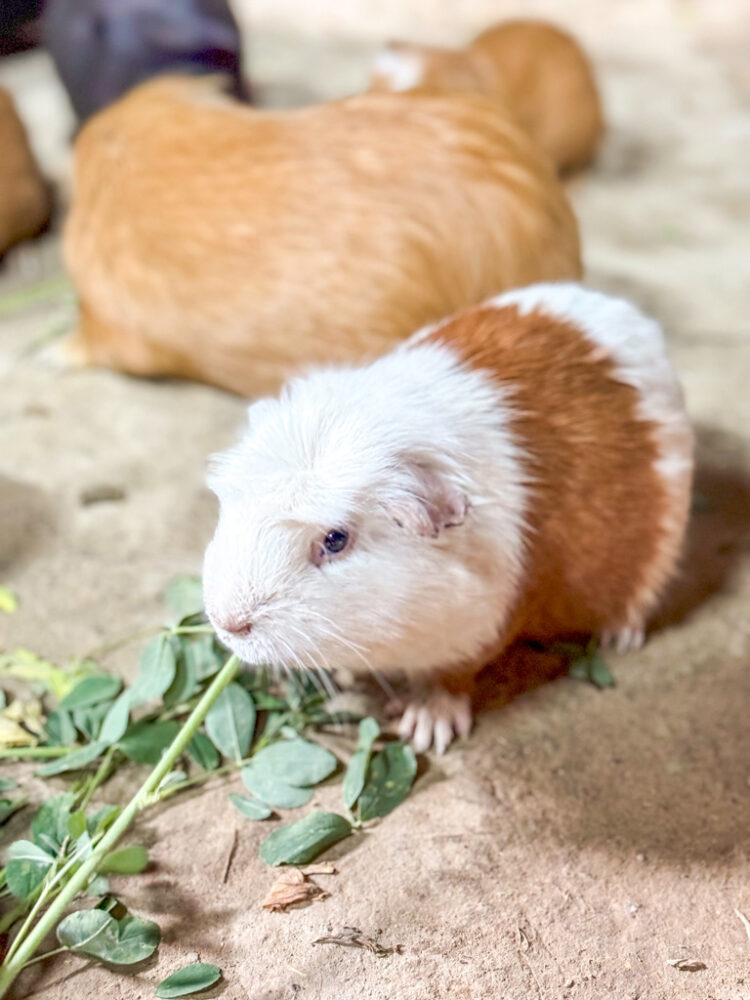
Want something a little more traditional? Nuna Raymi is another great option, especially if you’re feeling adventurous and want to try some local specialties like alpaca or cuy (guinea pig). The restaurant has a farm-to-table concept, with a focus on local ingredients and traditional Andean flavors.
And definitely don’t miss the potato experience! The servers introduce you to five native varieties of Peruvian potatoes, explain what makes each one different, and, of course, you get to try them all. Because when you’re in Peru, you might as well embrace the potatoes, right?!
Stop 6) See the 12-Angled Stone + Wander San Blas
Next, make your way toward San Blas, easily my favorite neighborhood in Cusco.
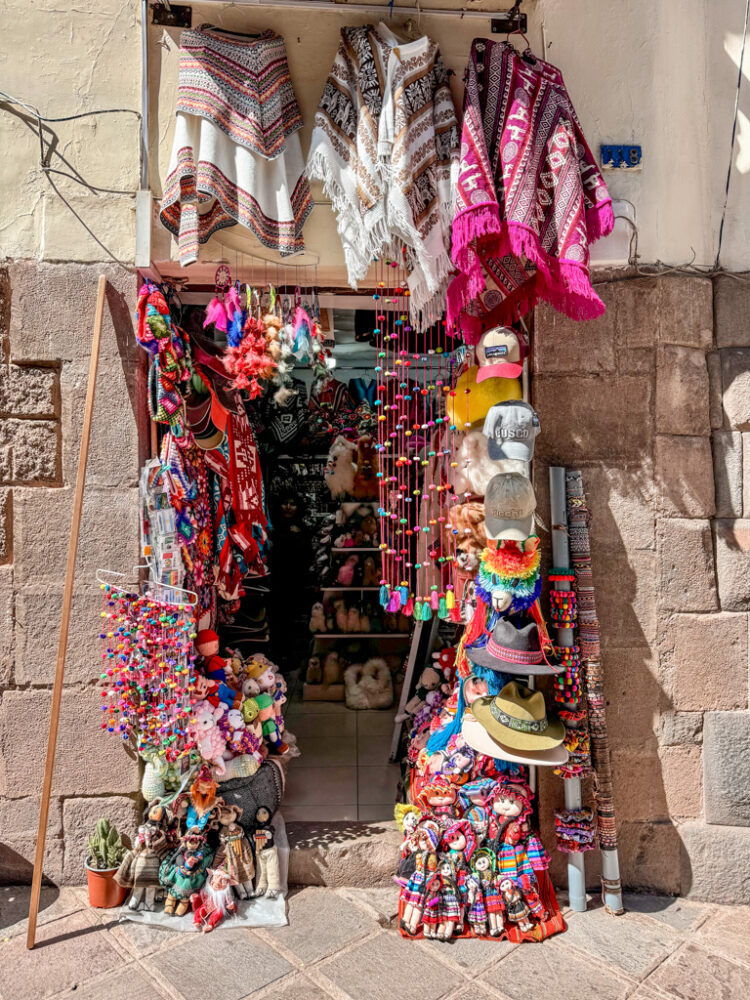
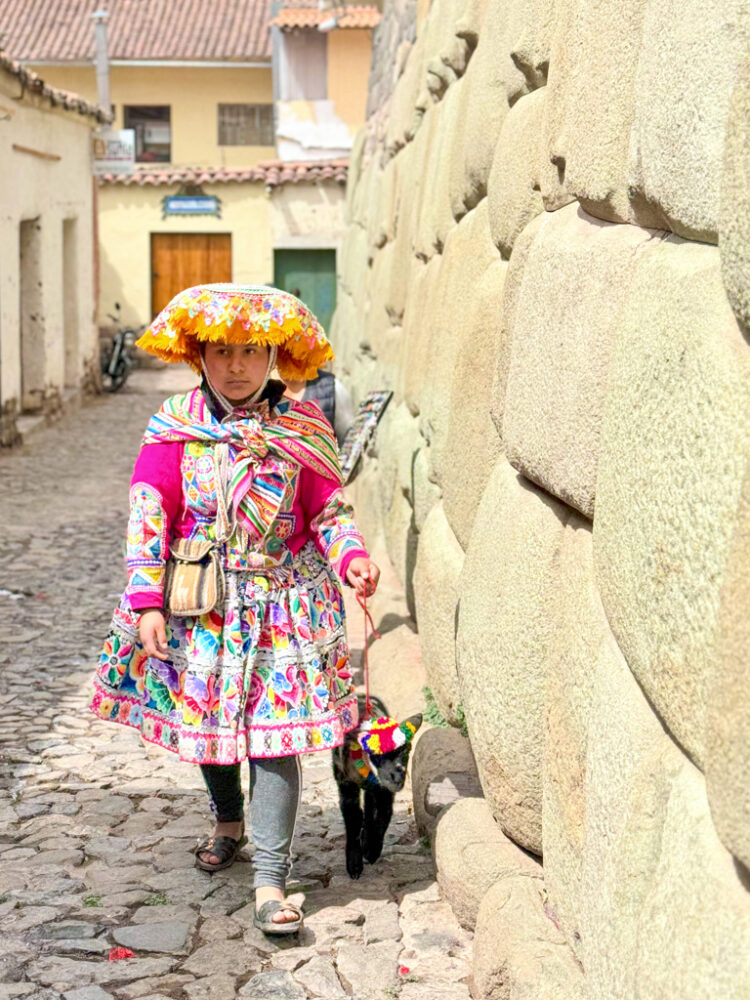
Along the way, stop at the famous 12-Angled Stone. I know, I know… it’s literally a rock in a wall, haha. But trust me on this one. Once you realize it was carved hundreds of years ago to fit perfectly against all the surrounding stones – without any mortar (!!!) – it becomes surprisingly impressive.
I mean, just think about it… how the heck did they do that?!
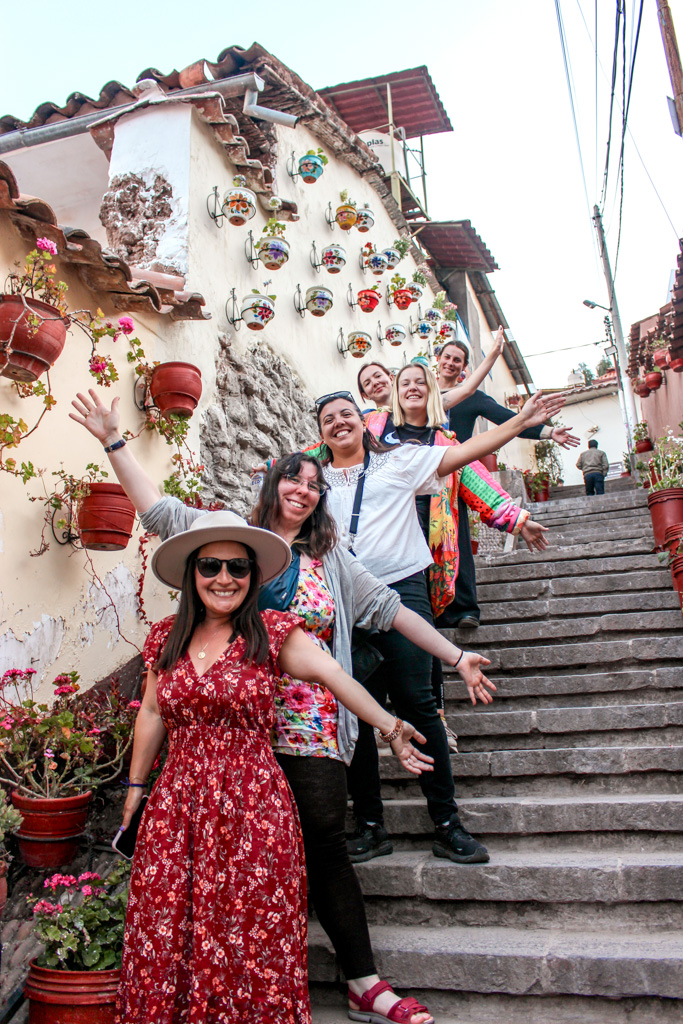
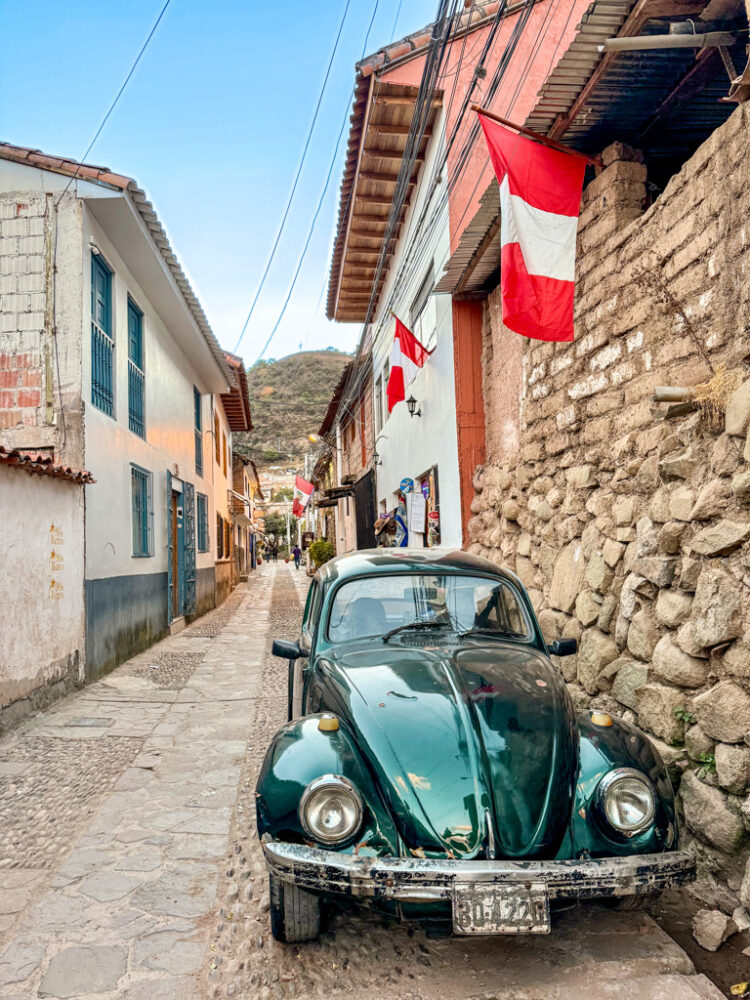
From there, continue uphill into San Blas. This is one of those neighborhoods where you really don’t need a plan. Just wander! You’ll find winding cobblestone streets, bright blue balconies, tiny art galleries, hidden courtyards, boutique shops, and cute cafés around practically every corner.
Yes, it’s uphill. Yes, you’ll probably be a little out of breath. But it’s also the kind of place where you accidentally spend two hours because every street is prettier than the last.
Psst: If you’ve been to Antigua, Guatemala, you’ll probably recognize that same charming mix of cobblestone streets, colorful colonial buildings, and beautiful plazas – although Cusco obviously comes with a whole lot more Incan history.
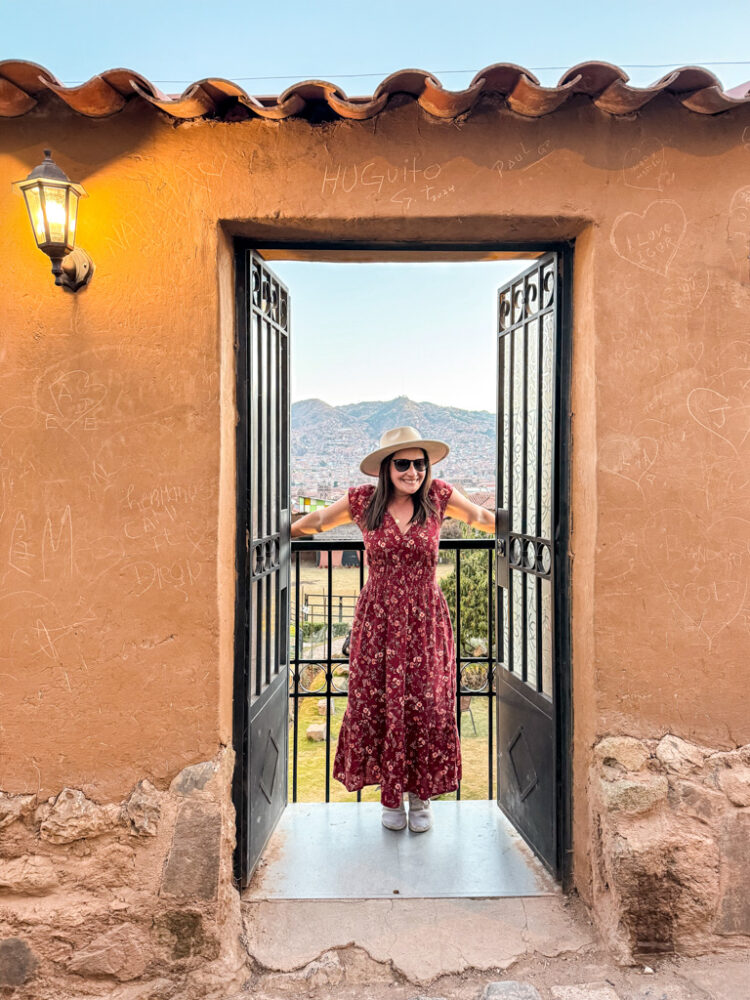
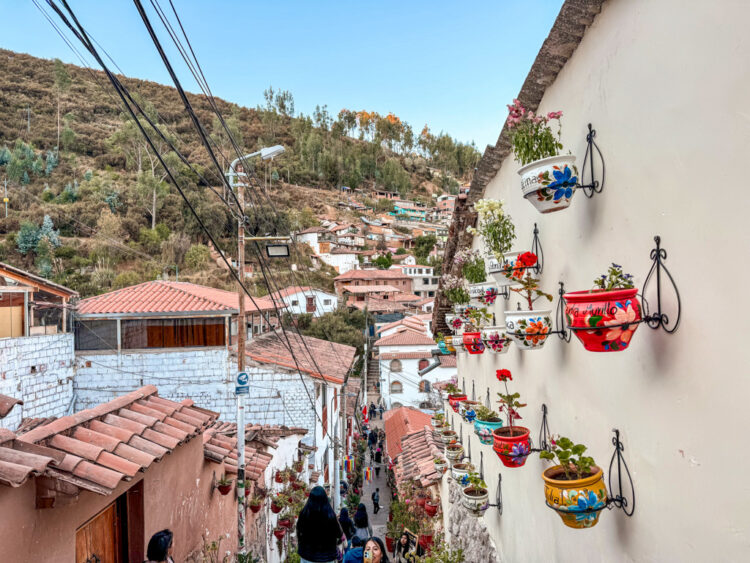
I re-visited San Blas multiple times because I found it so charming. There are a few spots worth seeking out if you want to hit some of the neighborhood’s highlights:
- San Blas Viewpoint: Right next to Limbus Restobar, this is a great spot for those classic views over Cusco.
- Calle 7 Borreguitos: A steep, super photogenic street lined with flower pots. Get your camera ready!
- Plaza San Blas: The neighborhood’s main square, where you’ll find an artisan market on Saturdays.
- Sakana CeviSushi: Need a little snack break? This is a fun spot to grab something to eat while you’re exploring.
But honestly, the streets themselves are one of the biggest attractions. San Blas is known for its artisan shops and galleries, so take your time, pop into anything that catches your eye, and don’t worry too much about following a specific route. Some of my favorite moments here came from simply wandering around.
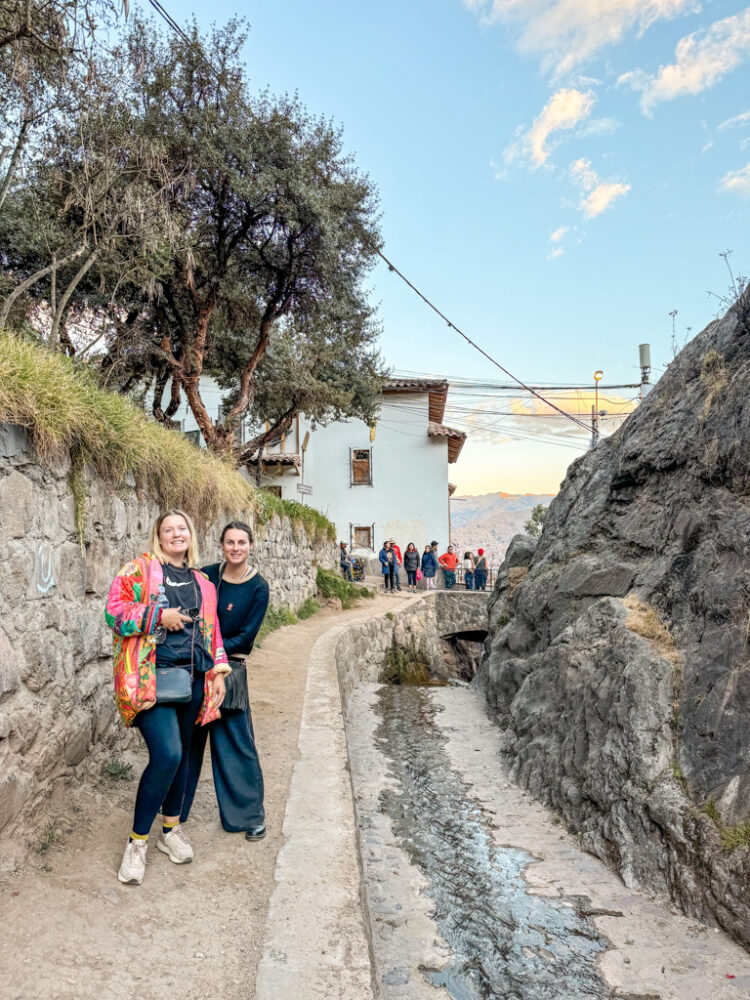
One more little stop you can add: the Sapantiana Aqueduct, tucked away around the San Blas/San Cristóbal area. I’ll be honest – I found it a little underwhelming, and I’d consider it more of a quick photo stop than a must-see attraction. But it’s easy enough to swing by if you’re already wandering around the neighborhood, so you might as well take a look!
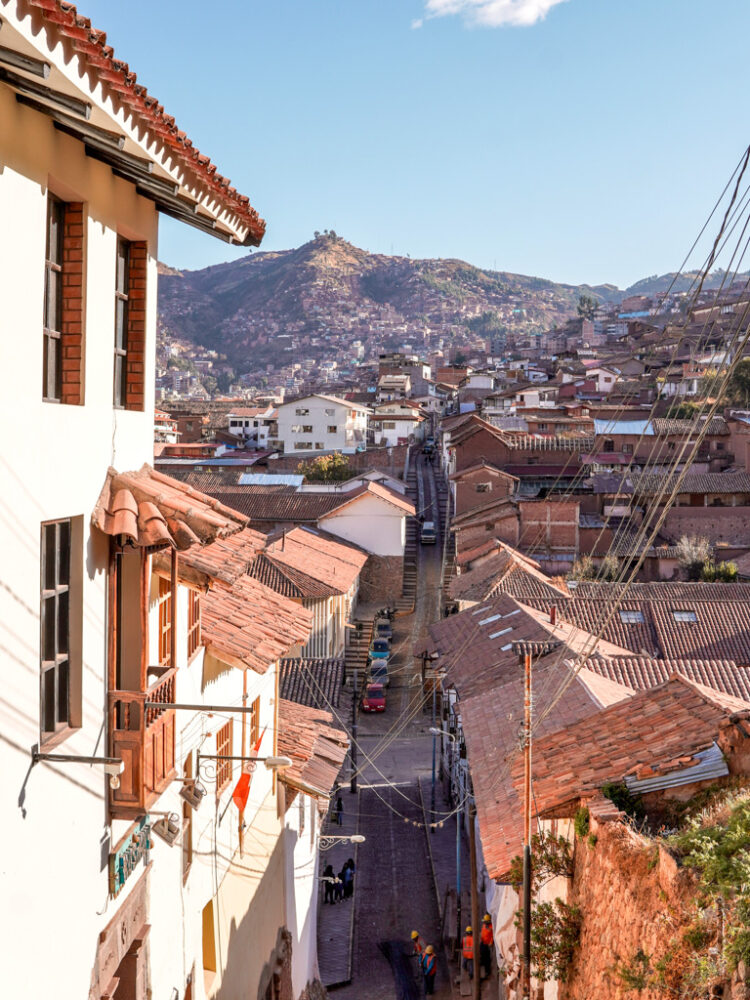
And don’t forget to look back as you’re walking uphill! San Blas has some pretty fantastic views over the rooftops of Cusco, and you’ll probably want to stop for a photo (or 12, haha).
Stop 7) Explore Sacsayhuamán
If you’ve still got some energy left, make your way up to Sacsayhuamán, the enormous Incan fortress overlooking Cusco. And yes, it’s pronounced exactly as it looks, haha.
Fair warning: getting here is a workout. The walk is steep, and when you’re already at 11,000+ feet, even a relatively short uphill climb can leave you seriously huffing and puffing. I wouldn’t blame you one bit for hopping in a taxi instead!
Once you’re here, I’d definitely recommend hiring a guide at the entrance. There’s SO much history packed into this site, and having someone explain what you’re looking at makes the enormous stone walls and ruins much more interesting. Plus, the views over Cusco are incredible!
I’ll be completely honest – I actually skipped Sacsayhuamán. After nearly three straight weeks of traveling around Peru, I hit a wall and decided my body was asking for a slower afternoon instead. Zero regrets.
That being said… if you’ve got the energy, everyone I talked to said it’s absolutely worth visiting. The enormous stone walls are considered one of the greatest engineering achievements of the Inca civilization, and the panoramic views over Cusco are supposed to be pretty freaking amazing.
So yeah, I’m gonna have to add this one to my list for my next Cusco trip (sooner than later, I hope!).
Stop 8) Sunset at Mirador de San Cristóbal
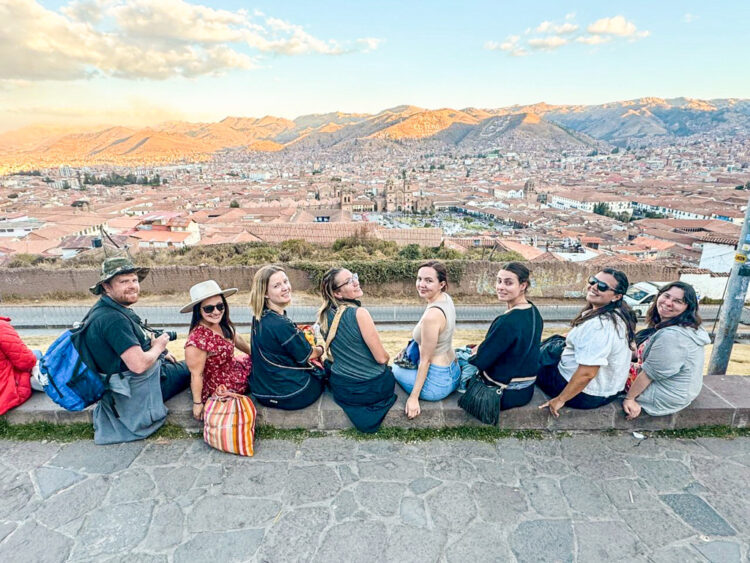
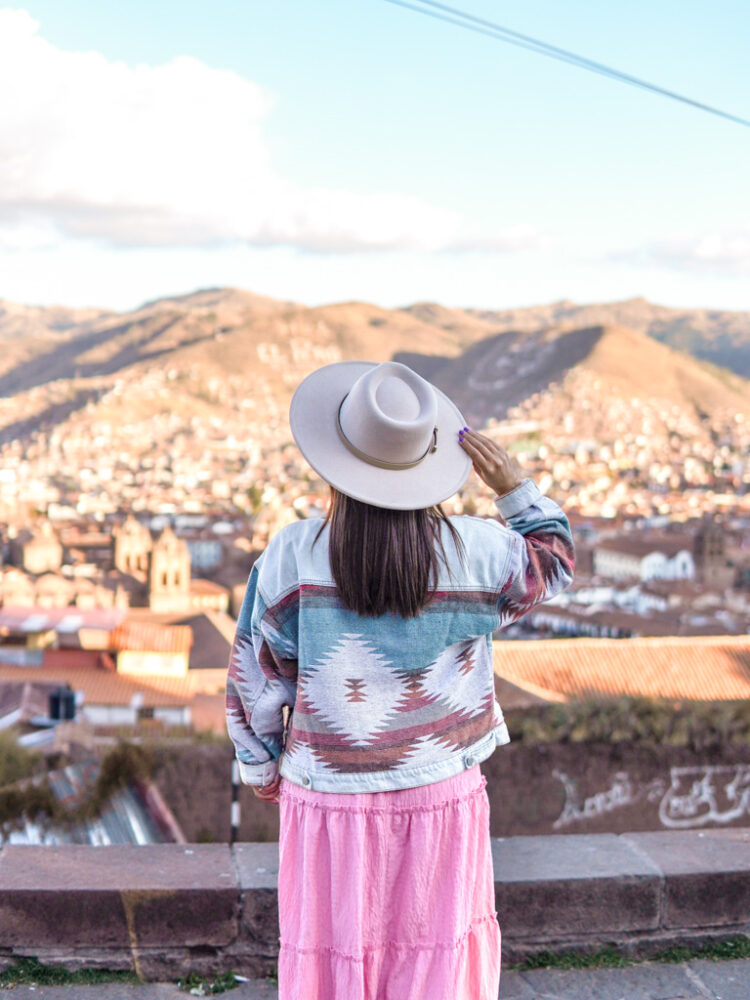
Finally, finish your first day at Mirador de San Cristóbal, one of the best viewpoints in Cusco (and easily my favorite!). And after a full day of walking around the city, trust me… you’ve earned this sunset.
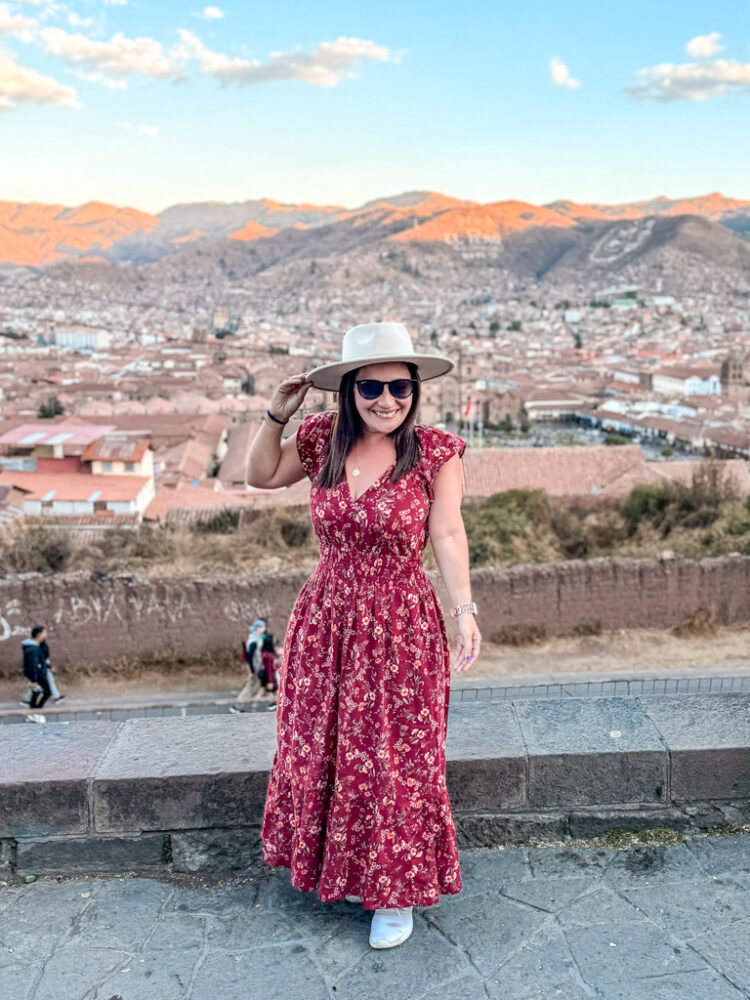
The views over Cusco are SO good – think terracotta rooftops, colonial churches, and mountains stretching out in every direction, all glowing as the sun starts to set. Grab a seat, take approximately 800 photos (because trust me, you won’t be able to resist), and just enjoy the view.
One important tip: get here about 30-40 minutes before actual sunset. Because Cusco is surrounded by mountains, the city can get cast into shadow before the sun technically sets. So if you show up right at sunset, you might miss that gorgeous golden light you’re hoping for. And if you’re lucky, you may also find a few street food stalls up here – the perfect excuse for a little snack while you wait.
Now, fair warning: getting up here is a freaking workout. It’s a pretty steep climb, especially after spending the entire day walking around Cusco at 11,000+ feet, so just know you’ll probably be huffing and puffing by the time you reach the top. But IMO, the view is absolutely worth the effort.
Or, you know… take a taxi, haha. You can easily grab a taxi to the viewpoint and then walk back down into the city, which is probably what I should’ve done, lol. Your lungs might appreciate you making this choice.
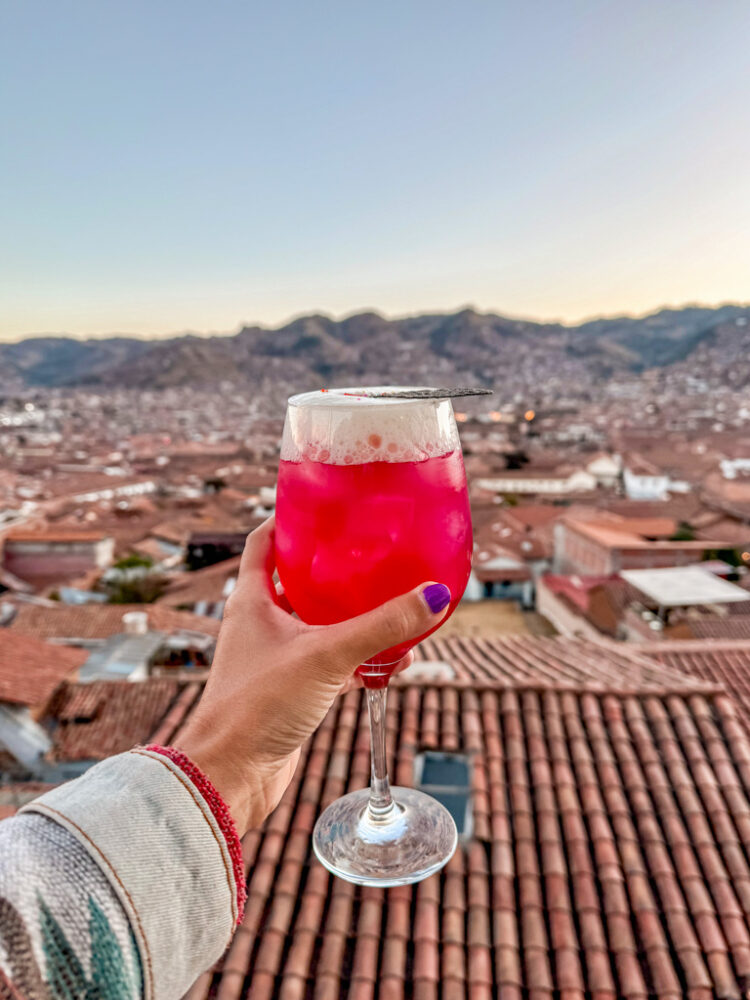
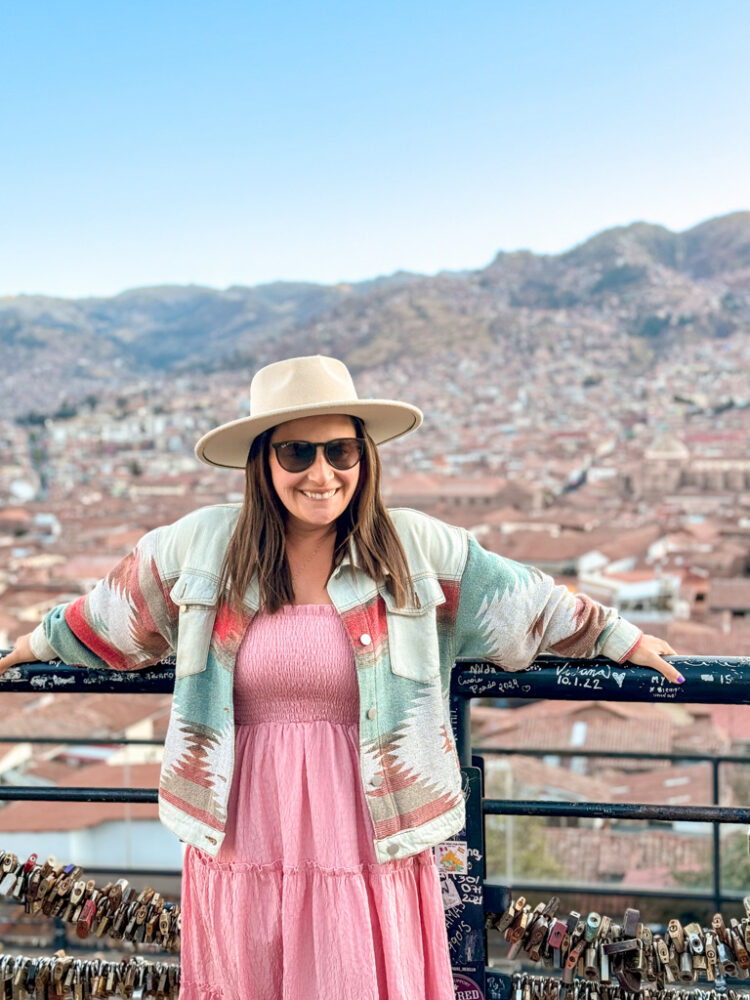
Psst – if you’d rather sip a cocktail or mocktail at sunset instead (you’re my kinda people!), head over to Limbus Restobar in San Blas. I stopped here for a drink one evening, and the view over Cusco and the surrounding mountains was such a vibe. Honestly, it’s a pretty perfect way to end the day.
Stop 9) Dinner!
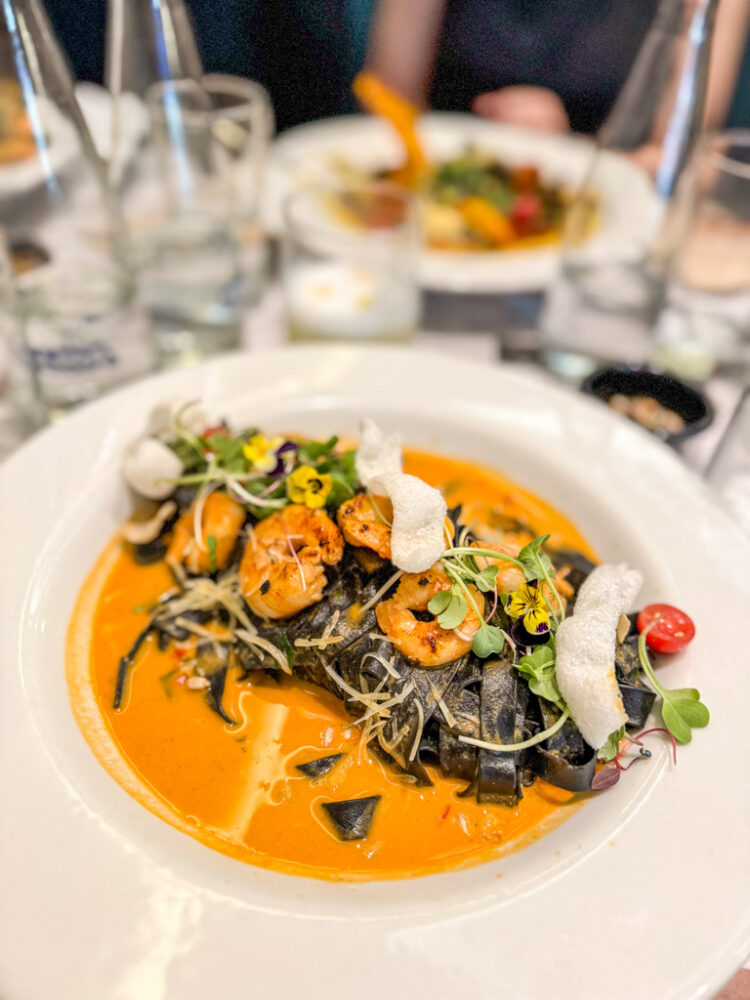
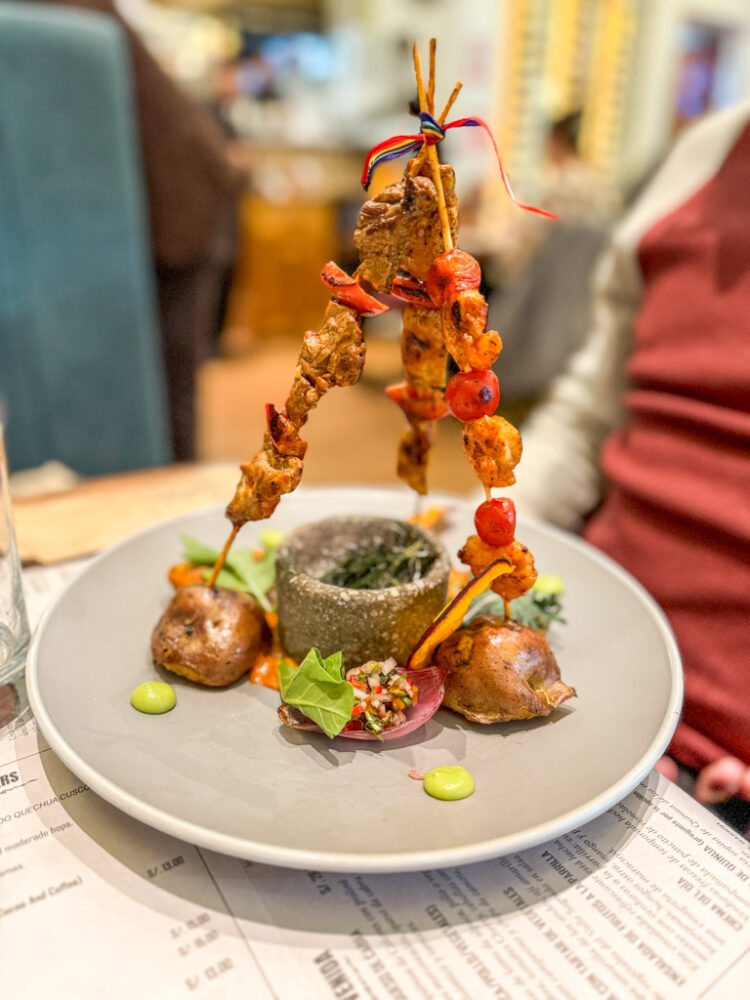
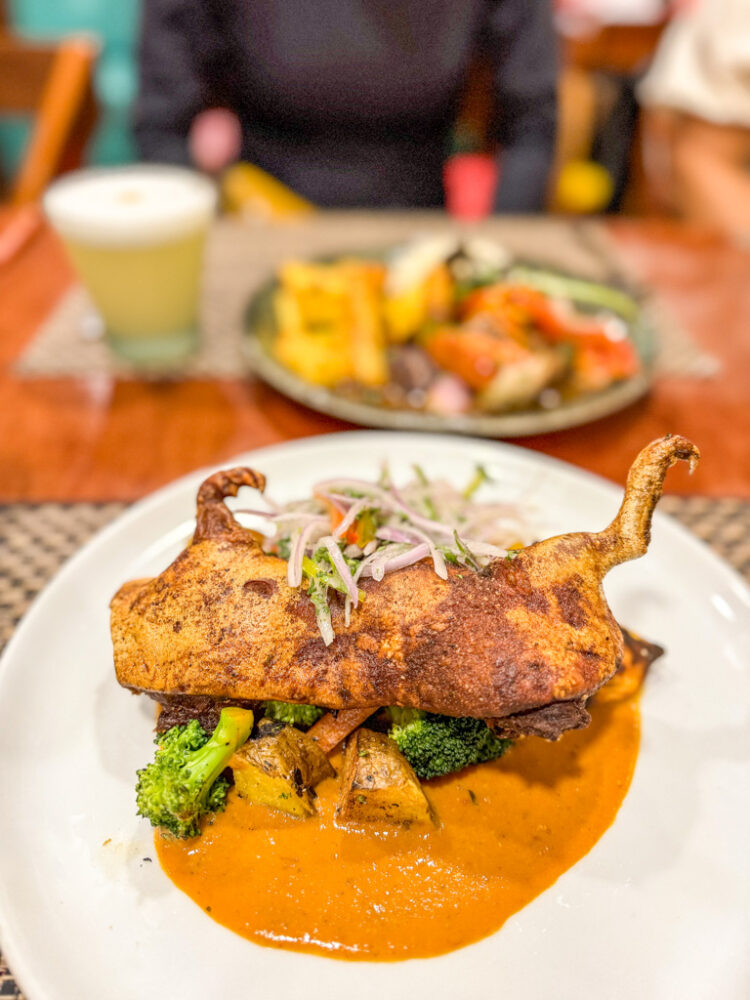
After a VERY full day of exploring, it’s time to reward yourself with dinner! After sunset, head back into San Blas or Plaza de Armas for some food. Thankfully, there’s tons of restaurants around both areas, so this is a good night to just pick somewhere that looks good and call it an early night. Trust me, after a full day at 11,000+ feet, you’re probably going to be ready for bed anyway!
Day 2: Day Trip to the Sacred Valley
If you only have time for one day trip from Cusco, I’d honestly make it the Sacred Valley. Sure, Rainbow Mountain gets all the Instagram attention (don’t worry, that’s coming on Day 3 of this Cusco itinerary!), but the Sacred Valley completely stole my heart. Between the breathtaking mountain scenery, fascinating Incan ruins, colorful artisan markets, and tiny Andean villages, it ended up being one of my favorite days of my entire 3-week Peru trip.
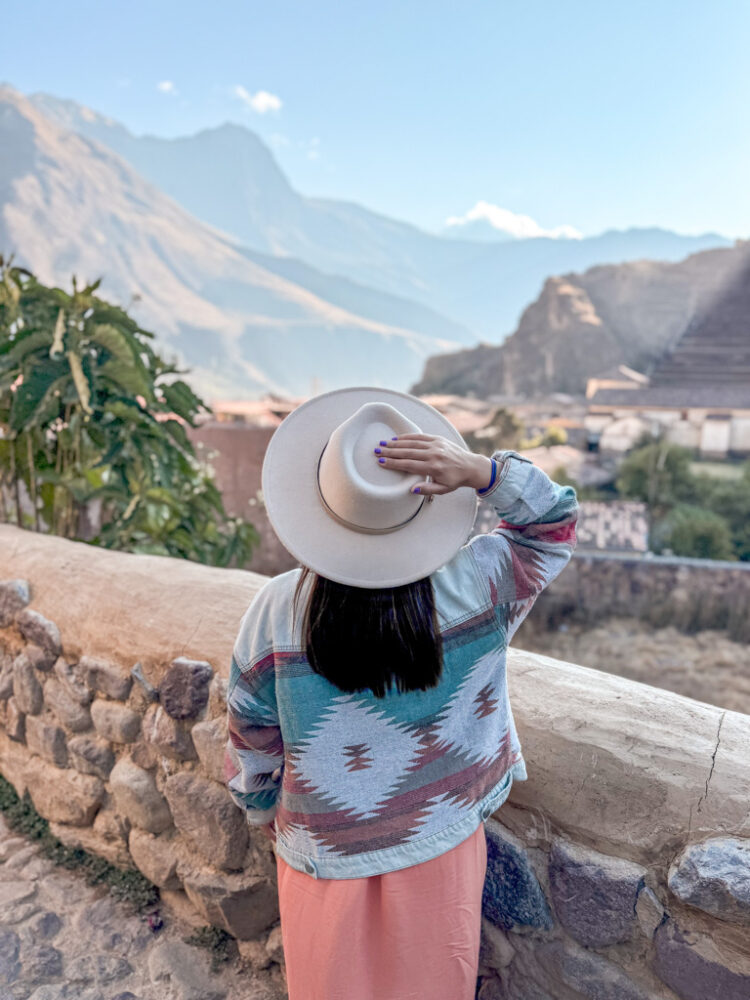
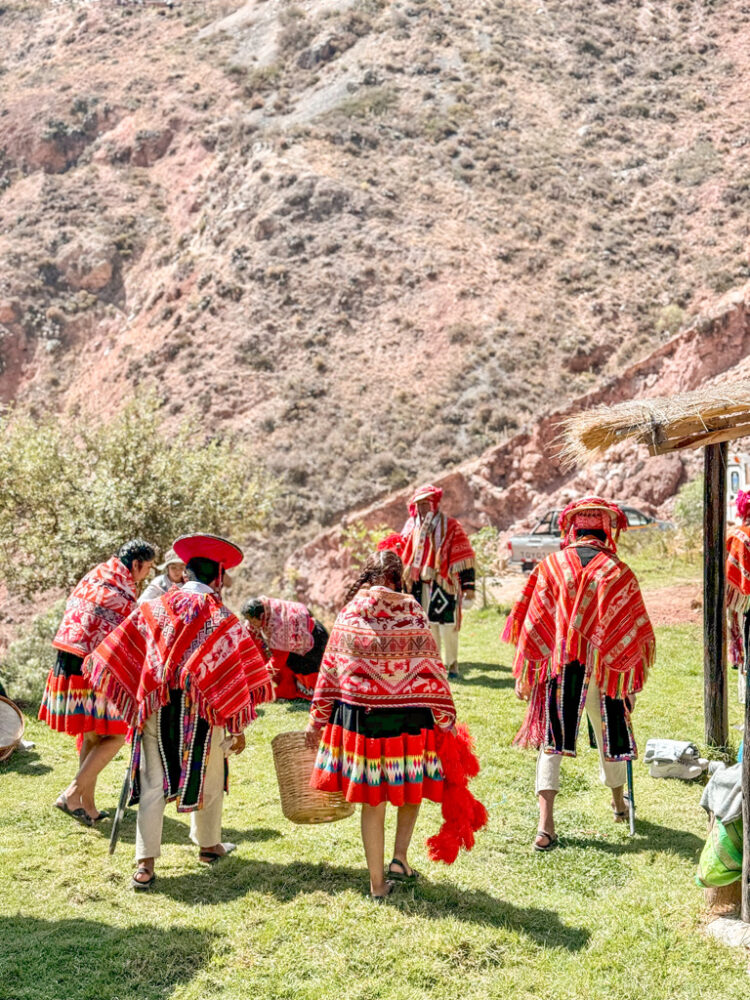

The Sacred Valley (or Valle Sagrado) is the lush, fertile heart of the Andes between Cusco and Machu Picchu. It stretches along the Urubamba River and was once the agricultural, political, and spiritual heart of the Inca Empire. Today, it’s filled with traditional villages, ancient ruins, colorful markets, and some seriously dramatic mountain scenery.
Basically, it’s the perfect mix of culture, history, and scenery – and you get A LOT of it in one day.
One of my favorite things about the Sacred Valley is that every stop feels completely different from the last. One minute you’re standing on an ancient hillside overlooking the Andes, the next you’re wandering through a colorful artisan market, and before you know it you’re staring down at thousands of salt pools cascading down a mountainside. The scenery changes constantly, which makes the entire day feel like one big adventure instead of the same thing over and over and over…
And there’s A LOT to see.
If you’re exploring independently, I’d recommend choosing 2-3 main stops depending on your pace. BUT, I highly recommend taking a tour. Getting around can be tricky in these parts (I don’t really recommend renting a car), and tours are honestly such a good value. Plus, you’ll be able to squeeze in quite a bit more when someone else is handling all the driving, transportation, and logistics.
The Best Places to Visit in the Sacred Valley
Depending on which tour you book (this one got amazing reviews), you’ll usually visit some combination of these incredible sites:
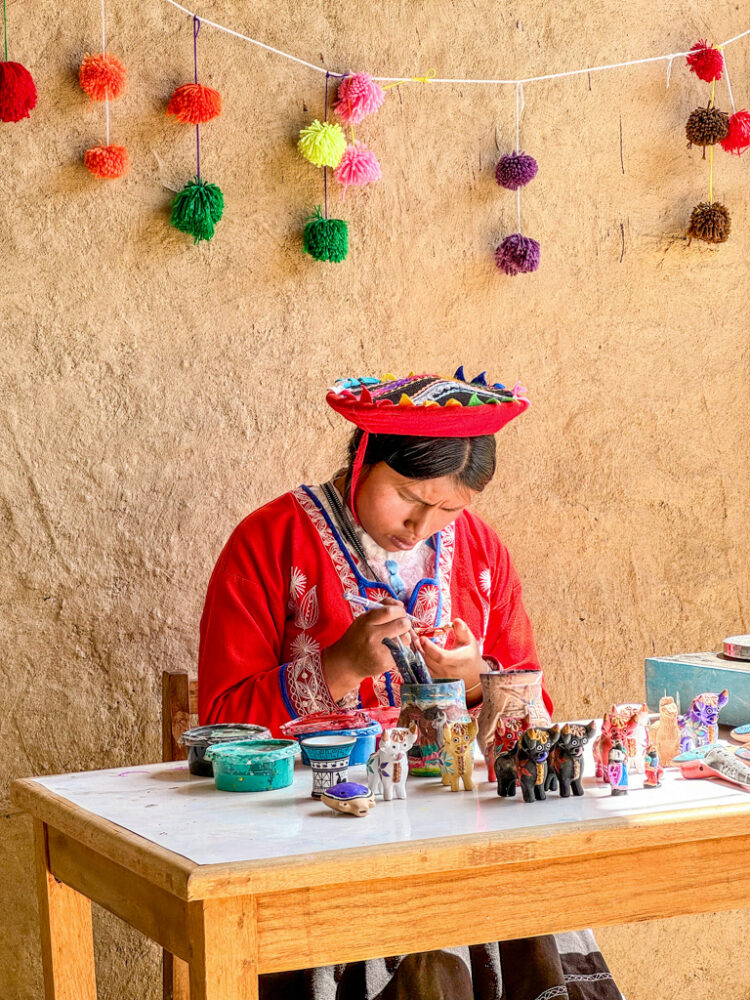
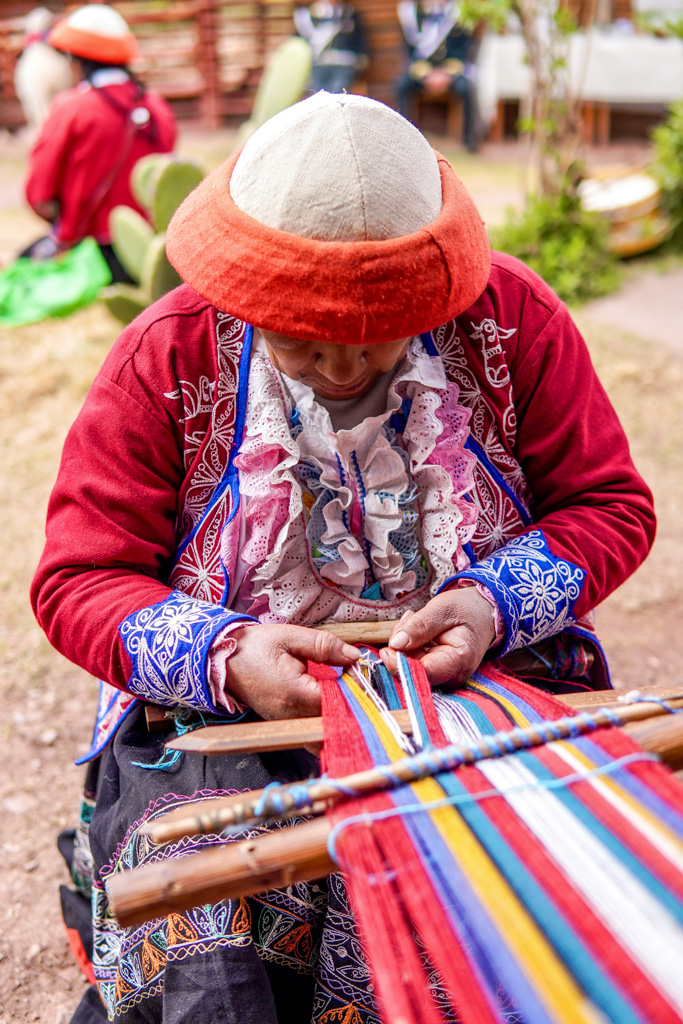
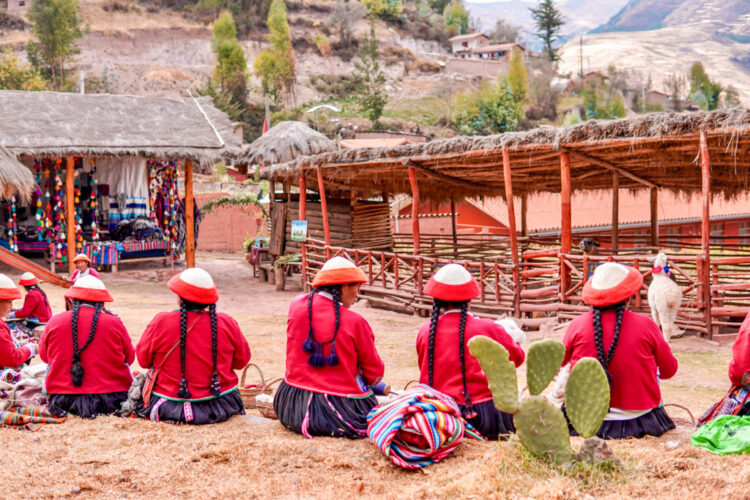
Chinchero: A charming Andean village known for its traditional weaving demonstrations, colorful artisan market, and beautiful colonial church. Even if you’re not planning to buy anything, it’s fascinating to watch local women demonstrate weaving techniques that have been passed down for generations.
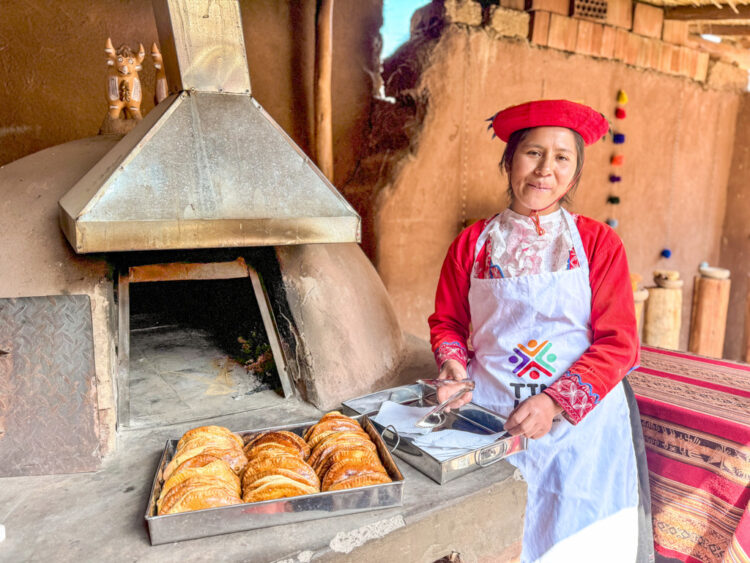
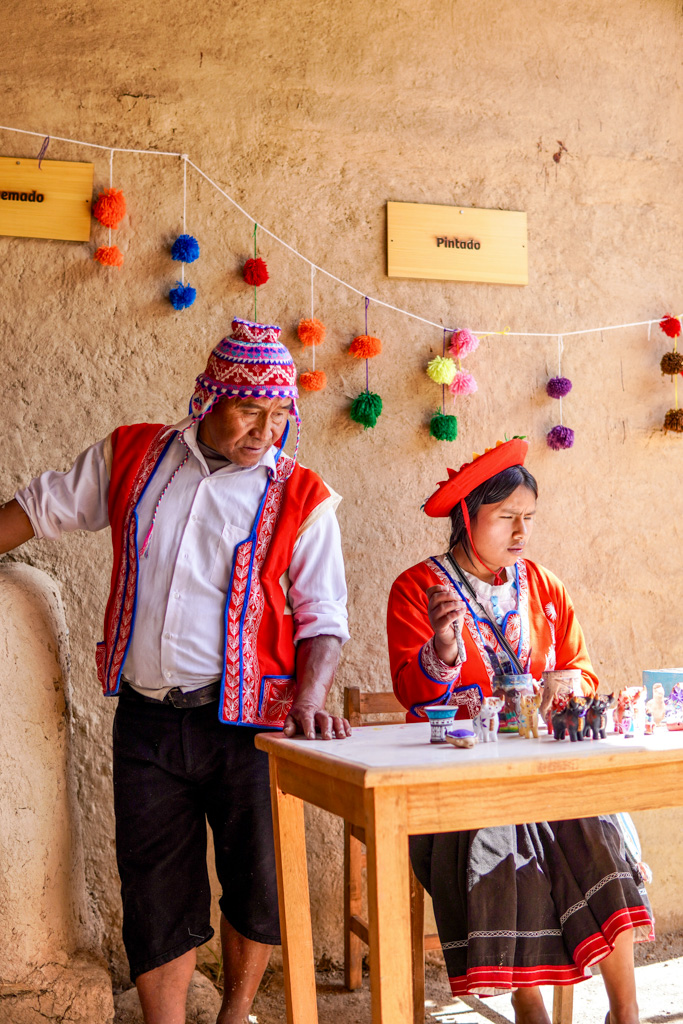
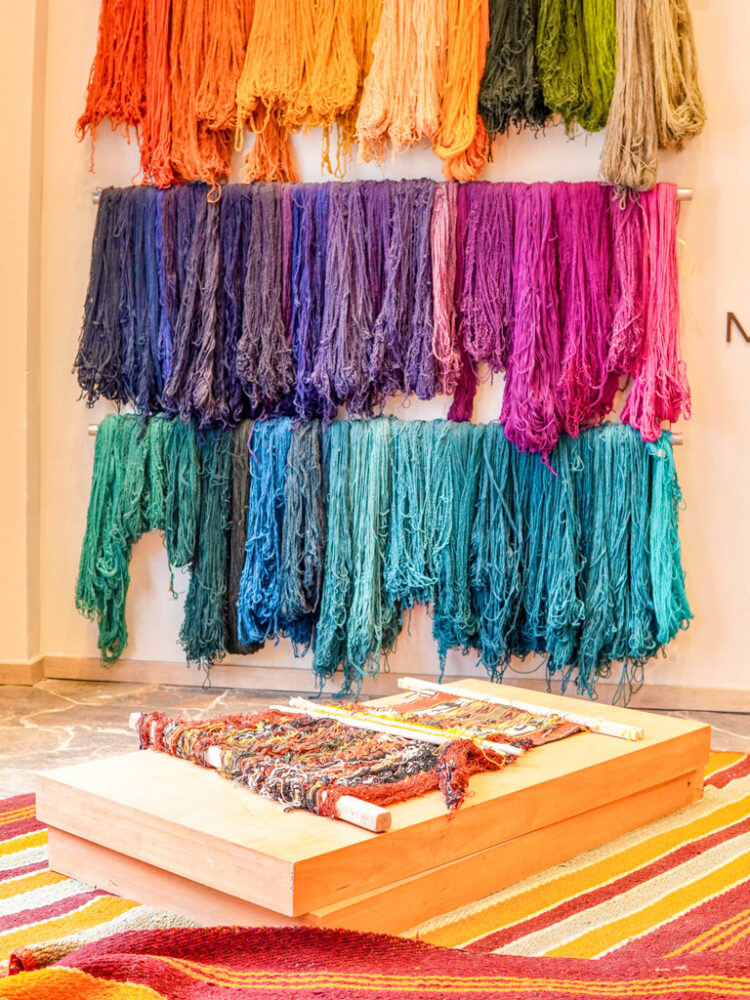
One of my favorite parts was watching local artisans dye wool using natural ingredients like plants and insects, then spin and weave it into intricate patterns. We also visited a women’s weaving co-op where we were able to chat with the women, watch them work, and buy pieces that directly benefit their community.
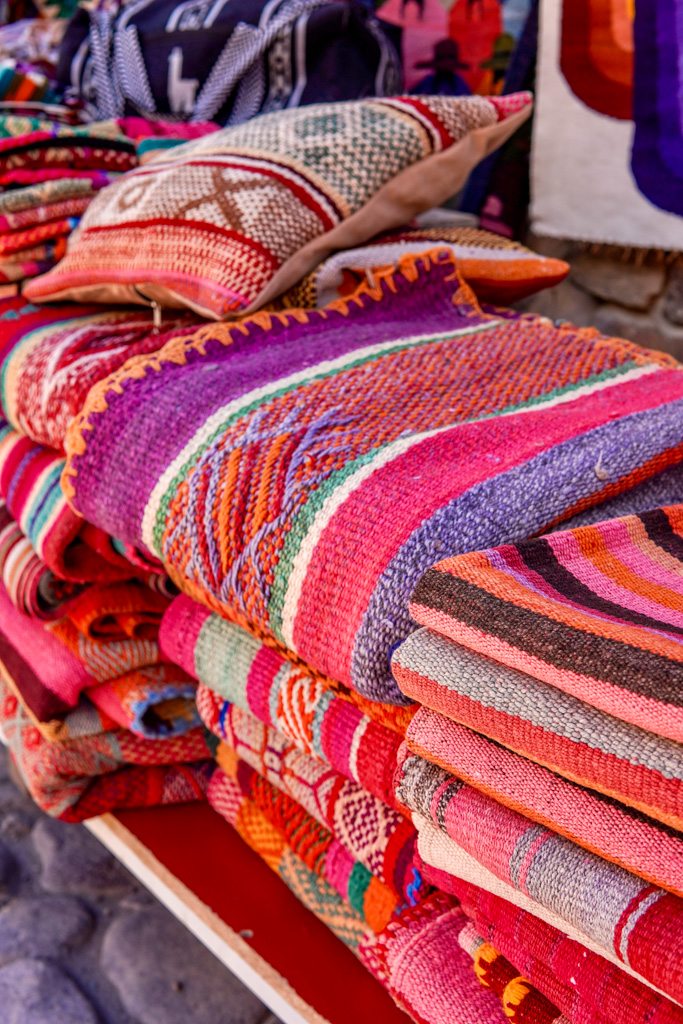
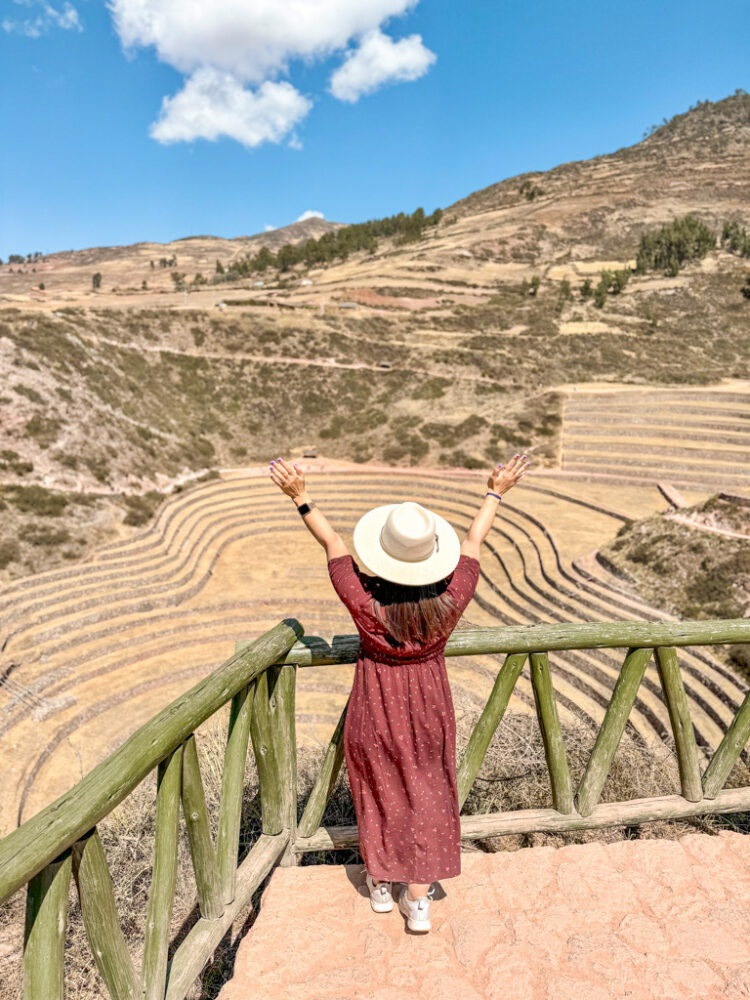
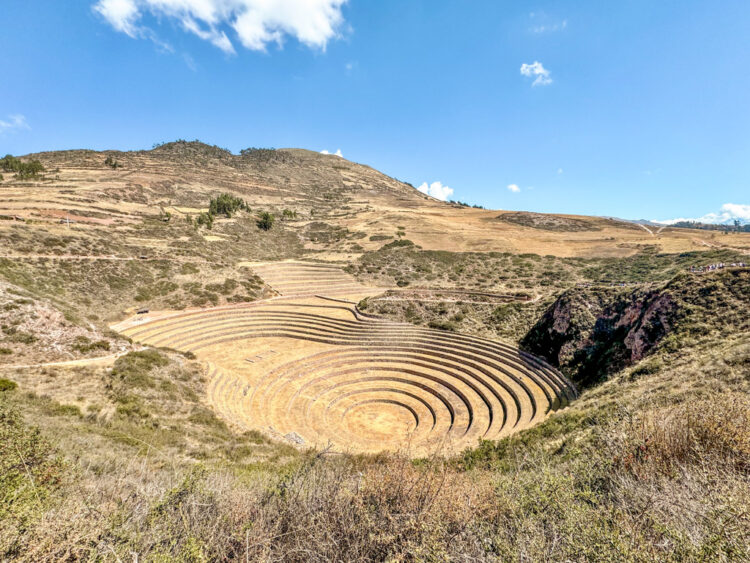
Moray: One of the most unique archaeological sites in Peru. These enormous circular terraces almost look like an ancient amphitheater, but they were actually used by the Incas as an agricultural laboratory to experiment with growing crops at different elevations.
I loved this one. The terraces almost look futuristic, and it’s pretty wild to think about just how advanced Incan agricultural techniques were.
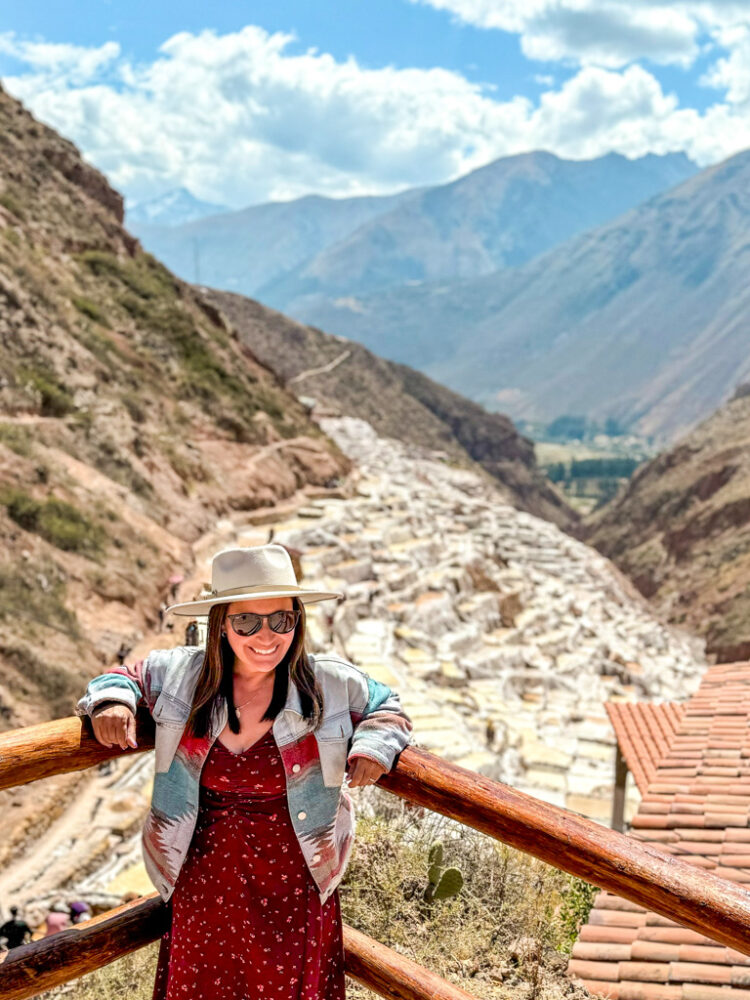
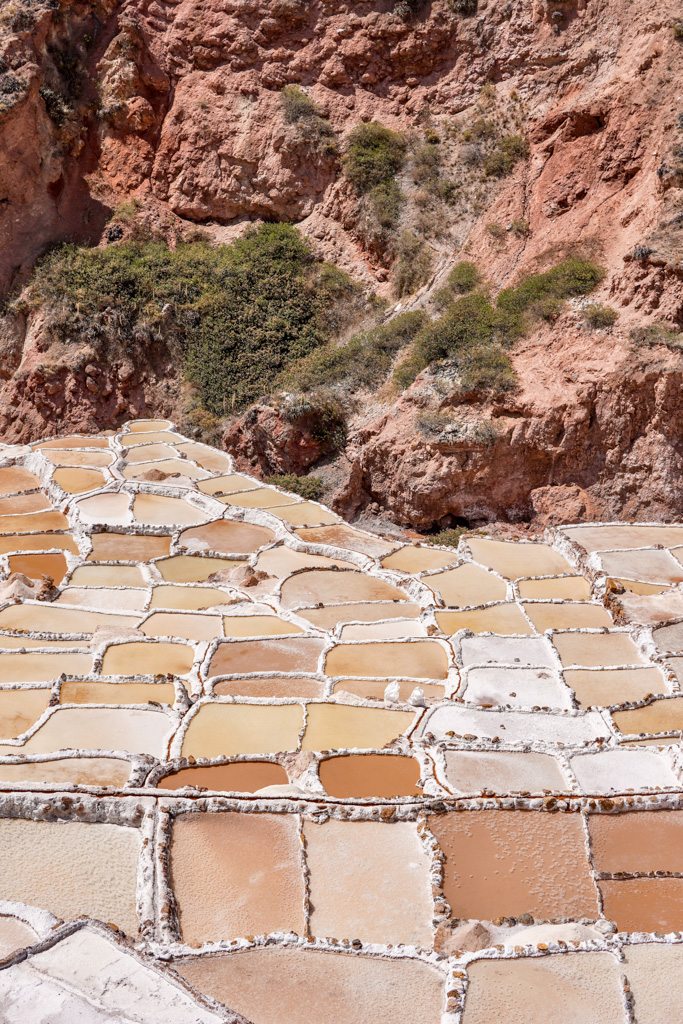
Maras Salt Mines: Easily one of the most photogenic places in the Sacred Valley. Thousands of bright white salt pools spill down the mountainside, creating a landscape unlike anywhere else I’ve ever seen.
This was probably my biggest surprise of the entire day – I had no idea it would be that beautiful! When I visited, I actually got to experience the first-ever annual Salt Festival, which was such a unique bonus and oh-so-fun, with lots of traditional dancing.

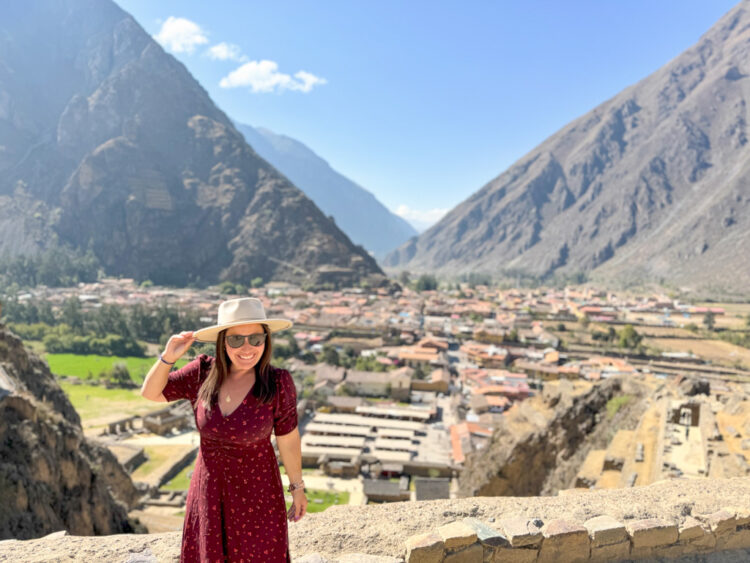
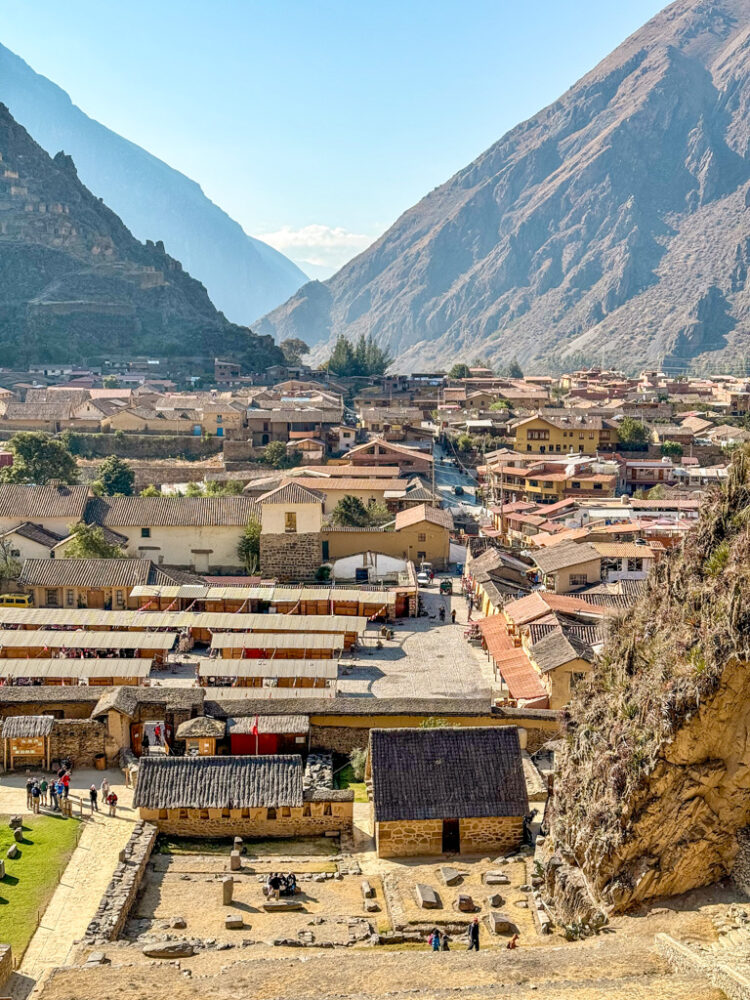
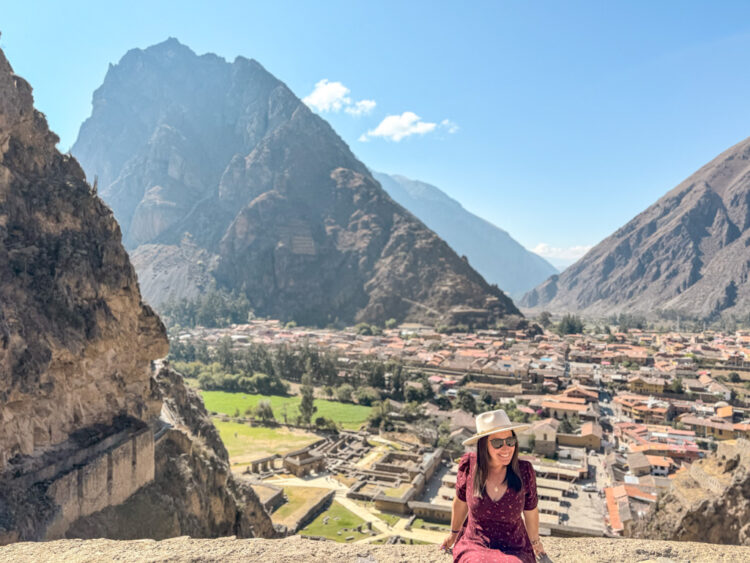
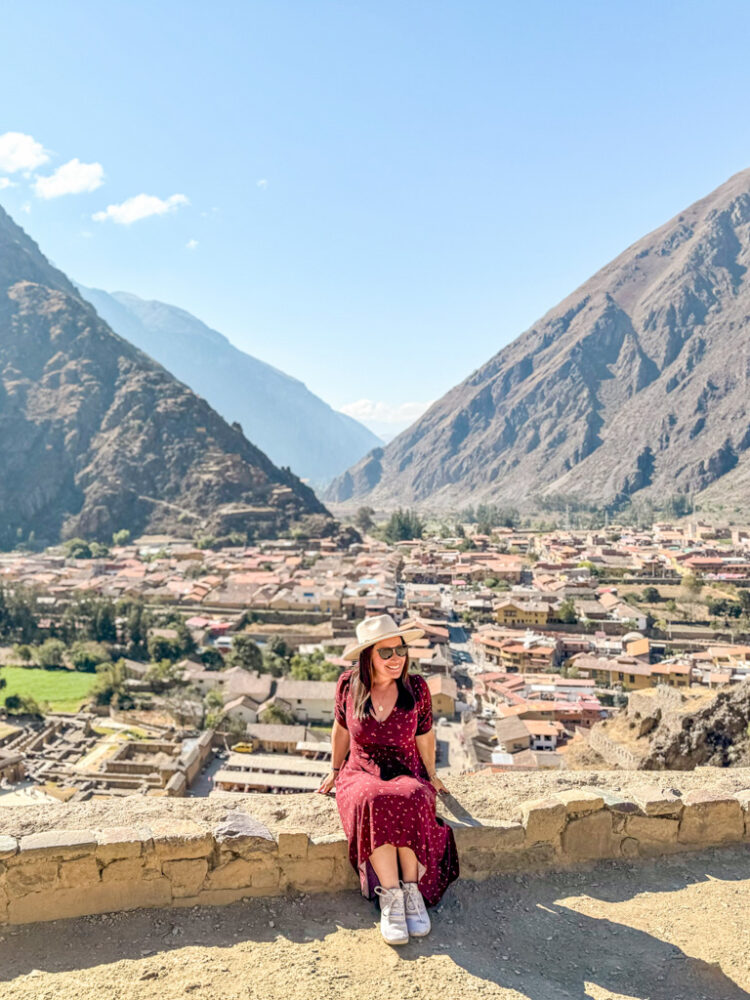
Ollantaytambo: My favorite stop of the day (and I actually ended up staying one night here before taking the train to Machu Picchu)!
This incredibly well-preserved Incan town is home to massive stone terraces, impressive ruins, and some of the best mountain views in the Sacred Valley. It’s also the gateway to Machu Picchu, so many travelers continue on from here by train.
If you’re heading to Machu Picchu next, I’d definitely look for a tour that ends in Ollantaytambo rather than making you go all the way back to Cusco. It saves you from backtracking, and you can simply spend the night here before catching your train the next day.
Pisac: Famous for both its impressive hilltop ruins and one of the best artisan markets in Peru. Depending on your tour, you may visit one or both.
If you’re into souvenirs and local crafts, the market is a fun stop, while the ruins offer some pretty incredible views over the valley.
Other Sacred Valley Experiences
The major archaeological sites are definitely worth seeing, but some of my favorite experiences in the Sacred Valley were actually the smaller, more local ones.
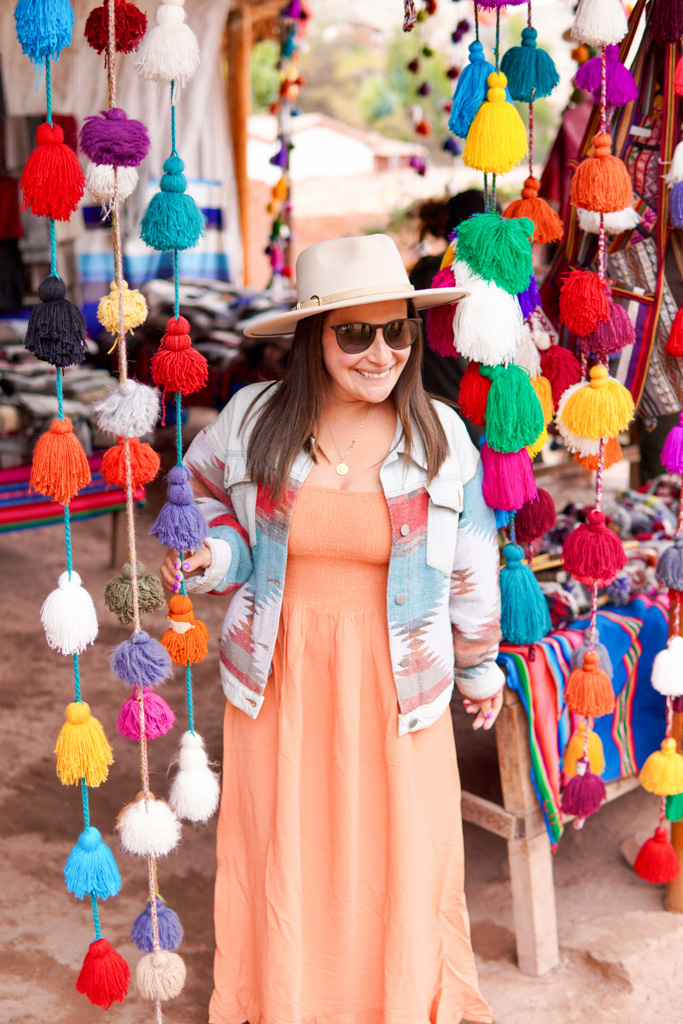
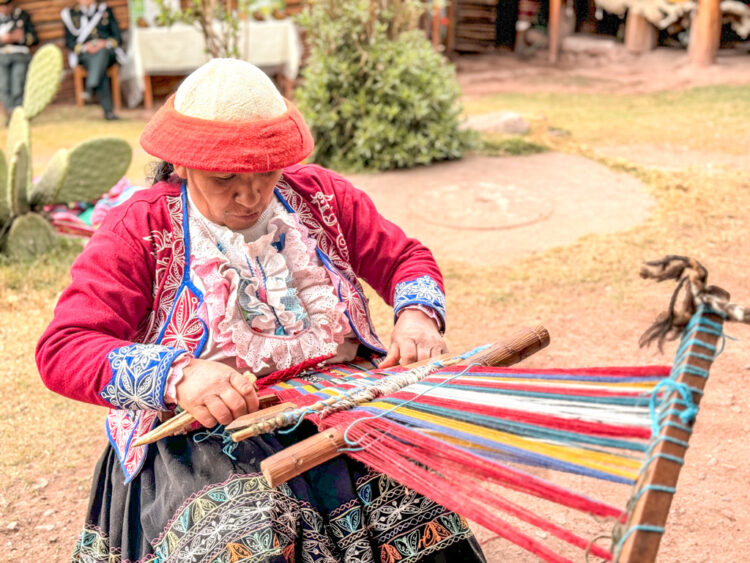
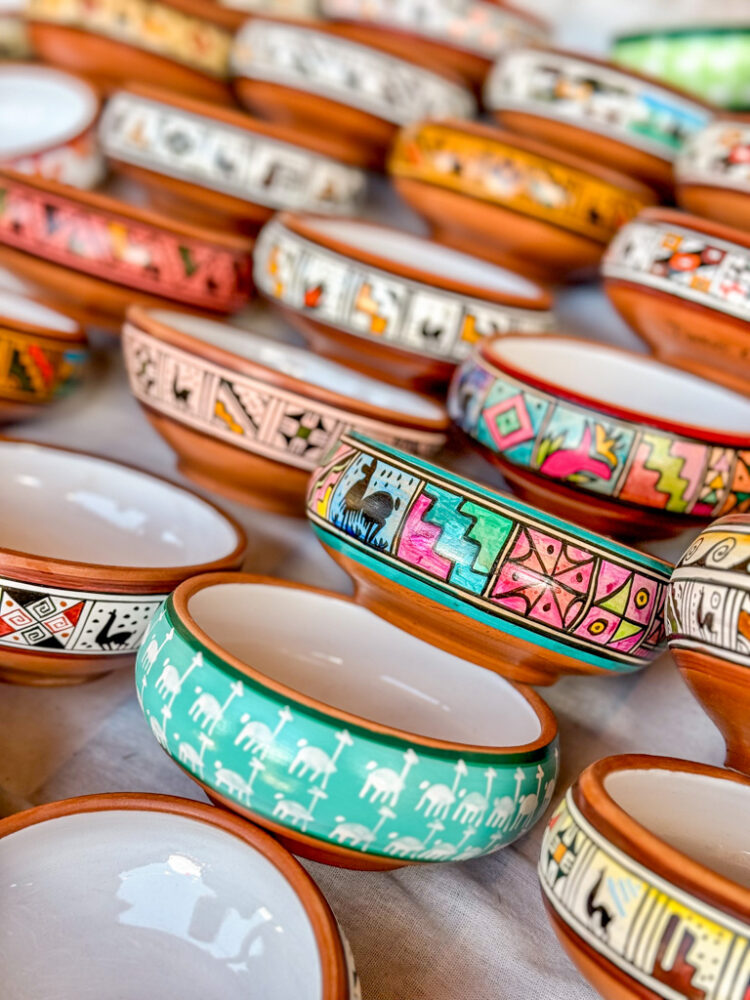
We visited a local pottery-making community where we got to see traditional pottery techniques still in use. You can watch them shape, fire, and decorate the pieces, and sometimes even try it yourself (which is way harder than it looks, haha).
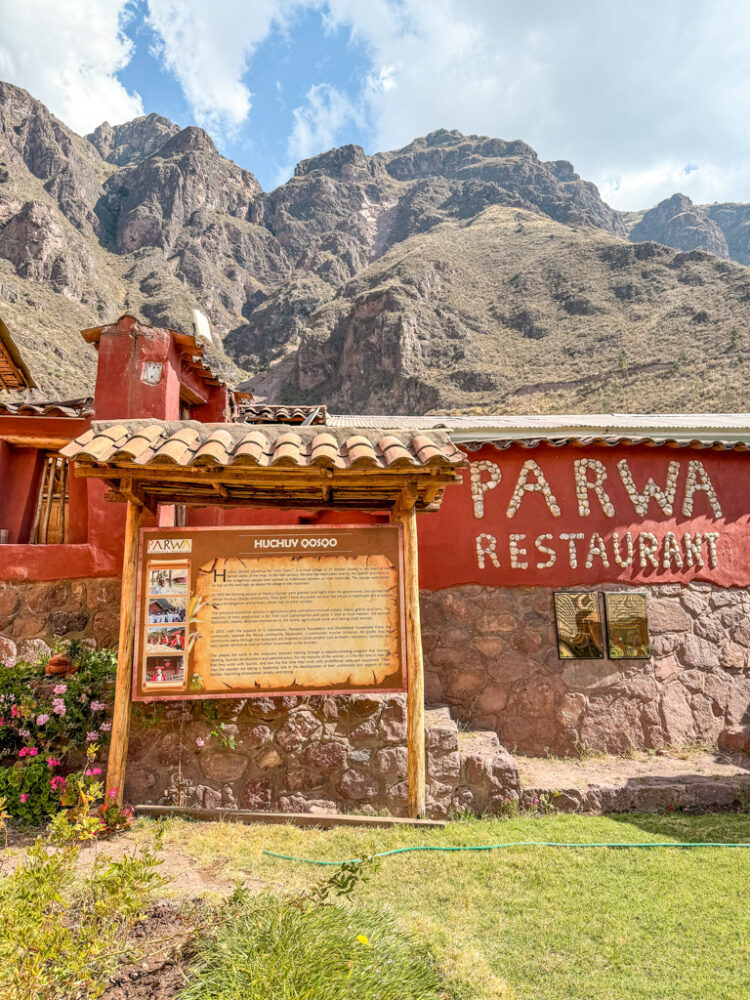
We also stopped at Parwa Community Restaurant in Huchuy Qosqo, and we LOVED this lunch stop. Not only was all the food locally made with fresh ingredients, but WOW – the views were amazing.
Not every tour includes these kinds of experiences, so if you’re interested in seeing more of the local side of the Sacred Valley, definitely read the itinerary carefully before booking.
Which Sacred Valley Tour Should You Book?
There are dozens of tours out there (truly, it’s overwhelming), so make sure you look closely at what’s actually included before booking. Some focus more heavily on archaeology, while others spend extra time in the villages, artisan markets, or local communities.
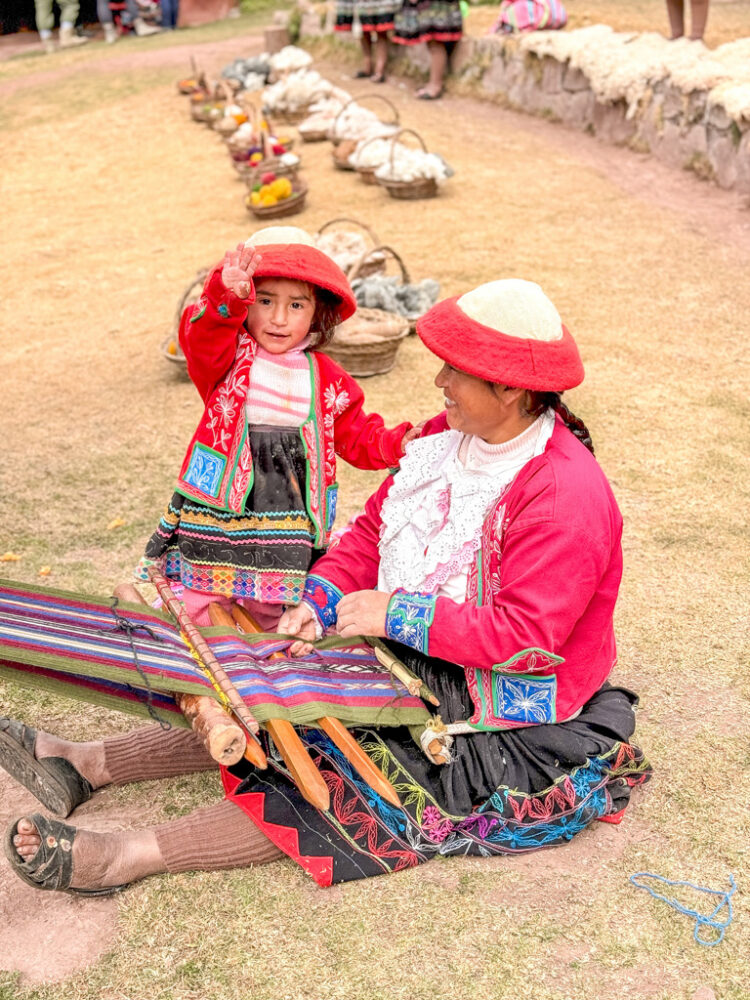
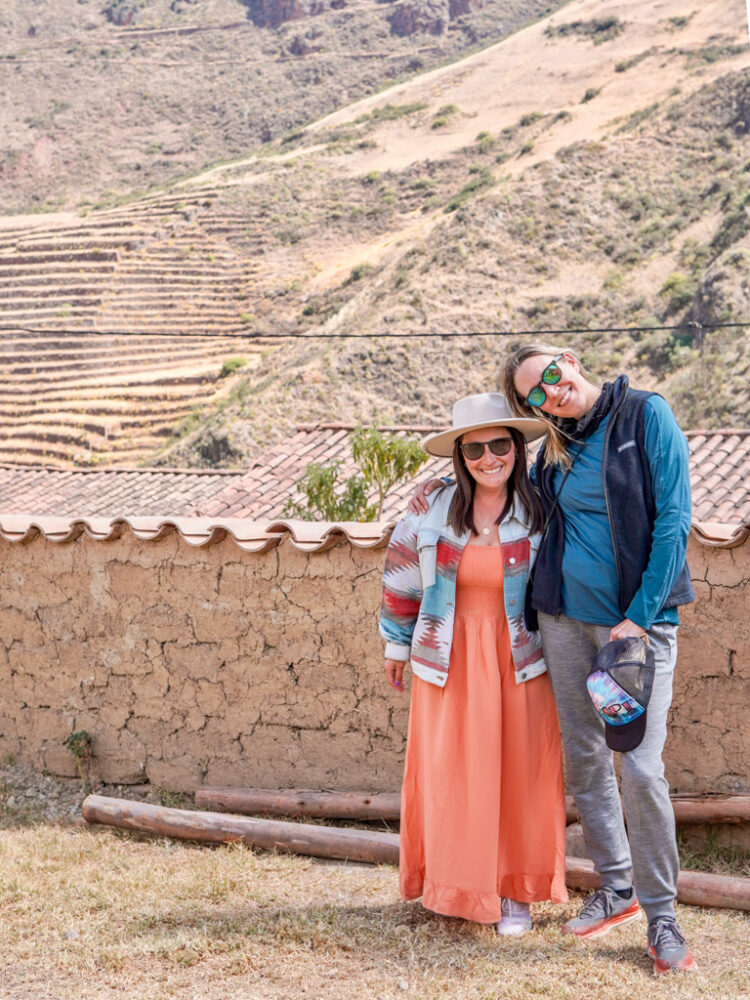
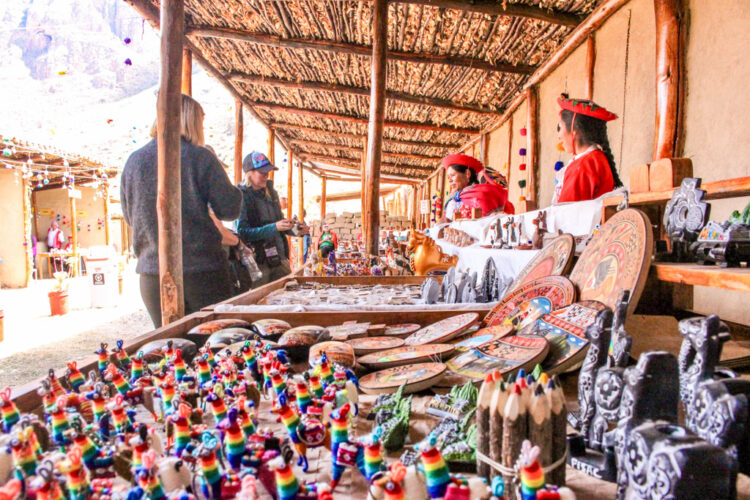
I personally loved exploring the Sacred Valley with a guide because there’s SO much history packed into each stop. I learned way more than I would’ve wandering around on my own, and having transportation between sites already taken care of made the entire day completely stress-free.
If you’re booking a tour, I’d recommend choosing one that includes Moray, the Maras Salt Mines, Ollantaytambo, and Chinchero at a minimum. If you can find one that also visits Pisac, even better!
A few options to look for:
- Moray, Maras Salt Mines & Chinchero Weavers Half Day Tour: See all the main highlights in only a few hours!
- Sacred Valley + Pisac Full-Day Tour: A good option if you want to add the famous Pisac ruins and market
- Sacred Valley Tour Ending in Ollantaytambo: Perfect if you’re heading straight to Machu Picchu afterward
Most Sacred Valley tours last 10-12 hours, with hotel pickup around 7-8am and a return to Cusco in the early evening. It’s definitely a full day, but I never once found myself checking the time. There’s just too much to see!
A Few Tips for Your Sacred Valley Day Trip
- Wear comfortable walking shoes. There are plenty of uneven stone paths and stairs throughout the day.
- Dress in layers. Mornings are chilly, but by midday you’ll probably be peeling those layers right back off.
- Don’t forget sunscreen, sunglasses, and a hat. The Andean sun is strong, even when it doesn’t feel particularly hot.
- Bring a little cash if you want to shop at the artisan markets or grab a snack.
- Most tours include lunch, but I’d double-check before booking just to be safe.
- Keep your camera handy. Trust me – you’ll be stopping for photos constantly.
And after a full day exploring the Sacred Valley, you’ll be ready for a completely different kind of adventure tomorrow: Rainbow Mountain!
Day 3: Adventure to Rainbow Mountain
Today’s the day you’ve probably been waiting for… Rainbow Mountain!
Fair warning, though: this is going to be your earliest morning of the entire trip. And I mean really early, so get to bed early the night before!
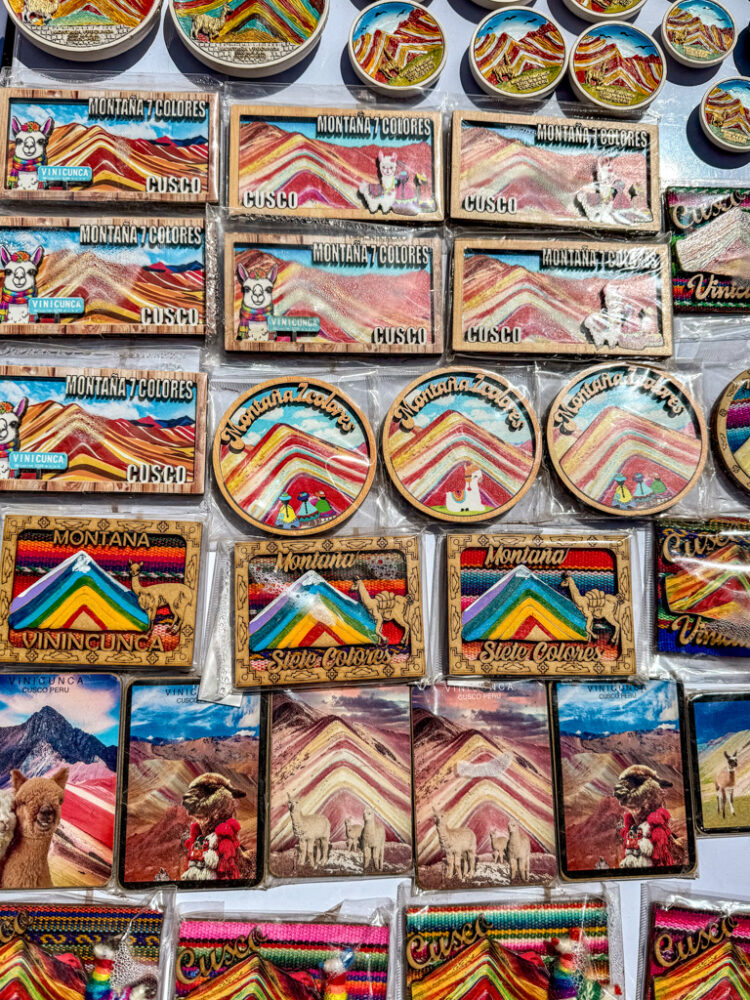
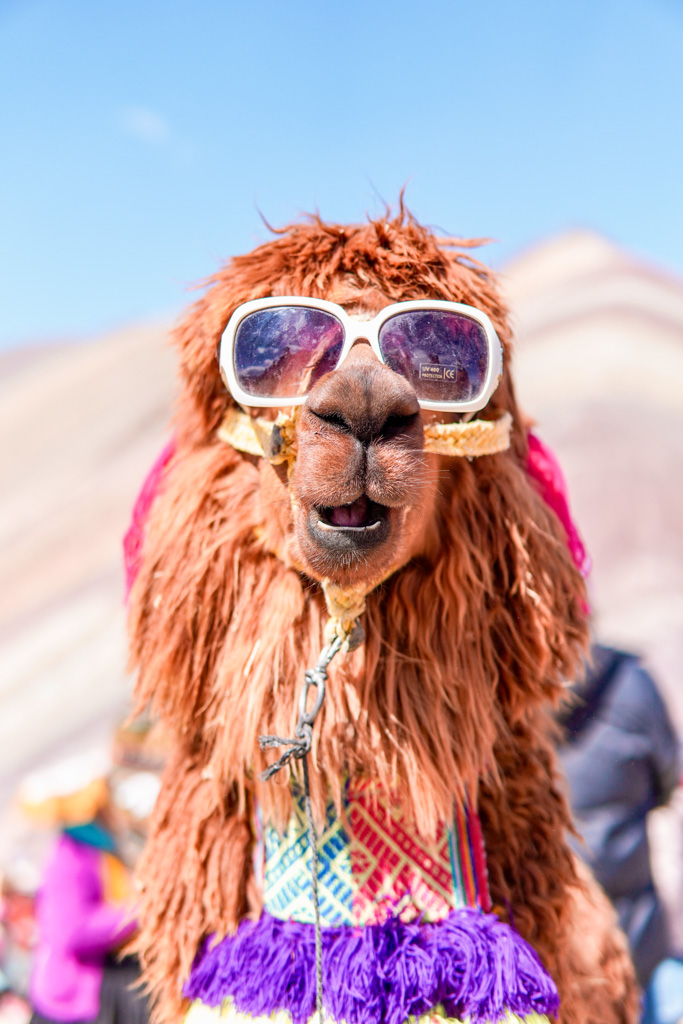
Most tours pick up between 4 and 5am, which honestly feels a little cruel when your alarm starts going off, lol. But once you’re driving through sleepy Andean villages with the mountains slowly coming to life around you, you’ll (almost) forgive the ridiculously early wake-up call.
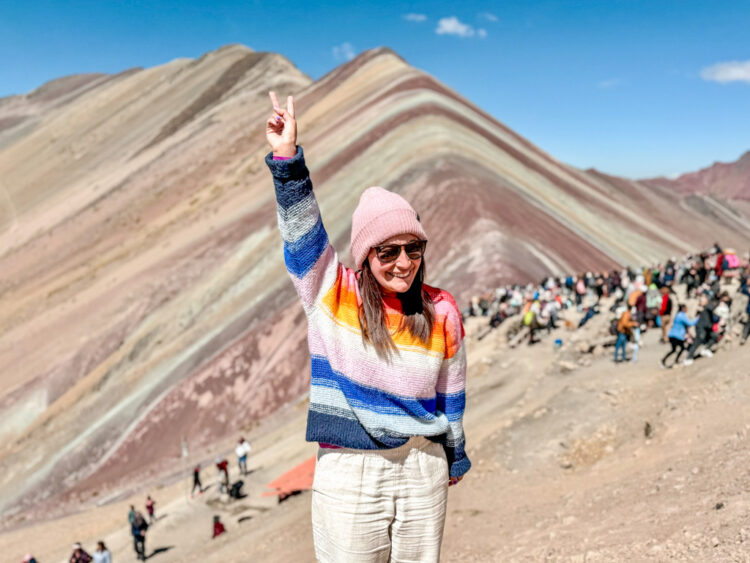
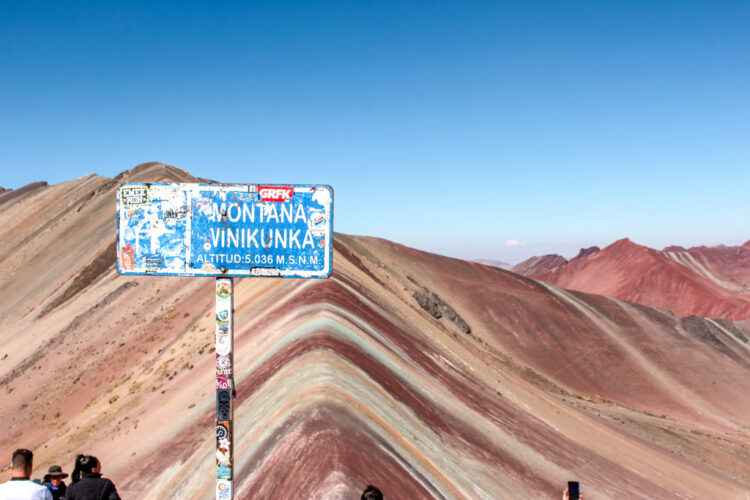
Rainbow Mountain (Vinicunca) sits at around 17,000 feet (5,200 meters) above sea level, making it one of the highest places most people will ever visit. And trust me – you’ll notice the altitude. That’s exactly why I recommend saving Rainbow Mountain until after you’ve spent a couple of days exploring Cusco and the Sacred Valley. By this point, your body will have had a little more time to adjust, which can make a HUGE difference.
Basically, this is why I structured this 3-day Cusco itinerary the way I did. Day 1 gives you time to adjust to Cusco, Day 2 takes you into the Sacred Valley, and then Day 3… well, you’re ready to head up to 17,000 freaking feet.
Hiking vs. ATV: Which Should You Choose?
Now, here’s where my experience was a little different… Instead of doing the traditional hike, I chose an ATV tour – and honestly? Best. Decision. Ever.
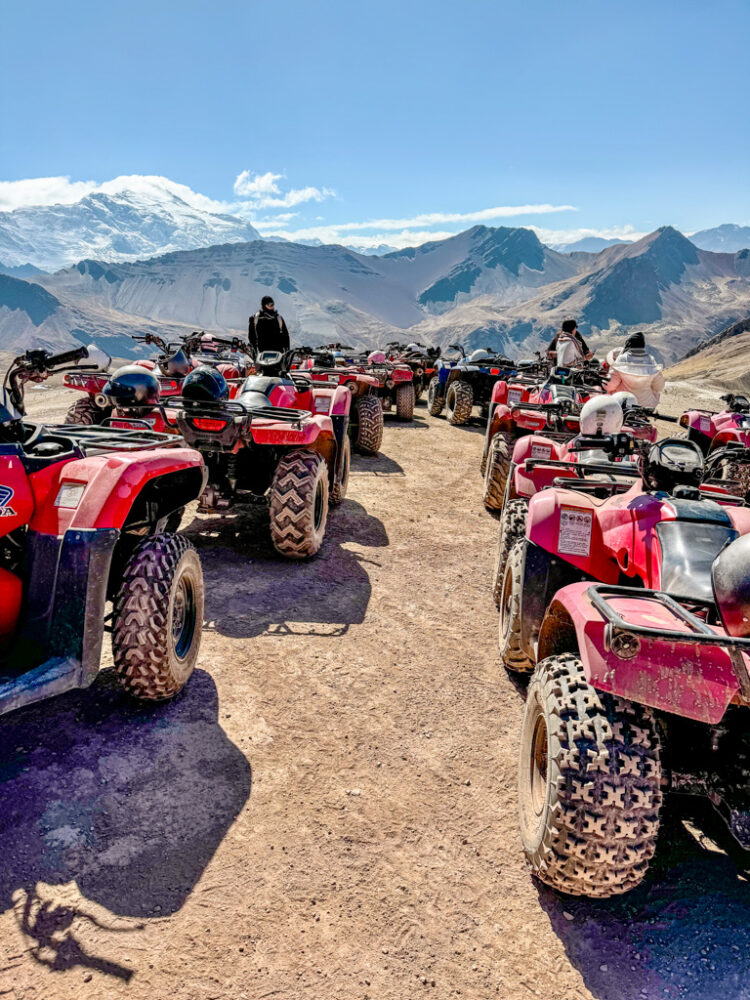
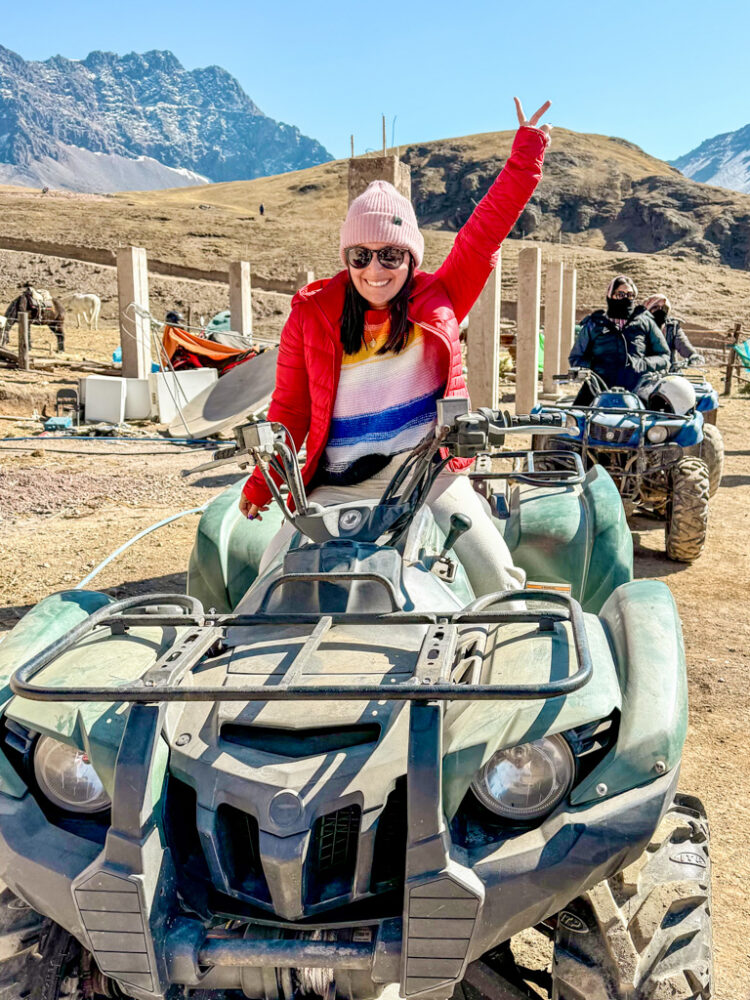
Don’t get me wrong, I love a good hike. But after traveling around Peru for nearly three weeks, the thought of hiking several miles at over 17,000 feet didn’t exactly sound appealing. The ATV takes you most of the way up the mountain, leaving just a short (but still steep) walk to the viewpoint.
I still got the incredible scenery without feeling completely wiped out before I even made it to the top. Was I still out of breath? Absolutely. Was I still wondering how people hike the entire thing? Also yes. Do I have even the tiniest bit of regret about choosing the ATV instead? Not even a little.
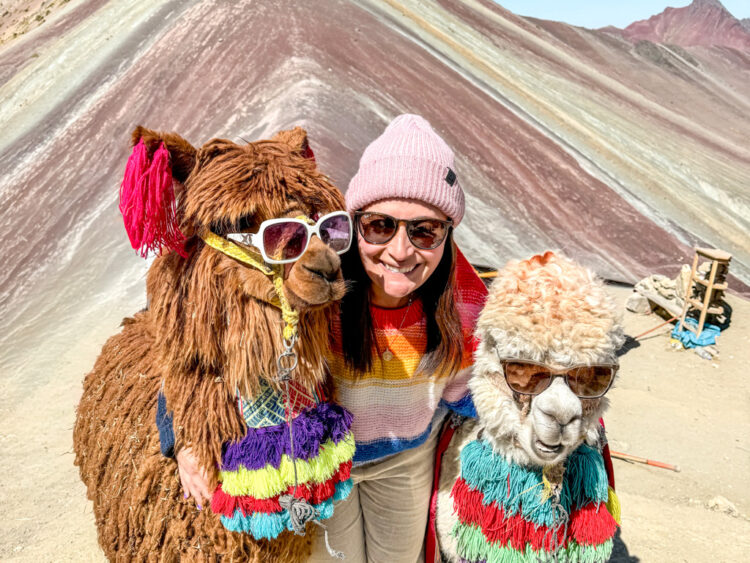
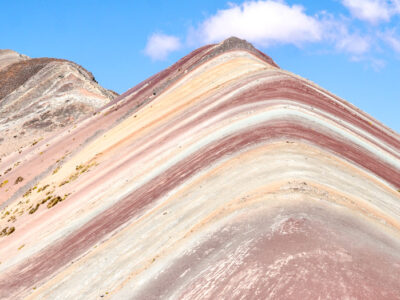
Once you finally reach the viewpoint, you’ll quickly understand why Rainbow Mountain has become one of Peru’s most iconic attractions. The colorful mineral stripes stretch across the mountainside while snow-capped peaks surround you in every direction. It’s dramatic, it’s surreal, and yes… it really does look like the photos (assuming you get good weather!).
Don’t Skip Red Valley
One thing I’d definitely keep an eye out for when booking your tour is a stop at Red Valley.
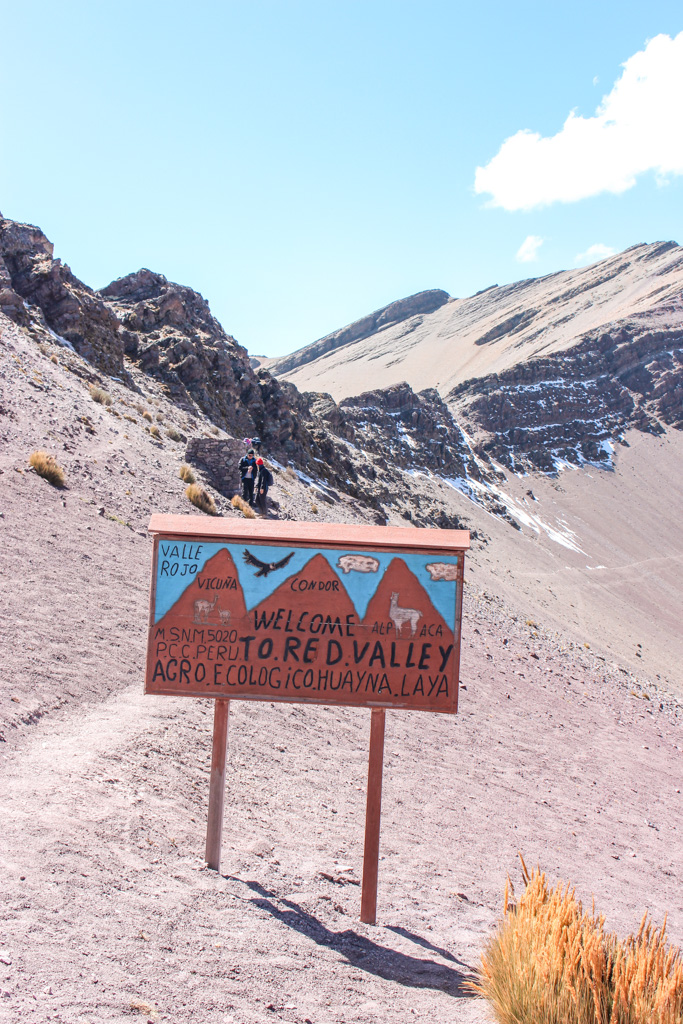
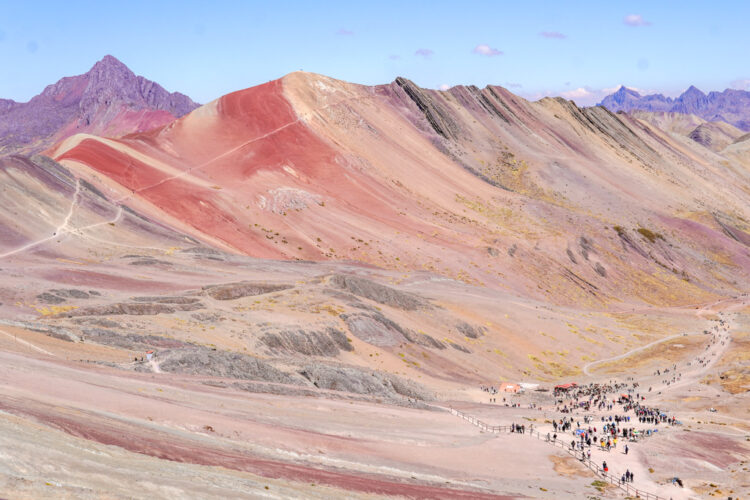
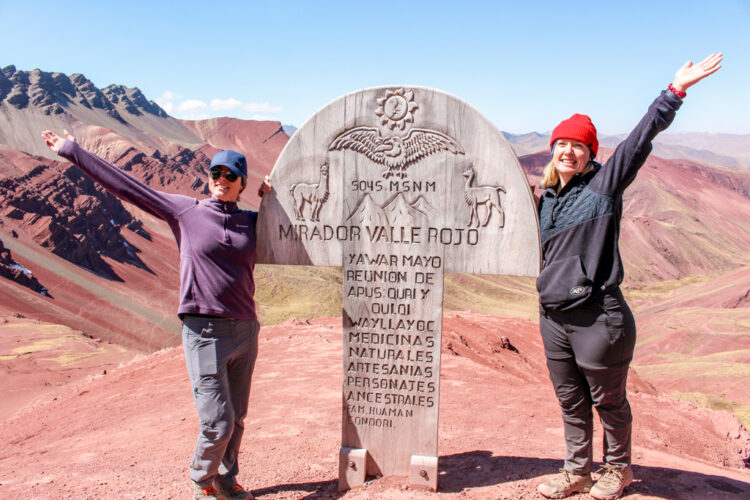
My ATV tour unfortunately didn’t include it, so I had to miss out. But a bunch of my friends on the trip visited Red Valley afterward, and they all came back saying it was one of their favorite parts of the entire day. They seriously couldn’t stop talking about it!
If you’re comparing tours, I’d absolutely pick one that includes Red Valley if you can. The landscape looks absolutely unreal, and from everything I’ve heard, the smaller crowds make the experience even better.
Which Rainbow Mountain Tour Should You Book?
There’s quite a few tour options, so it can get a little overwhelming when you’re trying to figure out which one to book. Personally, I’d look for one that includes:
- Round-trip transportation from Cusco
- Breakfast and lunch
- A stop at Red Valley
- Small group sizes, if possible
- An ATV option if you’re not excited about tackling the full hike
Here’s a few Rainbow Mountain tours with high ratings:
- Rainbow Mountain ATV Tour (minimal hiking required – the exact one I chose!)
- Classic Rainbow Mountain Hiking Tour (known to be one of the first groups on the mountain)
- Rainbow Mountain + Red Valley Tour (over 6k reviews!!!!)
A Few Tips for Visiting Rainbow Mountain
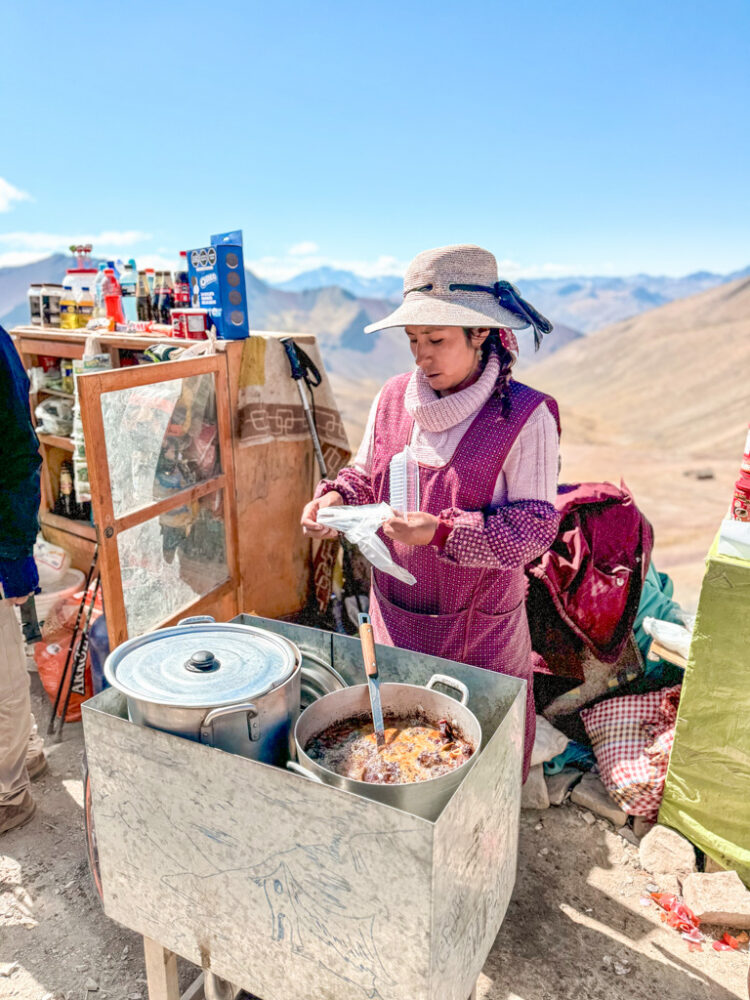
- Dress in lots of layers. Like, a lot. It can be absolutely freezing before sunrise, but once the sun comes out you’ll likely start peeling layers back off.
- Wear sturdy hiking shoes or sneakers with good grip. The trail can be rocky and dusty.
- Don’t forget sunscreen, sunglasses, and a hat. At over 17,000 feet, the sun is incredibly intense, even when it’s cold.
- Bring plenty of water and a few snacks for the drive.
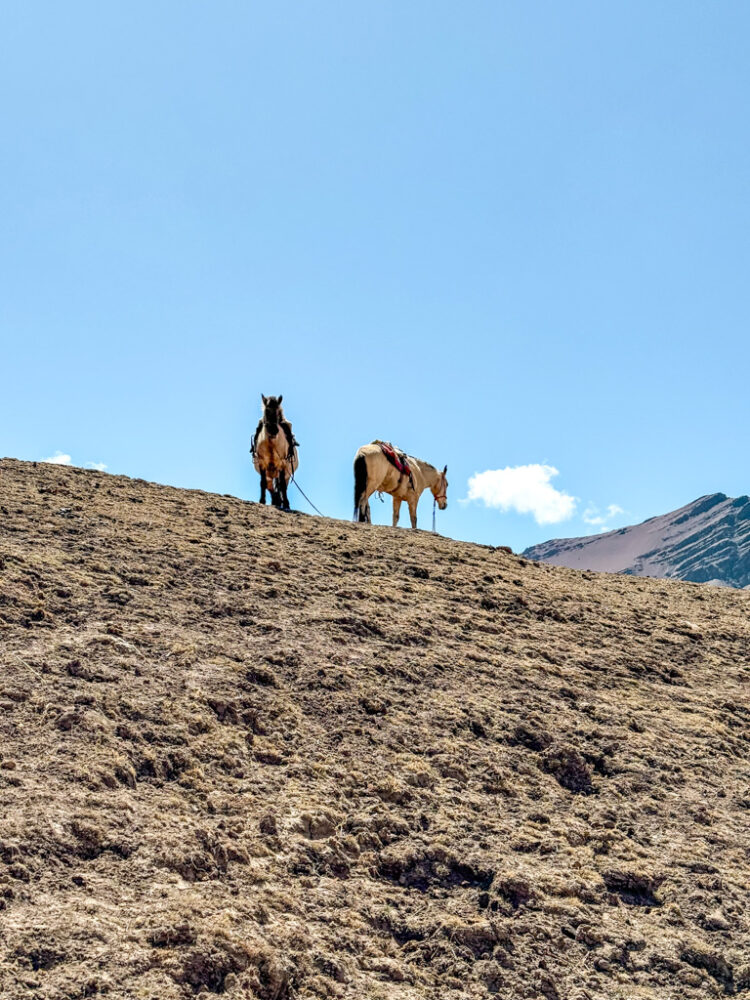
- If you’re doing the traditional hike, horses are available for rent if you decide you need a little extra help.
- And if you’re on the fence about hiking versus taking an ATV… well, you probably know where I stand, haha.
One last piece of advice: don’t make Rainbow Mountain your first day in Cusco. Between the altitude, the physical effort, and the painfully early wake-up call, it’s so much more enjoyable after you’ve had a couple of days to adjust. Your lungs (and probably your legs) will thank you.
If you want even more details on Rainbow Mountain, I put together an entire guide to visiting Rainbow Mountain, where I cover exactly which ATV tour I booked, what the ride was like, what to pack, what I wish I’d known beforehand, and whether I actually think it’s worth visiting.
If Rainbow Mountain is on your Peru bucket list, I’d definitely recommend giving that a read before booking your tour.
And that’s a wrap on your 3 days in Cusco! You’ve explored the city, wandered through the Sacred Valley, and somehow made it all the way up to 17,000 feet. Not bad for three days, right?! Are you planning a trip to Cusco anytime soon?!


Leave a Reply